
Plastic Bag Making Machines for Sale in Pretoria
Plastic Bag Making M
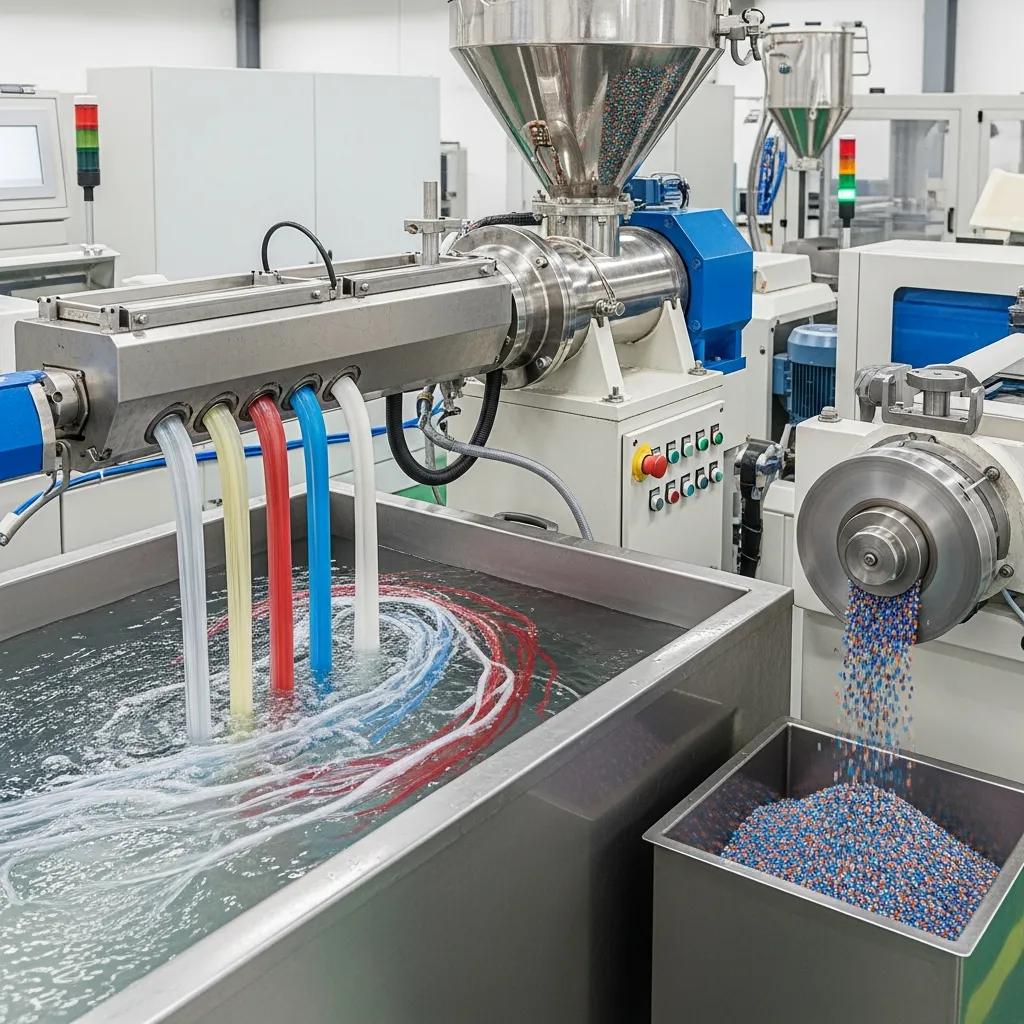
Water cooling plastic recycling systems use a water-based heat-dissipation stage during pelletizing to convert shredded or extruded plastic waste into stable, high-quality pellets. This article explains the core mechanism — extrusion into a water cooling bath followed by pellet cutting and drying — and shows why rapid, uniform cooling improves pellet surface finish, dimensional stability, and throughput for HDPE, LDPE and PP streams. Readers will learn step-by-step process flow, the main mechanical and thermal components, measurable operational benefits, and how to match machine features to feedstock and production targets. The guide also compares water cooling with air cooling, maps suitable waste materials to processing notes, and covers plant-level integration including water treatment and chillers. Finally, practical buyer guidance addresses model selection, maintenance expectations in South Africa, and how efficient water-cooled pelletizing fits into circular-economy strategies while noting example machine models from Plastic Bag Machine South Africa for real-world context.
A water cooling plastic recycling system is an extrusion-pelletizing workflow where molten or semi-molten polymer is solidified by passing extrudate through a controlled water bath prior to cutting into pellets. The mechanism relies on convective heat transfer: warm extrudate contacts cooler water which rapidly extracts heat, allowing a pelletizer knife to cut consistent granules with reduced surface melt and improved dimensional control. Typical process stages are shredding/washing, extrusion and melt filtration, water-ring or water-bath cooling and cutting, followed by separation and drying; each stage influences final pellet quality and moisture content. Understanding where water cooling delivers value helps operators optimize throughput and downstream handling while minimizing thermal degradation of polymers.
This numbered process illustrates the primary steps and expected outcomes for a water-cooled pelletizing line:
These steps create pellets with tight dimensional tolerances and consistent melt-flow properties, which improves process predictability for downstream extrusion or molding operations. Real-world equipment lines vary by feedstock and capacity, and manufacturers provide model options tailored to specific throughput requirements and polymer types.
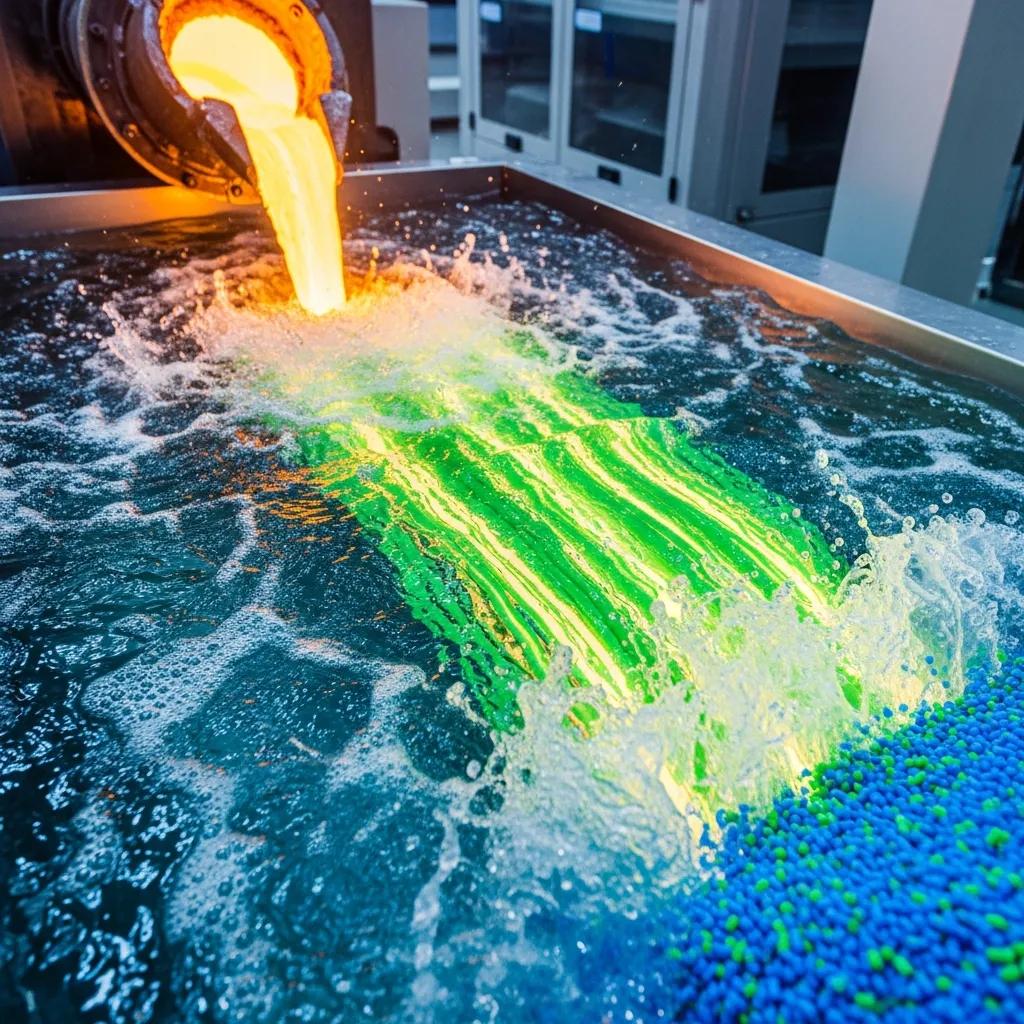
Water cooling enhances pelletizing efficiency by accelerating heat removal from extruded polymer, producing a rapid solidification front that preserves pellet geometry and reduces post-cutting deformation. Heat transfer in water is faster than in air due to higher thermal conductivity and heat capacity, so cooling times drop and knives can operate at higher speeds without smearing or elongation. The result is more uniform pellets with improved surface finish, narrower size distribution and better retention of melt flow characteristics, which reduces rejects and improves downstream processing consistency. Faster cooling also enables higher line throughput margins; operators can tune water temperature and circulation to balance cooling rate against energy and water use for optimal productivity.
This thermal advantage leads directly into equipment choices and component interactions that determine practical performance in a production line and informs decisions about pumps, chillers and bath sizing in the next section.
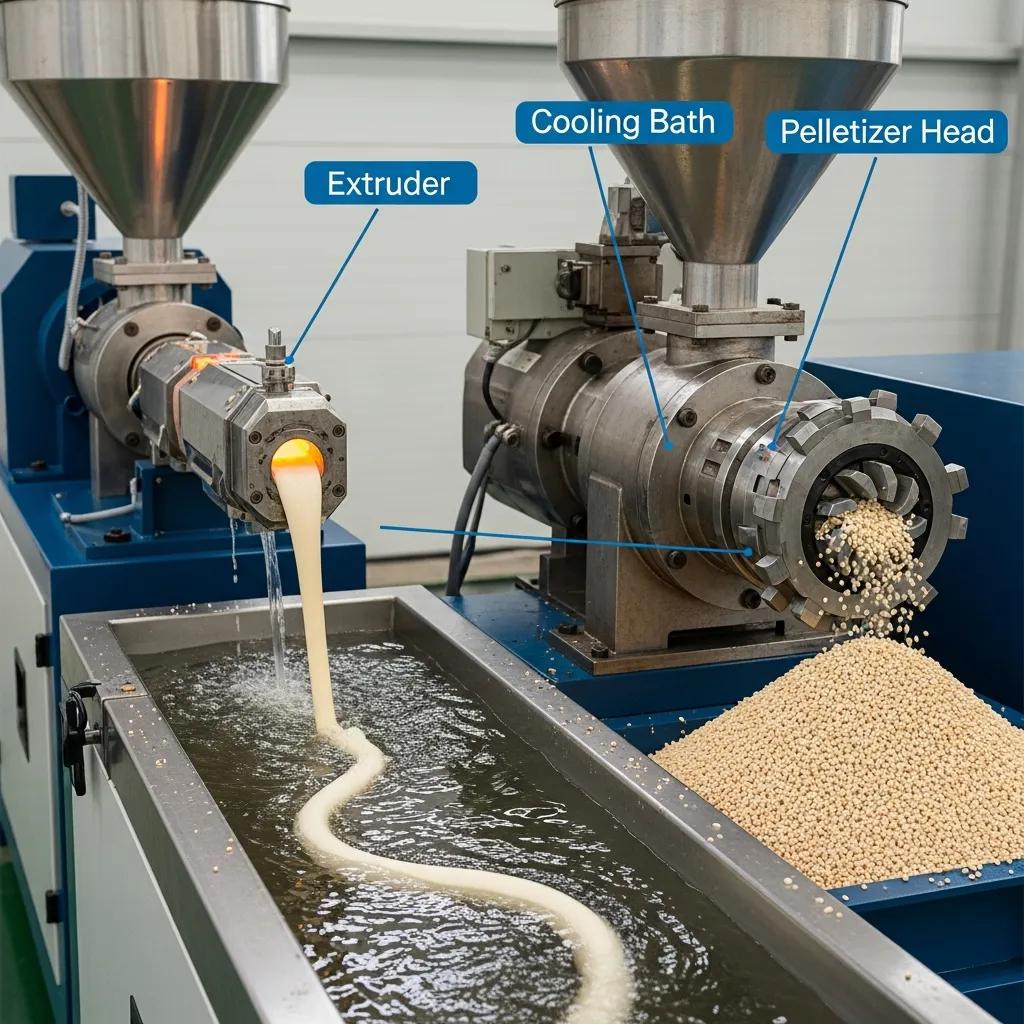
A typical water-cooled pelletizing machine comprises several integrated components that together control melt, cooling and pellet formation: extruder, die head, cooling bath (water tank), pelletizer head (water-ring or underwater pelletizer), cutting knives, water circulation pump, and industrial chiller or heat exchanger. The extruder provides melting and homogenization; the die shapes the extrudate; the cooling bath and circulation system control cooling rate and remove heat to the chiller; the pelletizer head and knives determine pellet geometry and cut speed; and the chiller maintains bath temperature for stable operation. Each component’s specification — screw geometry, die size, pump flow rate, chiller capacity — affects final pellet quality and must be matched to feedstock viscosity and target throughput.
Understanding these parts clarifies where maintenance focus should be placed and how system tuning (e.g., pump flow vs bath temperature) impacts cooling uniformity and pellet consistency on continuous lines.
Water cooling in plastic film recycling machines delivers several operational, quality, and economic advantages compared with air-cooled alternatives, particularly for thin-film feedstocks and heat-sensitive polymers. Rapid convective cooling reduces thermal residence time and prevents excessive chain scission or discoloration, while uniform bath conditions produce consistent pellet surface finish and size. Operationally, water baths allow higher cutting speeds and throughput, reduce particulate carryover and offer easier downstream separation of fines and contaminants. Energy comparisons frequently favor water-cooled systems when paired with efficient chillers and recirculation because they consolidate cooling into a smaller footprint than large forced-air systems for equivalent capacity.
Key benefits are summarized below with short explanations and measurable outcomes:
The following table maps benefits to mechanisms and practical outcomes to aid decision-making when evaluating water-cooled systems.
| Benefit | Mechanism | Practical Outcome |
|---|---|---|
| Improved granule quality | Rapid, uniform convective cooling | Smooth surface finish and narrow size distribution |
| Reduced material degradation | Shorter thermal residence time | Better retention of mechanical/flow properties |
| Higher throughput | Faster solidification enables higher cut rates | Increased kg/h production capacity |
| Energy consolidation | Centralized chiller and recirculation | Smaller footprint and predictable energy profile |
This mapping helps buyers and operators quantify expected improvements and align equipment choices with production goals. At the end of the equipment lifecycle, access to reliable after-sales maintenance and customization further preserves these benefits.
Plastic Bag Machine South Africa supports buyers with service-oriented options including after-sales maintenance, customization and final inspection protocols to ensure machines operate at designed performance levels. Their stated propositions — simple operation, perfect performance, easy maintenance, timely after-sales service, 100% final inspection, strong R&D, one-stop customization, strong production capacity, competitive prices, and fast delivery — help operators bridge specification to deployment when selecting water-cooled pelletizers.
Water cooling improves granule quality by producing a controlled, rapid solidification front that reduces surface melt distortion and prevents elongation or welding of adjacent pellets, which preserves roundness and size consistency. The mechanism limits exposure to elevated temperatures after extrusion, which reduces oxidation and chain-scission events that cause discoloration and loss of molecular weight. For recycled films, these improvements help maintain melt flow index and tensile properties, improving the reprocessed material’s usability in higher-value applications. Operators should pair proper filtration and degassing upstream with water cooling to maximize quality gains while managing potential moisture pickup prior to drying.
Maintaining optimized cooling bath temperature, circulation rates, and separation methods directly limits moisture-related issues and ensures pellet quality is preserved through drying and storage stages.
Water cooling tends to be more energy efficient than air cooling on a per-kilogram basis when systems are engineered with efficient chillers, heat recovery and recirculation because water’s heat capacity removes more heat per unit energy than forced air. Instead of large-volume fans and extended air ducts, water systems concentrate cooling in a closed-loop with a chiller that transfers heat efficiently to a refrigerant cycle or heat sink. Pump and chiller energy can be scaled to load, and waste heat from the chiller can sometimes be reclaimed for facility heating. Operational energy differences depend on line load, ambient conditions and system design, but properly sized water cooling with modern chillers typically yields lower overall electrical demand for equivalent throughput.
This energy profile informs lifecycle cost assessments and supports environmental goals when paired with water treatment and efficient refrigeration controls.
Water-cooled pelletizers are well suited to polyolefin films and rigid polyolefins such as HDPE, LDPE and PP, as these materials solidify cleanly in water baths and benefit from fast cooling to preserve properties. Typical waste sources include blown film scrap, post-consumer film bales, industrial offcuts and contaminated trim that has been pre-washed and dewatered. Water cooling also handles many mixed polyolefin streams where similar melting points allow consolidation, though highly polar or hygroscopic polymers may require alternative handling. Recognizing feedstock composition and pre-processing requirements is critical to selecting the correct die, screw design and bath parameters for consistent pellet quality.
The following table maps common materials to sources and processing notes to assist feedstock decisions.
| Material | Typical Waste Source | Processing Notes |
|---|---|---|
| HDPE | Agricultural film, bottle caps, heavy-duty sacks | Requires thorough washing and decontamination; benefits from fast cooling to avoid warping |
| LDPE | Retail film, shopping bags, stretch film | Thin films need controlled feed rates and flake sizing for stable extrusion |
| PP | Rigid parts, some films and thermoformed scrap | Higher melt temperature; adjust chill temperature and screw profile accordingly |
Below is a concise list summarizing suitability and quick processing notes for featured polymers:
HDPE and LDPE films usually enter the line as washed and dewatered flakes or shredded film; consistent flake size and low contamination levels enable steady feeding into the extruder. Process parameters emphasize gentle but thorough melt homogenization, filtration for contaminants, and controlled die-throughput to produce an extrudate diameter compatible with the chosen pelletizer head. In the water bath, HDPE’s higher crystallinity benefits from slightly warmer bath temperatures to avoid thermal shock, while LDPE’s lower stiffness responds well to rapid cooling to lock in shape. Effective separation, drying and screening after cutting complete the flow and reduce reintroduction of fines.
Practical performance expectations for film feedstocks depend on feed consistency and pre-wash quality; operators should prioritize consistent input preparation to realize the material benefits of water cooling.
Water cooling systems can effectively recycle PP and many compatible plastics provided process temperatures, screw design and cooling bath settings are adjusted to the polymer’s thermal properties. PP has a higher melting point and different crystallization behavior than PE, so extruder torque, die sizing and chiller capacity must be sized appropriately. For mixed streams or polymers with differing melt points, separation or blending strategies are necessary; sometimes alternative pelletizing methods (e.g., strand air cooling or underwater pelletizing with tailored temperature profiles) are preferable. Operators handling broader polymer types should evaluate thermal stability, contamination risk and required downstream properties before selecting a water-cooled approach.
These material-specific considerations emphasize the importance of matching machine configuration and operational controls to feedstock chemistry for reliable pellet quality.
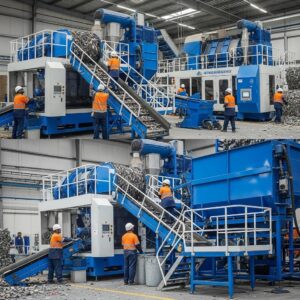
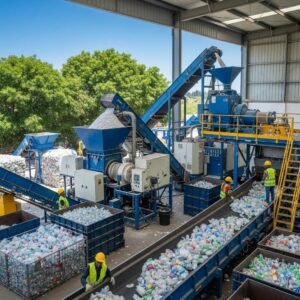
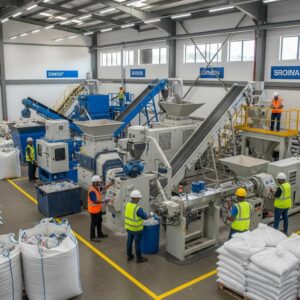
Industrial recycling solutions integrate water cooling technology as a central thermal control element in continuous pelletizing lines, pairing shredders and washing systems upstream with extruders, filtration, cooling baths and pelletizers downstream. Water cooling is usually combined with active water circulation, solids separation and chiller systems that remove heat and maintain consistent bath temperatures for long runs. Integration extends to water treatment and filtration to manage fines and contaminants, as well as to dryers and screening systems that condition pellets for storage or sale. Proper layout and modular design allow facilities to scale throughput by adding parallel extruder-pelletizer modules while sharing central chillers and water treatment infrastructure for efficiency.
System-level planning includes piping, pump sizing and chiller redundancy to avoid bottlenecks and ensure stable pellet quality during high-load runs.
In granulation systems, water cooling ensures that granules formed by cutting remain dimensionally stable and free from fuse-back or smearing that would otherwise complicate downstream drying and handling. For wet granulation processes, the bath also acts as a medium to remove fines and soluble contaminants, allowing mechanical separation and settling before drying. The temperature and flow profile in the bath influence pellet hardness and surface texture, which in turn affects drying time and pellet flowability. Operators must manage solids load in the recirculation loop and use screens or decanting systems to maintain bath quality and consistent granule geometry.
This operational role connects directly to water treatment and solids management strategies that ensure continuous, predictable granulation performance in industrial settings.
For high-volume lines, water cooling is scaled through larger baths, higher-capacity circulation pumps and appropriately sized chillers that maintain bath setpoints under heavy heat loads. Engineering considerations include pump flow rates, heat-exchanger sizing and bath residence times to ensure complete solidification at high extrudate mass flow. Modularization — using multiple extruder-pelletizer units feeding shared chillers and water treatment — supports incremental capacity growth without duplicating fixed infrastructure. Controls for automatic temperature regulation and flow balancing are essential to prevent local hotspots and to keep pellet geometry consistent across extended production runs.
Scaling considerations underline the trade-off between capital for larger chillers and operational gains from increased throughput and consistent pellet quality.
Buyers selecting a water cooling plastic pelletizer should evaluate feedstock type and contamination level, required hourly production capacity, energy consumption profile, footprint and layout constraints, maintenance access, and local after-sales support availability. Feedstock chemistry and physical form dictate screw design, die size and pelletizer head choice, while capacity targets determine motor sizes and pump/chiller specifications. Energy considerations include chiller efficiency and pump power; maintenance needs hinge on accessibility of knives, screens and wear parts. Local service support, spare-part availability and supplier customization capability are crucial in markets such as South Africa to minimize downtime and ensure rapid parts replacement.
The checklist below summarizes decision criteria for quick assessment before technical comparisons.
These selection factors prepare buyers for a technical specification phase where model differences become important; the table below compares typical model attributes to help match needs to equipment.
| Model Series | Screw Diameter / Motor | Typical Production Capacity (kg/h) | Footprint / Notes |
|---|---|---|---|
| SJ-C100 | Small screw / modest motor | Lower-capacity bench to small-line use | Compact footprint for pilot lines |
| SJ-C120 | Medium screw / medium motor | Moderate production suitable for small plants | Balanced capacity and energy |
| SJ-C140 | Larger screw / higher motor power | Higher throughput for medium plants | Requires larger chiller and pump |
| SJ-C160 | Largest screw / high-power motor | High-capacity industrial lines | Suit large-volume recycling operations |
Plastic Bag Machine South Africa (operating under Kingdom Machinery Co., Ltd.) supplies the SJ-C100/C120/C140/C160 water cooling plastic recycling machine models for HDPE, LDPE and PP applications and offers one-stop customization, timely after-sales service, 100% final inspection, and competitive pricing. Prospective buyers should request a quotation that specifies required feedstock, target capacity and local service expectations to ensure model selection aligns with operational needs.
Model variations mainly alter screw diameter, motor power, die size and the capacity of cooling and separation subsystems, which together determine maximum continuous throughput and the robustness of contamination handling. Smaller models like SJ-C100 suit pilot or low-volume applications and prioritize compact footprint and lower power draw, while larger models such as SJ-C160 increase mass throughput, require larger chillers and heavier-duty extruder components, and support more aggressive filtration. Feature differentials can include automation level, feed-hopper design, integrated filtration options and options for underwater vs water-ring pelletizers, which influence OEE and labor requirements during operation.
Choosing the right model balances present capacity needs with anticipated growth and maintenance capabilities, and should consider spare-part lead times and local serviceability.
Maintenance for water-cooled pelletizers typically includes scheduled inspection and replacement of cutting knives, monitoring and replacement of extruder screens, lubrication of bearings, chiller servicing, and pump maintenance to prevent cavitation and maintain flow. Users should expect routine checks every production shift for wear indicators and periodic chiller and pump servicing per manufacturer schedules. In South Africa, selecting a supplier with local after-sales service and parts inventory reduces downtime risk; service options can include remote troubleshooting, on-site technician visits and training for operator maintenance tasks. Clear SLAs for response times and spare-part shipping, plus documented maintenance checklists, keep lines running at designed throughput and protect production targets.
Proactive maintenance and a supplier commitment to timely service are essential to sustain pellet quality and throughput over the equipment’s operating life.
Efficient water-cooled recycling systems support sustainability by improving yield and quality of mechanically recycled pellets, reducing demand for virgin resins and lowering lifecycle emissions associated with plastic production. By producing higher-quality regranulate, recyclers can more readily substitute recycled content into manufacturing feedstocks, closing material loops and extending product life cycles. Energy-efficient chillers and recirculation practices reduce operational carbon intensity, while centralized water treatment and reuse lower freshwater demand. Together, these technical advantages align machinery-level efficiency with broader circular-economy goals such as increased recycling rates and responsible resource use.
Connecting machine performance to end-market acceptance accelerates the displacement of virgin polymers and supports industry-wide material loop closure efforts.
Water-cooled pelletizers can materially increase local recycling capacity by enabling higher-quality output from widely available film and polyolefin waste streams, thereby creating feedstock for local manufacturers and reducing exports of low-value scrap. Improved pellet quality broadens market acceptance for recycled content, which in turn drives demand for collection and pre-processing infrastructure. When matched with local service and spare-part networks, these machines support resilient recycling operations and can form the backbone of municipal or private recycling initiatives that aim to divert plastic from landfill. The combination of performance, after-sales support and customization helps accelerate practical deployment of recycling capacity in diverse South African contexts.
This operational impact is realized when technology choice is paired with feedstock logistics, water management, and downstream buyer engagement.
Water-cooled recycling systems align with circular economy principles by enabling mechanical recycling that keeps polymers in use, reduces virgin material extraction and lowers embodied emissions in downstream products. By improving pellet quality and yield, they enhance the economic case for recycled content and encourage product designers to specify recycled feedstocks. Energy efficiency, water recirculation and centralized treatment are technical levers that reduce resource intensity while supporting regulatory and corporate targets for waste reduction and recycled content. Implemented at scale, these systems contribute to national environmental goals by turning waste into reliable feedstock streams that close material loops and support sustainable manufacturing.
Operators and procurement teams should evaluate machines not only on throughput but on their ability to deliver consistent quality and resource-efficient operation to maximize circular-economy benefits.
These strategic outcomes show how equipment decisions cascade into broader environmental and economic benefits when combined with proper operational practices and supplier support.
Plastic Bag Making M
Plastic Recycling So
Plastic Recycling So
Plastic Recycling So