
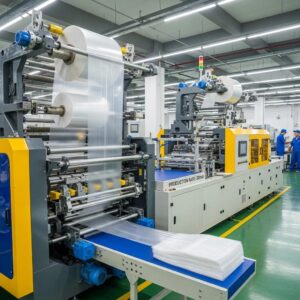
Plastic Bag Making Machines for Sale in Pretoria
Plastic Bag Making M
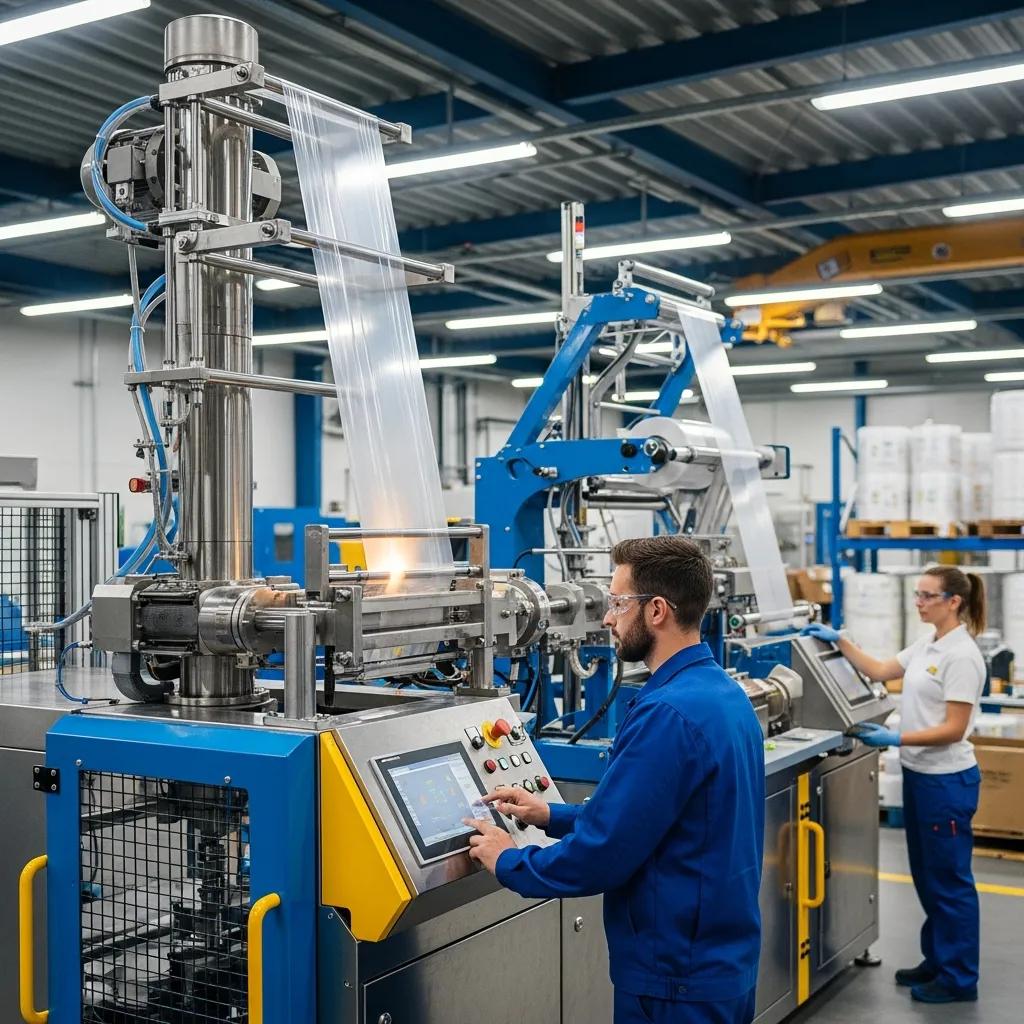
Blown film extrusion is the industrial process that converts thermoplastic resin into continuous tubular film for packaging, shrink wrap, agricultural sheeting and a wide range of flexible products. This guide explains how blown film extrusion works, which machine types and layer configurations suit different applications, and practical buying criteria for manufacturers and converters in Stellenbosch and the Western Cape. For local sourcing, Plastic Bag Machine South Africa offers blown film extrusion lines, plastic bag making machines, flexo printing machines and plastic recycling equipment that can be customised for regional needs. By the end of this guide you will understand the extrusion process, material choices (HDPE/LDPE/LLDPE/PP), mono- vs multi-layer tradeoffs, application mapping and a concrete checklist for evaluating CAPEX, OPEX and ROI when buying a new or used extruder. Read on to learn the technical basics, compare equipment options available in Stellenbosch, and follow a stepwise buying checklist to select the right blown film extruder for your operation.
Blown film extrusion machines are industrial extrusion lines that melt polymer resin, push it through a circular die, inflate the extruded tube into a stable bubble, cool and collapse the bubble, then wind the finished film for conversion. The mechanism combines an extruder screw, a circular (rotary) die head, internal bubble cooling (IBC) or external cooling, a haul-off/ nip roll unit, and a winder; together these components convert molten polymer into controlled film thickness, width and mechanical properties. The result is flexible film used for bags, laminates, shrink films and agricultural sheeting, with properties set by resin selection, screw design and layer structure. Understanding the process and the critical control points helps buyers match machine capabilities to end-product requirements and expected throughput. Below is a short process breakdown to clarify step order and control points before we examine material choices and line components in more detail.
The blown film extrusion process proceeds in clear steps:
This stepwise view shows where parameters such as screw L/D, die gap, melt temperature and cooling airflow influence gauge consistency and mechanical performance. Understanding these steps leads naturally to material choices and how different polymers affect processing.
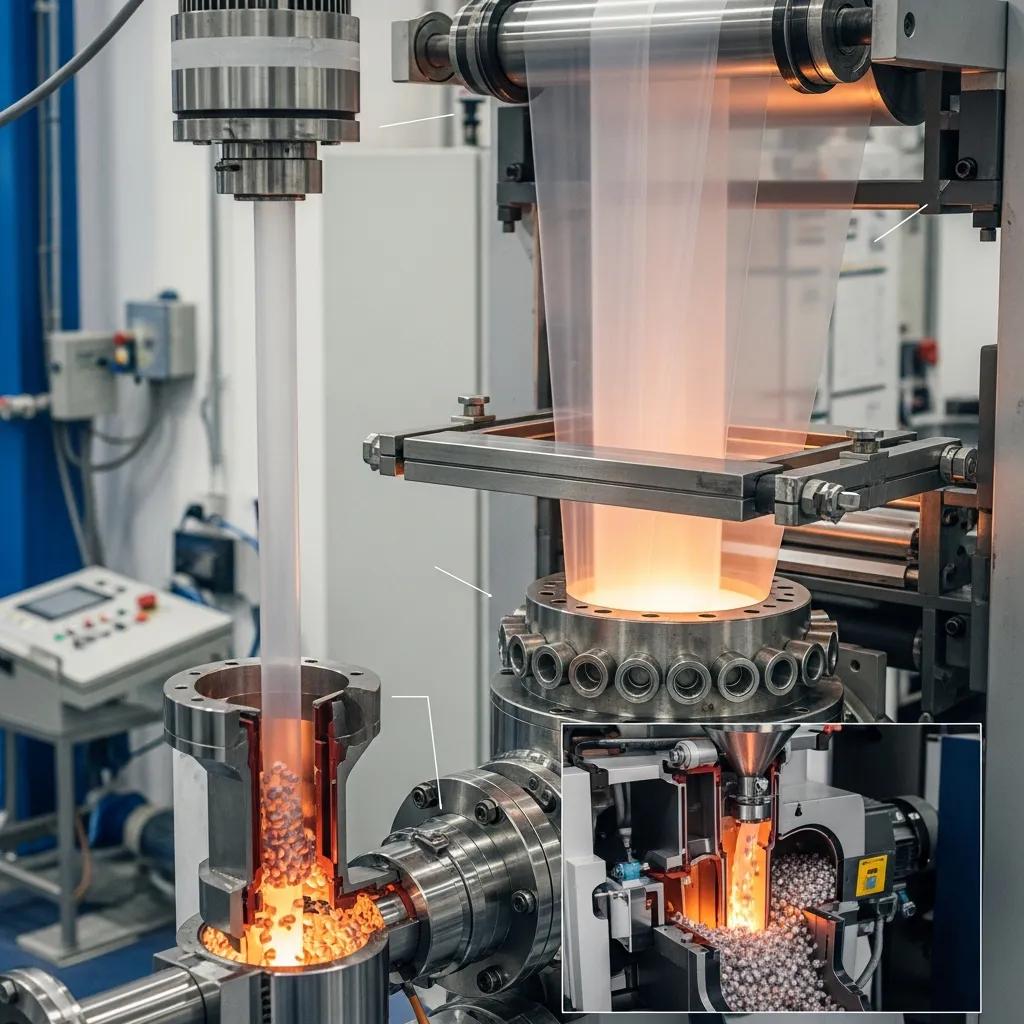
Blown film production centres on controlling melt quality, bubble stability and cooling to produce uniform film; key process variables include extruder screw geometry, melt temperature, die gap, take-off speed and IBC airflow. A longer screw L/D improves homogenisation and degassing for recycled blends, while die centring and gap precision reduce gauge variation; these component-level choices affect output rate and film properties. Practical troubleshooting focuses on stabilising the bubble (avoid flutter and oscillation), balancing cooling to prevent melt fracture, and calibrating haul-off speed with die output to maintain target thickness. Operators track mechanical measures (tensile, elongation, dart impact) and optical properties to ensure the film meets specification, and they adjust process setpoints as material or production goals change. Mastering these control points reduces scrap and improves overall equipment effectiveness on the extrusion line.
Blown film lines process several common polyolefins, each giving distinct properties and processing needs: HDPE provides stiffness and low cost, LDPE offers clarity and sealability, LLDPE improves strength and puncture resistance, and PP yields higher heat resistance and stiffness for demanding applications. Processing temperatures and melt strength differ: LDPE/LLDPE melt at lower temperatures and generally yield better elongation, while HDPE and PP require higher shear and temperature stability; screw design and die geometry must match the chosen polymer or blend. Recyclate compatibility depends on contaminant levels and melt flow index; using pelletised reclaimed resin typically requires robust degassing and consistent dosing to maintain film quality. Selecting the correct material family and optimizing screw/die/cooling parameters yields films tailored to packaging, agricultural, or industrial uses and sets expectations for downstream converting and printing.
Local suppliers and distributors serving Stellenbosch offer a range of blown film extruders from compact mini blown-film lines to medium and multi-layer production lines with rotary die heads and specialised hot-shrink PE configurations. Buyers can choose mono-layer single-screw lines for simple bag and sheeting applications, or co-extruded multi-layer (3, 5, 7) lines for barrier properties, improved sealability and product performance. Machine choice is driven by required output (kg/h), film width and thickness range, automation level and whether downstream equipment (printing, bag-making, recycling) will be integrated. Below is a compact comparison of model attributes to help match machine types to common production needs in the Western Cape.
Introductory comparison of representative machine model attributes:
| Model Family | Typical Layers | Output (kg/h) | Film Width (mm) | Thickness Range (µm) | Typical Power (kW) |
|---|---|---|---|---|---|
| Mini blown film | Mono | 30–150 | 300–700 | 10–60 | 15–30 |
| Standard mono-layer | Mono | 200–600 | 500–1200 | 20–200 | 30–100 |
| 3–5 layer co-extrusion | 3–5 | 300–1200 | 600–1600 | 15–200 | 50–150 |
| 7-layer barrier lines | 7 | 500–2000 | 800–2200 | 20–300 | 80–250 |
This table helps buyers compare hyponym machine families (mini lines, rotary die head, multi-layer) as hypernyms of the broader category of plastic processing machinery. Use the table to narrow options before inspecting machines in person; next we compare mono-layer and multi-layer tradeoffs more directly.
Mono-layer blown film extruders produce film with a single polymer melt and are simpler to set up, operate and maintain, making them cost-effective for standard grocery bags, refuse sacks and basic protective films. Multi-layer co-extrusion lines combine two or more extruders through a common die to create films with dedicated skin, core and tie layers; this architecture enables barrier properties, improved sealability and functional skins for printing or slip modification. The trade-offs are clear: mono-layer lines have lower CAPEX, simpler maintenance and fewer process control points, while multi-layer lines cost more upfront, require more skilled setup, but deliver films with superior mechanical and barrier performance for food-grade or laminated applications. Understanding this cost vs. performance dynamic helps define whether a 3-layer blend suffices or whether 5/7-layer technology is warranted for higher-value packaging.
Adding layers in co-extruded blown film lines allows designers to allocate functions—barrier, seal, mechanical core, slip or anti-block—to specific layers, improving overall film performance without compromising processability. A typical 3-layer film uses a strong core layer with thin skin layers for sealing and printability; 5-layer lines add tie or barrier layers for oxygen or aroma protection; 7-layer systems enable complex stacks combining barrier resins, recycled-content cores and engineered skins for high-performance applications. Benefits include tailored barrier, lower total film gauge for same strength, improved sealing windows and the ability to incorporate recyclate while protecting product contact surfaces. These layered configurations expand product applications from standard sacks to food packaging and technical films requiring precise mechanical and barrier profiles.
Our local offering positions practical machine features alongside measurable supply advantages: the distributor relationship and product mix focus on affordable machinery, thorough final inspection and local support that reduces installation friction. The allowed business information indicates affordable pricing through large-scale production, 100% final inspection to keep defect rates low, and visible delivery timelines that support quick sampling and bulk fulfilment. For South African buyers seeking a one-stop equipment solution, these capabilities—combined with on-demand customisation and R&D support—help reduce procurement risk and shorten time to production. Read on for specific evidence points and the after-sales commitments that back machine performance and uptime.
How the supplier ensures competitiveness and reliability:
These operational strengths support buyers in Stellenbosch who need predictable delivery and value-oriented equipment choices; the next subsection details the production and warranty specifics that underpin these claims.
Concrete operational advantages stem from production capacity and quality measures: the manufacturing partner operates multiple production lines and dedicated R&D testing equipment that enable consistent manufacturing and pre-shipment verification. Large-scale production lowers unit cost, which translates into competitive pricing for buyers, while the final inspection process reduces the likelihood of shipping defective components. Delivery cadence that includes rapid sample shipping (approximately three days) and bulk runs within roughly 15–20 days helps converters accelerate test runs and scale up quickly. These production and logistics characteristics combine to make customised blown film solutions more accessible to regional manufacturers.
After-sales support focuses on practical service items that protect buyer investment and speed troubleshooting: warranty coverage includes a two-year warranty on electrical components (such as timer switches), and the provider promotes one-stop customisation with R&D assistance to adapt lines to local material blends or downstream converting needs. Local operators benefit from technical guidance during commissioning and access to R&D testing equipment for process validation before full production. While spare-parts logistics and formal local service levels depend on specific arrangements, buyers can expect structured handover support and collaboration on machine adjustments during initial runs. This support framework increases the likelihood of a smooth ramp-up and consistent film quality.
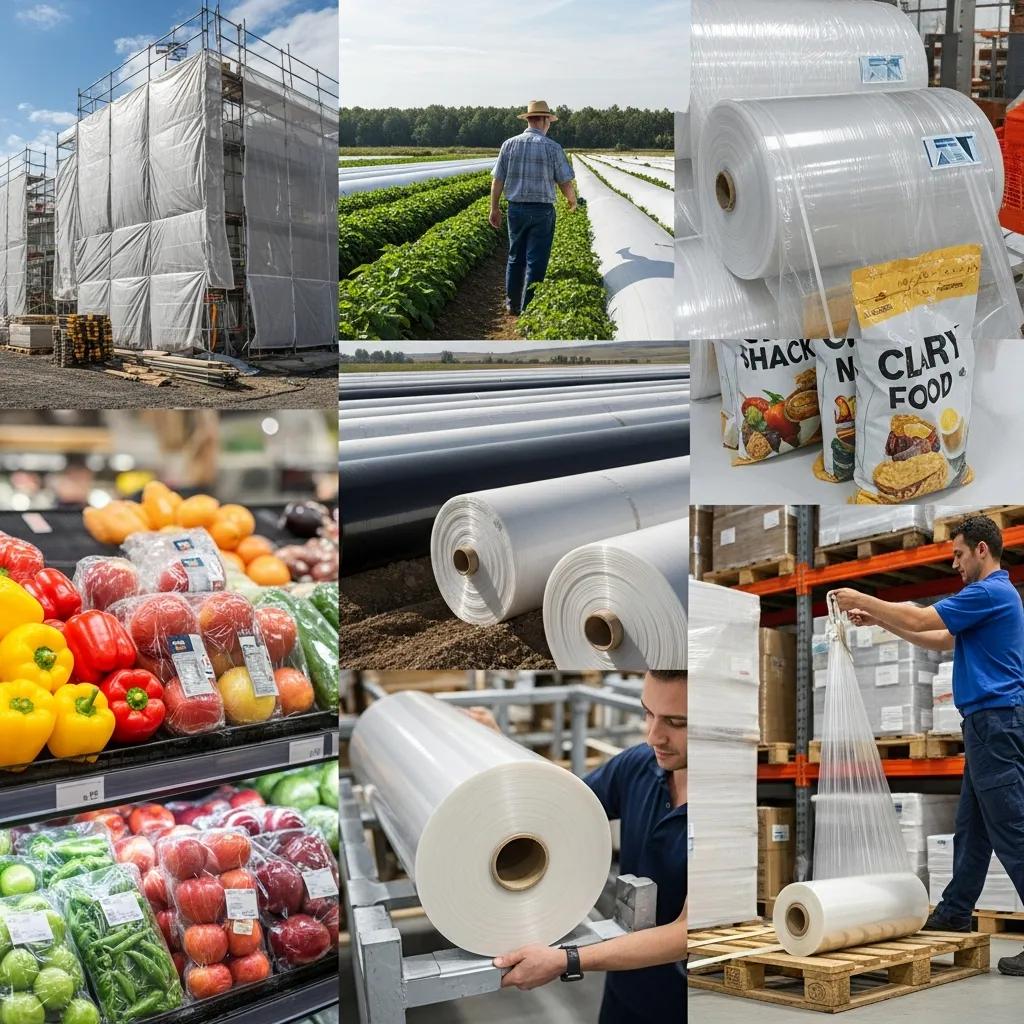
Blown film extrusion machines serve distinct sectors across the Western Cape, producing films for flexible packaging, agricultural films and construction protection sheeting—each application demands tailored machine configurations and material selections. Packaging films vary from grocery bags to food-grade laminates requiring barrier layers; agricultural films need UV stabilisation and puncture resistance; construction films emphasise tear-resistance and weather protection. Mapping applications to machine features helps buyers select layer counts, resin families and output rates that align with end-product performance and market pricing. The table below pairs common applications with recommended machine types and materials to facilitate practical equipment decisions.
Application mapping to guide machine selection:
| Application | Recommended Machine Type / Layers / Materials | Why Recommended / Example End-Products |
|---|---|---|
| Retail bags & sacks | Mono-layer or 3-layer / LDPE, LLDPE | Cost-effective, sufficient strength for grocery and refuse bags |
| Food packaging & laminates | 5–7 layer co-extrusion / LLDPE + barrier layers | Improved shelf life, seal integrity and printable skins |
| Agricultural film | 3-layer with UV-stabilised LLDPE/LDPE | Durable greenhouse & silage films, high puncture resistance |
| Construction sheeting | Mono or multi-layer HDPE/PP blends | Damp-proof membranes, protection sheeting with tear resistance |
This mapping clarifies how layer architecture, polymer choice and line capacity translate into usable film products for Western Cape industries. Next we illustrate specific use cases and integration with recycling equipment to close the production loop.
In packaging, co-extruded multi-layer lines enable food-safe films, printed pouches and shrink films where barrier and seal layers are essential for product protection and branding. Agricultural uses include greenhouse covers, mulch film and silage wrap where UV stabilisers and toughness are priorities; these applications often use LLDPE blends and wider layflat widths. Construction films and protective sheeting require high tear strength and dimensional stability, frequently produced on mono-layer HDPE lines or multi-layer lines using reinforced core layers. Choosing the correct configuration ensures film meets regulatory and performance specifications for each sector and simplifies downstream converting or printing operations.
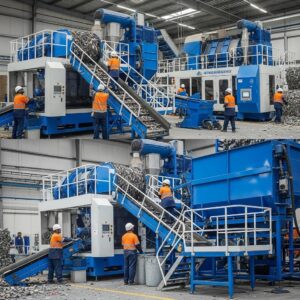
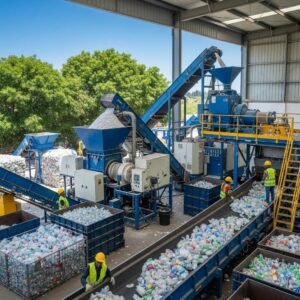
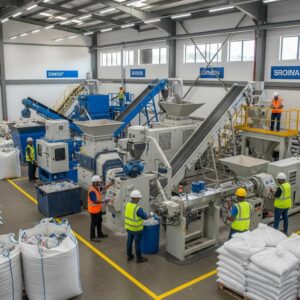
Recycling machines—granulators, wash lines and pelletisers—convert post-industrial or post-consumer film waste into reprocessed pellets that can be blended into blown film recipes, reducing material cost and environmental footprint. Typical integration involves collecting film scrap, cleaning and pelletising into recyclate, then dosing recyclate into the feed stream via gravimetric dosing systems to control blend ratios. Quality control focuses on contaminant removal and consistent melt flow index to avoid process instability; many converters target 10–30% recyclate in finished film depending on product requirements. Proper integration reduces material costs and supports circularity while requiring careful process controls to maintain film performance.
Selecting the right blown film extruder requires balancing required output, material compatibility, layer architecture, automation and energy efficiency against CAPEX and expected ROI. Start by defining target products, required film width and thickness range, and annual throughput; then evaluate extruder screw diameter and L/D, die type, presence of rotary die head, IBC cooling, gravimetric dosing and automation features. A clear procurement checklist simplifies machine comparisons and supports informed decisions between new and used equipment. The checklist below outlines the core technical and commercial criteria buyers should verify during evaluation and negotiation.
Core buying checklist:
This checklist helps structure supplier evaluations and supports ROI calculations; below is a cost-factor table to assess major CAPEX and OPEX drivers relevant to Stellenbosch buyers.
Understanding CAPEX and OPEX drivers clarifies payback expectations: major capital influences include extruder size, number of extruders for co-extrusion, die complexity and automation level, while operational costs come from energy consumption, labor, maintenance and raw materials. Energy-efficient drives, higher automation and reliable screw/die components reduce OPEX and downtime, improving long-term ROI despite higher initial CAPEX. Below is a structured view of cost factors and their qualitative impacts to guide financial modelling.
| Cost Factor | Impact on CAPEX/OPEX/ROI | Guidance / Typical Range |
|---|---|---|
| Extruder size & screw count | High CAPEX | Larger screws and multiple extruders increase upfront cost but raise throughput |
| Automation & control systems | Medium–High CAPEX, lowers OPEX | Invest to reduce labor and improve process stability |
| Energy consumption | OPEX driver | Energy-efficient components shorten payback in high-run-rate plants |
| Maintenance & spare parts | OPEX driver | Availability of local spares reduces downtime and operating risk |
These qualitative ranges help buyers prioritise investments and estimate payback; the next subsection outlines where to find machines in South Africa and what to check for used equipment.
Buyers can source equipment from local distributors representing overseas manufacturers, direct-from-manufacturer purchases, or used-equipment marketplaces and brokers; each route has trade-offs in pricing, warranty and local support. When considering used machines inspect screws, gearboxes, control panels, die condition and spare parts availability; confirm that the seller provides test runs and clear documentation. Logistics and installation planning for Stellenbosch should include rigging, electrical compatibility and commissioning supervision. Plastic Bag Machine South Africa is a local-facing supplier that offers blown film extrusion equipment, plastic bag making machines, flexo printing and recycling lines, and lists production capacity and inspection practices that can simplify procurement and customisation processes.
This sourcing guidance complements the earlier checklist, enabling buyers in Stellenbosch to weigh price, risk and support when choosing between new and used machines.
Plastic Bag Making M
Plastic Recycling So
Plastic Recycling So
Plastic Recycling So