
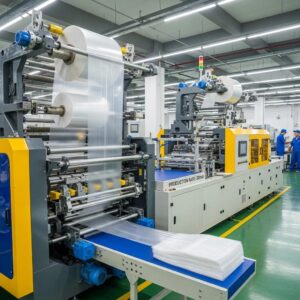
Plastic Bag Making Machines for Sale in Pretoria
Plastic Bag Making M
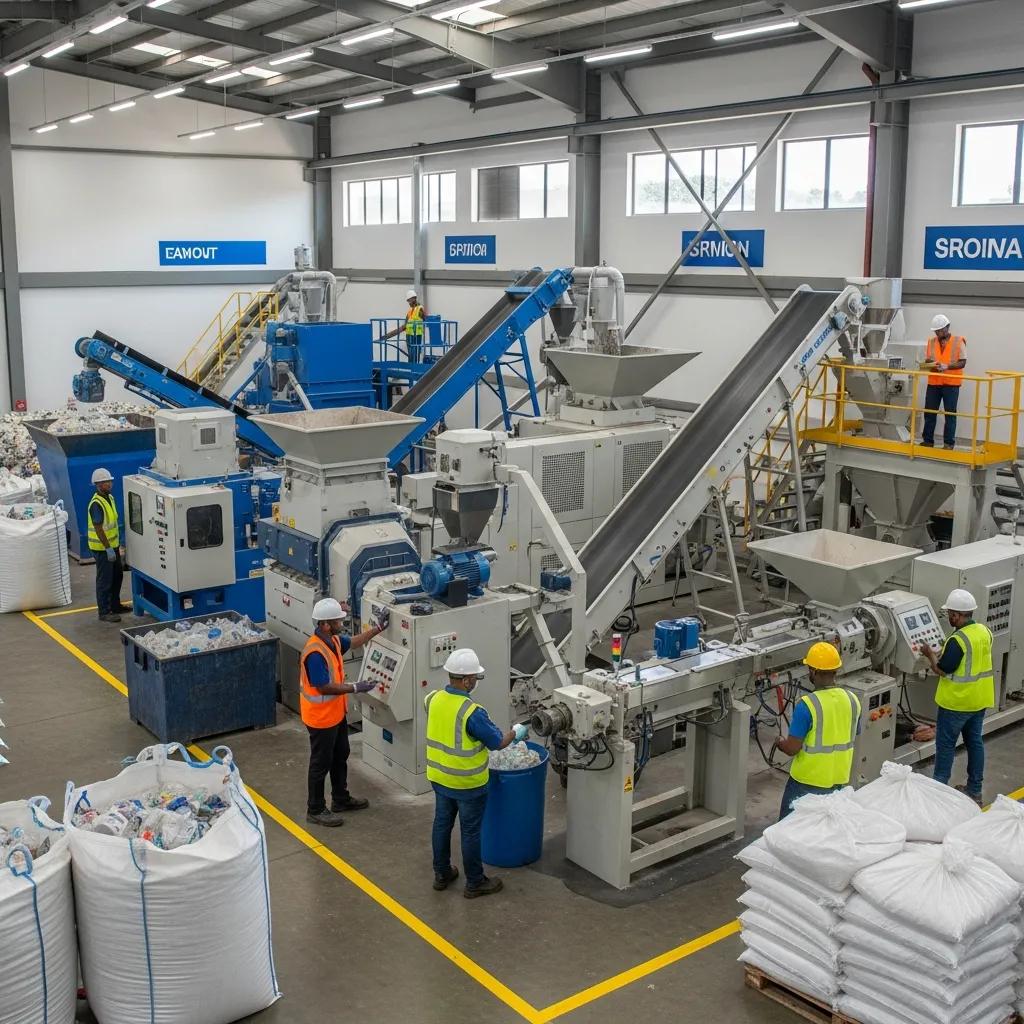
Plastic waste volumes and post-industrial scrap present a clear operational and environmental challenge for Pietermaritzburg businesses, but they also represent a recoverable resource when processed correctly. This article explains which plastic recycling machines and plant components are practical for local operators, how those machines interconnect from shredding to pelletizing and film production, and the decision criteria to select equipment that matches throughput, budget, and contamination levels. Readers will learn about industrial shredders, granulators, pelletizers, extrusion and blown film lines, and the supporting washing and melt-filtration systems that turn mixed film and rigid scrap into usable recycled plastic pellets. The guide also covers plant workflows specific to KZN conditions, measurable environmental benefits, and step-by-step implementation advice including pilot projects, staff training, and maintenance planning. Throughout, targeted keywords such as plastic pelletizer machine KZN, plastic recycling machine Pietermaritzburg, and industrial plastic shredder are integrated to help buyers locate relevant solutions and make informed procurement decisions.
Plastic recycling machines available to local buyers span pre-processing through finishing stages, each serving a specific role in converting waste into recycled pellets or finished film. Shredders and granulators handle size reduction; washing systems remove contaminants and dry material; extruders and pelletizers melt and reform plastic into recycled pellets; blown film extrusion and flexo printing lines convert pellets back into film and bags. Understanding these classes clarifies where to invest for in-plant recycling or a standalone recycling operation and how capacity and material type influence machine choice.
The quick comparison table below helps match machine classes to typical throughput and primary use-cases for business buyers in KZN.
| Machine Class | Typical Throughput (kg/hr) | Primary Use |
|---|---|---|
| Industrial Shredder | 50–800 | Pre-processing bulky or film scrap to manageable pieces |
| Plastic Granulator | 20–400 | Produce uniform flakes for washing and reprocessing |
| Plastic Pelletizer | 30–500 | Convert melt into rPP/rPE pellets for re-use or sale |
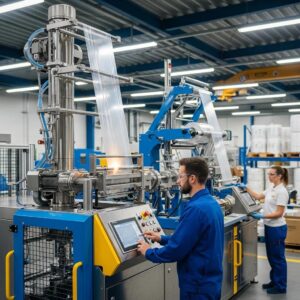
| Blown Film Extrusion Line | 50–600 | Produce film and bags from virgin or recycled pellets |
This table clarifies common capacity bands and intended applications so buyers can shortlist equipment based on feedstock and production goals. Local suppliers and lead-generation services can connect operators with machines that match these capacity ranges and provide installation support.
A plastic recycling machine reduces waste costs and secures a secondary raw-material stream while enabling value capture through internal reuse or sales of recycled pellets. By converting post-production film or rejected bags into usable rPE or rPP pellets, manufacturers can lower virgin resin purchases by a measurable percentage and reduce disposal fees. Using on-site recycling also shortens supply chains and improves resilience to raw-material price volatility, while creating opportunities for vertical integration into blown film or bag-making.
Practical examples include converting 500 kg/day of film scrap into pellets that offset part of a converter’s resin purchases, or a packaging plant integrating a pelletizer to supply a small blown-film extruder for internal bag production. These operational gains support broader sustainability reporting and can be monetized through pellet sales if capacity exceeds in-house consumption, making recycling machines a strategic asset for cost control and circularity.
A high-quality plastic pelletizer for KZN operators balances throughput, energy efficiency, and robust melt filtration to handle variable contamination levels common in post-industrial scrap. Key technical features include screw L/D ratios optimized for the polymer type, corrosion- and wear-resistant screws and barrels, reliable melt filtration or screen changers, and precise temperature and back-pressure controls to maintain pellet quality. Local serviceability—availability of spare parts and trained technicians—is equally important for minimizing downtime in regional installations.
Buyers should request datasheets with kW ratings, throughput guarantees, L/D ratios, and sample pellet specifications, and verify that maintenance support and wear parts are available locally. Selecting pelletizers that accommodate regrind and include degassing or melt filtration improves final pellet clarity and yield, which in turn raises the economic return on recycling investments.
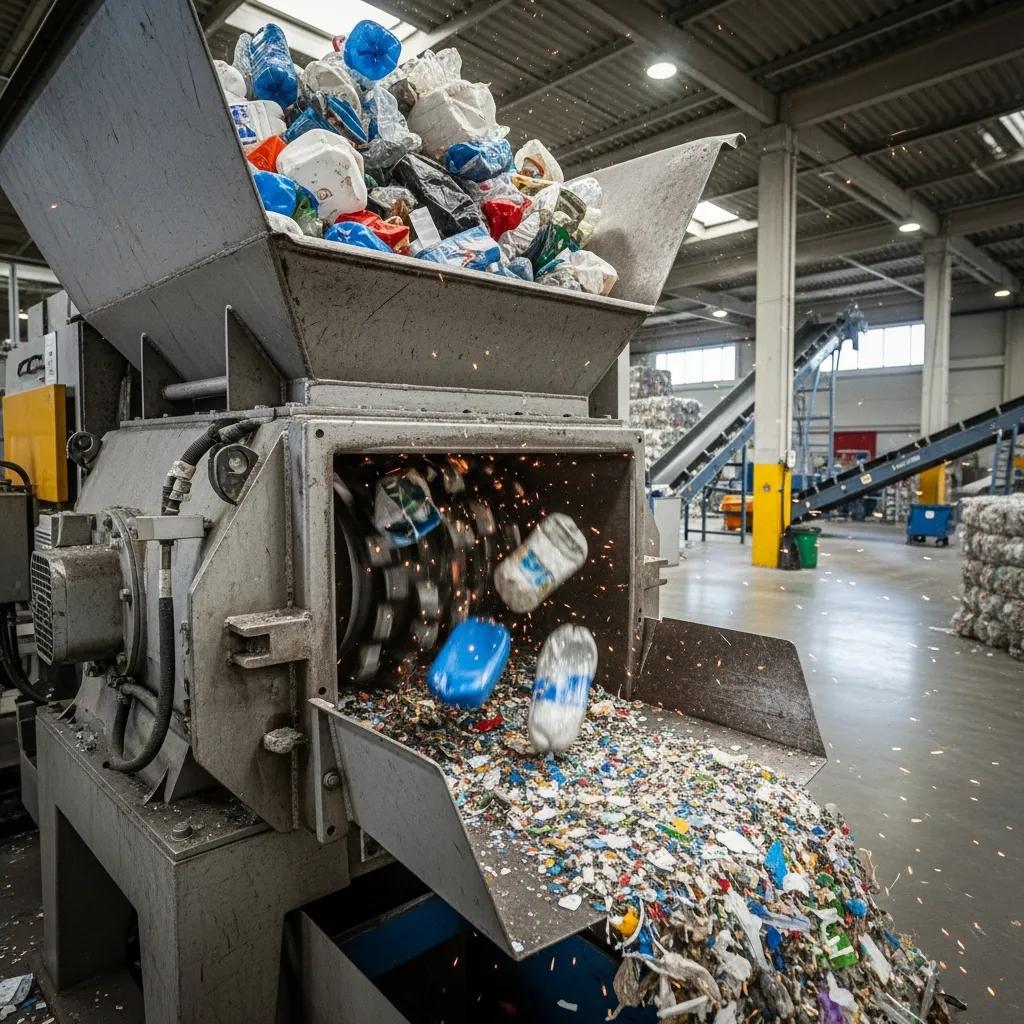
Industrial plastic shredders are foundational because they create consistent feed material that downstream granulators and extruders can process more efficiently, reducing jam risks and energy consumption. A shredder’s rotor design, cutting chamber geometry, and available screens determine particle size distribution and throughput, which directly affects washing efficiency and melt uniformity. By reducing large, irregular scrap into a predictable flake size, shredders improve metering into granulators and extruders and lessen the load on melt filters.
When choosing a shredder, operators should evaluate rotor type (single- vs multi-shaft), screen perforation sizes, motor kW sizing relative to expected loads, and access to wear parts. Properly matched shredders can reduce processing time per kilogram and improve overall plant throughput while lowering the frequency of manual interventions.
The core benefits of shredders are:
These performance gains translate into measurable reductions in energy per kg processed and fewer production interruptions, which supports both economic and sustainability goals for recycling operations in Pietermaritzburg.
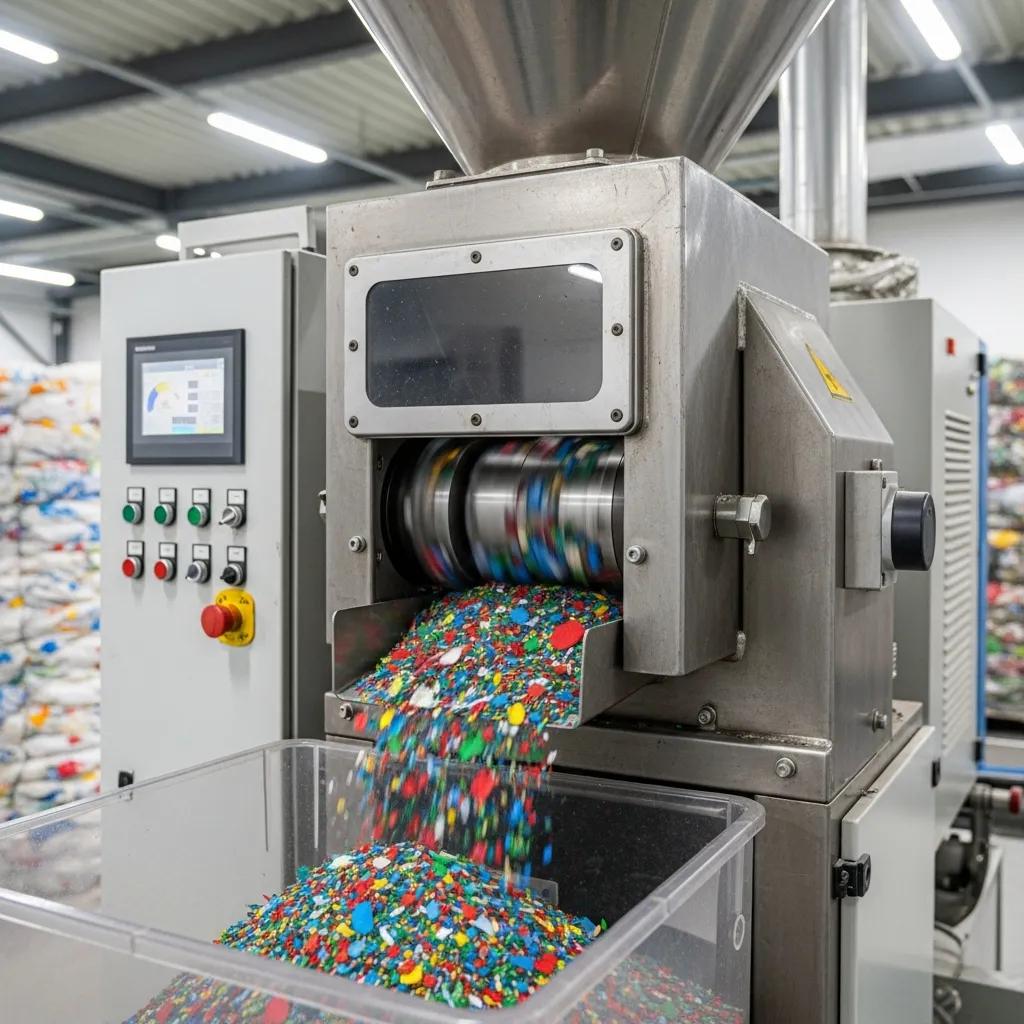
Plastic granulators produce uniform flakes that are ideal for washing systems and controlled feeding into extruders, making them especially valuable for in-plant recycling of production scrap. Compared with coarse shredding, granulation yields smaller, consistently sized particles that dry and wash more effectively and melt more uniformly, improving extrusion efficiency and pellet quality. Granulators designed for film and thin-gauge scrap often include specialized feed systems and knife geometries to prevent wrapping and minimize wear.
Selecting granulators involves assessing screen sizes, rotor speed, knife configuration, and ease of blade replacement to minimize downtime. For South African plants dealing with mixed film grades, robust granulators paired with effective washing improve reclaimed material yield and produce flakes suitable for pelletizing or direct extrusion into lower-gauge film.
Shredders enable measurable waste diversion by transforming bulky scrap into feedstock that can re-enter production, reducing landfill volumes and associated disposal costs. The ability to process and reuse internal scrap lowers the demand for virgin resin, which in turn reduces the embodied carbon of finished products through a circular-materials approach. These practices support corporate sustainability reporting by providing concrete metrics—tons diverted, kilograms of virgin resin avoided, and energy saved per tonne processed—that demonstrate progress toward circular-economy goals.
Recording diverted tonnage and calculating avoided virgin resin purchases helps quantify the financial and environmental benefits for stakeholders. By embedding shredding and granulation into operational workflows, companies in Pietermaritzburg can show direct contributions to local waste reduction and job creation while improving resource efficiency across manufacturing lines.
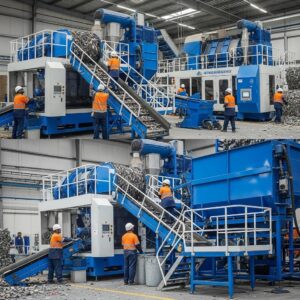
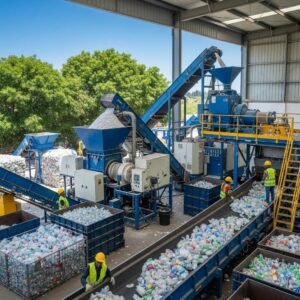
A typical recycling plant comprises reception and sorting, washing and drying, size reduction (shredding/granulation), extrusion and pelletizing, and finishing systems such as blown film extrusion or printing. Each component plays a specific role: sorting separates polymer types and contaminant streams; washing removes labels and residues; drying prepares material for melt; extrusion/pelletizing converts melt into reprocessed resin; ancillary systems (melt filters, conveyors, dosing units) ensure process control. Designing around feedstock mix, contamination rates, and target throughput is essential for an efficient plant.
| Component | Key Function | Typical Spec Highlights |
|---|---|---|
| Reception & Sorting | Separate streams by polymer and contamination | Manual/automatic sort, conveyor capacity |
| Washing System | Remove contaminants and labels | Hot wash tanks, friction washers, rinse stages |
| Shredder / Granulator | Size reduction to flakes | Rotor type, screen size, throughput kg/hr |
| Extruder | Melt-processing and homogenization | Screw L/D, barrel heating zones, kW |
| Pelletizer | Form recycled pellets | Die or strand pelletizer type, throughput |
This breakdown helps planners match process stages to desired outputs and identify where investments in filtration or drying will yield better pellet quality. Equipment suppliers and lead-generation services can assist in assembling these components into turnkey or modular systems that suit local logistics and feedstock variability.
Operations begin with inbound material reception—separating film from rigid plastics, segregating contaminants, and batching by polymer type—then proceed through washing, drying, size reduction, and melt processing. Local feedstock often includes post-industrial film, off-spec bags, and packaging scrap, which vary daily; therefore, flexible sorting and adjustable process parameters are necessary. Staffing typically includes reception workers, machine operators, maintenance technicians, and quality supervisors, with shift patterns matched to throughput requirements and collection schedules.
Practical local considerations include coordinating collections to smooth feedstock volumes, accounting for seasonal variations in scrap generation, and ensuring contamination levels are monitored to prevent downstream process issues. Integrating simple quality checkpoints—visual sorting, float-sink tests, and sample melt checks—helps maintain pellet consistency and reduces rework.
Local recycling plants divert significant tonnages from landfill, reduce the need to transport waste over long distances, and lower the embedded greenhouse gas emissions associated with virgin resin production. A medium-scale plant processing 2–5 tonnes per day can divert hundreds to thousands of tonnes annually, depending on operating days, directly lowering local landfill burdens. Producing recycled pellets locally also stimulates regional circular-economy networks and generates local employment.
Beyond tonnage metrics, local recycling reduces transport-related emissions by keeping material processing within the region and enables manufacturers to source rPE/rPP with shorter supply chains, improving resilience. These environmental benefits strengthen community engagement and can be incorporated into corporate sustainability disclosures and procurement policies.
Choosing the right equipment starts with a decision checklist that aligns material type, contamination level, throughput, available footprint, and total cost of ownership into a coherent purchasing strategy. Assess which polymers dominate your waste stream, estimate daily or hourly volumes, and determine acceptable pellet quality or finished product specifications. Match these requirements to machine capacity ratings and request standardized performance metrics from suppliers (kW/kg, yield percentages, service agreements).
| Selection Factor | Typical Range | Recommendation |
|---|---|---|
| Throughput | 20–800 kg/hr | Choose machine with 20–30% growth margin |
| Material Type | Film, rigid, mixed | Select shredders/granulators designed for dominant grade |
| Footprint | 10–200 sqm | Confirm plant layout and material flow before purchase |
| Energy Consumption | 0.2–2 kW/kg | Request kW/kg figures for apples-to-apples quotes |
Using this matrix, buyers can prioritize machines that meet capacity needs while providing headroom for growth and acceptable energy profiles. Requesting sample processing trials with representative scrap is a practical step before committing to significant capex.
Material characteristics drive most selection decisions: thin-gauge film requires equipment that prevents wrapping and handles lightweight sheets, whereas rigid scrap needs robust shredders and higher-torque rotors. Operational patterns—continuous 24/7 operation versus batch processing—affect motor sizing, inverter controls, and maintenance planning. Budget constraints dictate trade-offs between lower upfront cost and higher operating costs; therefore, total cost of ownership calculations should include energy consumption, spare parts, and expected yield.
Also consider supplier support: local availability of spare parts and trained technicians reduces downtime risk. For many Pietermaritzburg operators, the ability to arrange trials, on-site commissioning, and operator training is as consequential as the machine specs themselves.
Assess cost and efficiency by comparing key metrics: capital cost per kg/hr of capacity, energy per kg processed (kW/kg), yield percentage after washing and filtration, and estimated annual maintenance spend. Simple payback models use annualized savings from reduced virgin resin purchases and lowered disposal fees against total installed cost. Request supplier quotes that include guaranteed throughput, energy consumption figures, spare parts lists, and recommended maintenance intervals to create apples-to-apples comparisons.
A concise checklist for supplier evaluation:
These metrics allow finance and operations teams to model payback periods and select equipment that optimizes lifetime cost and performance.
Implementing recycling should begin with a material audit and a small pilot line that validates equipment performance with actual scrap streams before scaling. Pilot trials reveal contamination issues, throughput bottlenecks, and layout constraints, enabling a phased integration approach: pilot, scale, optimize. Establish clear KPIs—diverted tonnes, energy per kg, pellet yield—and set maintenance schedules and training programs to maintain uptime and product quality.
Practical implementation steps include layout planning for material flow, segregation points to minimize cross-contamination, and safety zoning around size-reduction equipment. Leveraging supplier training and local lead-generation services can shorten commissioning timelines and ensure access to spare parts and technical support that keep operations productive.
The phased rollout checklist for implementation:
Following this staged approach reduces risk and builds operational competency, enabling businesses to scale recycling activities with confidence and measurable environmental outcomes.
Integration requires mapping existing material flow, allocating adequate footprint for new equipment, and planning for dust, noise, and safety controls. Begin with a pilot positioned to receive scrap directly from production lines and progressively add washing and pelletizing stages as quality improves. Coordinate scheduling so that recycling runs do not conflict with core production and implement quality checkpoints to ensure recycled pellets meet in-house standards.
Common pitfalls include underestimating segregation needs and insufficient access to spare parts; mitigate these by planning spare-parts inventory and establishing clear SOPs for contamination screening. Gradual integration with frequent process checks maintains production continuity and optimizes resource use.
Training should cover operator-level safe operation and basic troubleshooting, maintenance-level scheduled servicing and wear part replacement, and supervisory training on KPIs, quality control, and supplier liaison. A practical curriculum includes module-based sessions: 1) operation and safety (1–2 days), 2) routine maintenance and blade handling (2–3 days), and 3) quality assurance and process optimization (1–2 days). Hands-on sessions during commissioning accelerate learning and reduce early-stage errors.
Certification or competency checks at the end of training ensure staff can safely operate equipment and respond to common faults, preserving uptime and product quality while enabling continuous improvement through recorded KPIs and supplier-supported refresher training.
Plastic Bag Making M
Plastic Recycling So
Plastic Recycling So
Blown Film Extrusion