
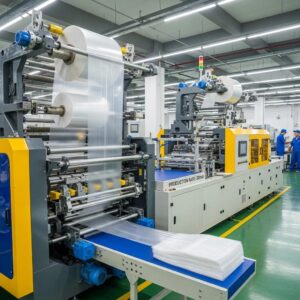
Plastic Bag Making Machines for Sale in Pretoria
Plastic Bag Making M
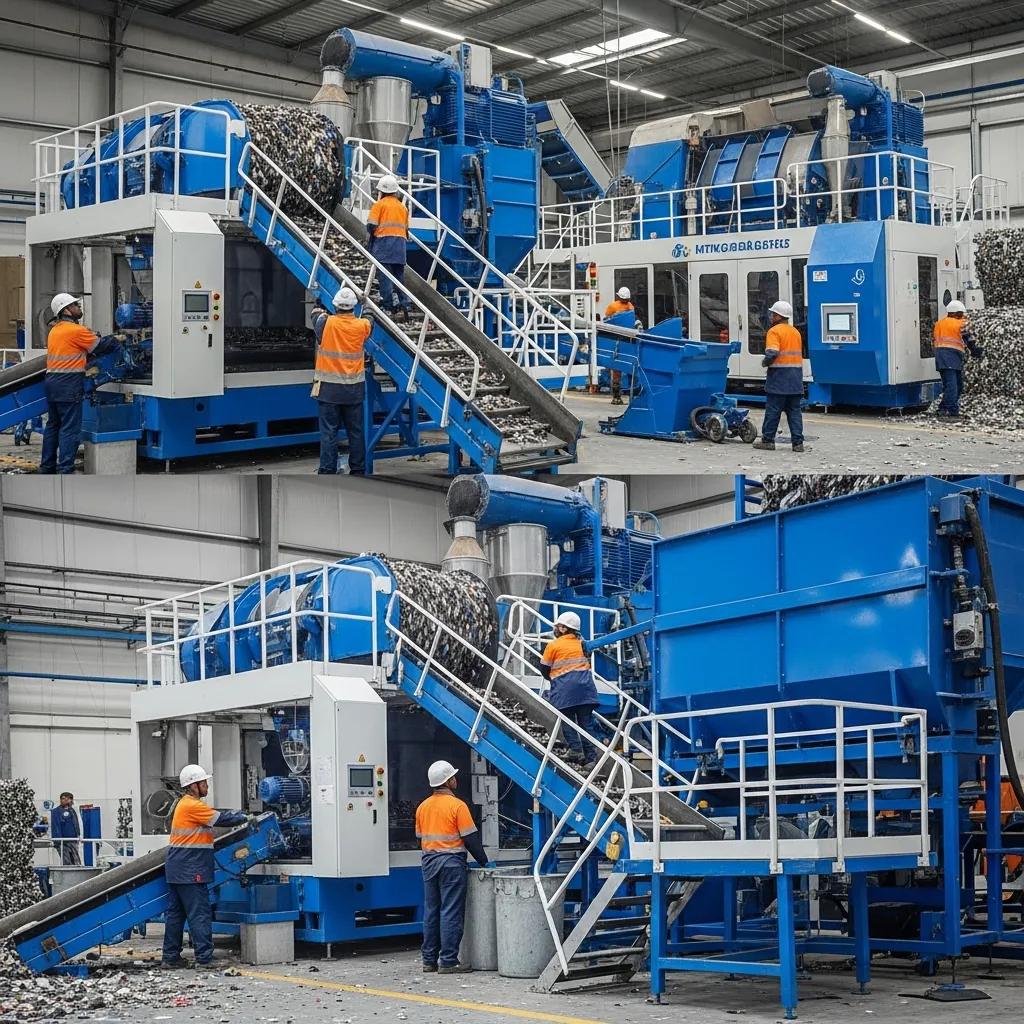
Plastic recycling solutions for Johannesburg businesses combine targeted machinery, optimized process flows, and operational practices to convert waste streams into saleable pellets and flakes while reducing disposal costs and compliance risk. This guide explains what equipment is essential, how to plan and commission a South African recycling plant, which polymers are recyclable locally, and how recycling supports circular economy targets in Gauteng and surrounding metros. Johannesburg enterprises face mixed waste types—film, rigid packaging, and industrial offcuts—so the right combination of shredding, washing, drying and pelletizing equipment drives material recovery and predictable yields. The article maps specific machines to common local waste streams, offers a step-by-step setup checklist for plant commissioning, and examines the environmental and economic benefits that help businesses meet Extended Producer Responsibility (EPR) requirements. Practical procurement considerations, equipment configurations for small to industrial scales, and supplier service attributes relevant to Johannesburg operations are woven through the technical guidance to help operations managers and sustainability leads make informed decisions. Read on to get clear, actionable guidance on equipment selection, plant layout, process integration, and the measurable benefits recycling machinery can deliver to businesses across Gauteng.
Essential recycling equipment converts mixed municipal and commercial plastic waste into clean regrind, flakes or pellets suitable for reprocessing or resale; the mechanism is sequential: size reduction, contamination removal, washing/drying, and pelletizing to create uniform output. Choosing equipment depends on feedstock (film vs rigid), contamination level, desired output (flakes vs pellets), and throughput targets; key specifications include throughput (kg/h), power consumption, and contamination tolerance. Smaller in-house systems prioritize compact shredders and pelletizers while industrial plants require robust shredders, multi-stage washing lines and twin-screw pelletizers integrated with conveyors and PLC controls. Below is a short ordered list that directly answers which machines form a basic, effective line for Johannesburg operations.
The essential machines and typical capacities are:
These components form the core recycling flow—shred → wash → dry → pelletize—and they must be sized to the expected daily intake and contamination profile. Next, compare core machine types and their common use-cases to help choose the right combination for your business.
Introductory comparison of core recycling machines, their inputs, and business use-cases:
| Machine | Typical Input Materials | Output Form | Typical Throughput | Ideal Business Use-Case |
|---|---|---|---|---|
| Industrial Shredder | Mixed film, rigid containers, offcuts | Small pieces / shredded flakes | 200–1,200 kg/h | Pre-processing for washing lines and compacting bulky waste |
| Washing Line (float-sink, friction) | Contaminated film and bottles | Clean flakes | 150–1,000 kg/h | Plants handling high contamination from retail and manufacturing waste |
| Pelletizer / Extruder | Dried flakes, dewatered material | Uniform pellets / granules | 100–1,500 kg/h | Manufacturers seeking recycled feedstock for extrusion or resale |
| Centrifugal Dryer / Thermal Dryer | Wet flakes after washing | Low-moisture flakes | Matches washing throughput | Improves pellet quality and reduces moisture-related defects |
This table clarifies how each machine maps to material inputs and business objectives, helping Johannesburg firms define a balanced line that optimizes yield and uptime. The next subsections describe shredder selection and pelletizer types in detail so you can match equipment to your feedstock.
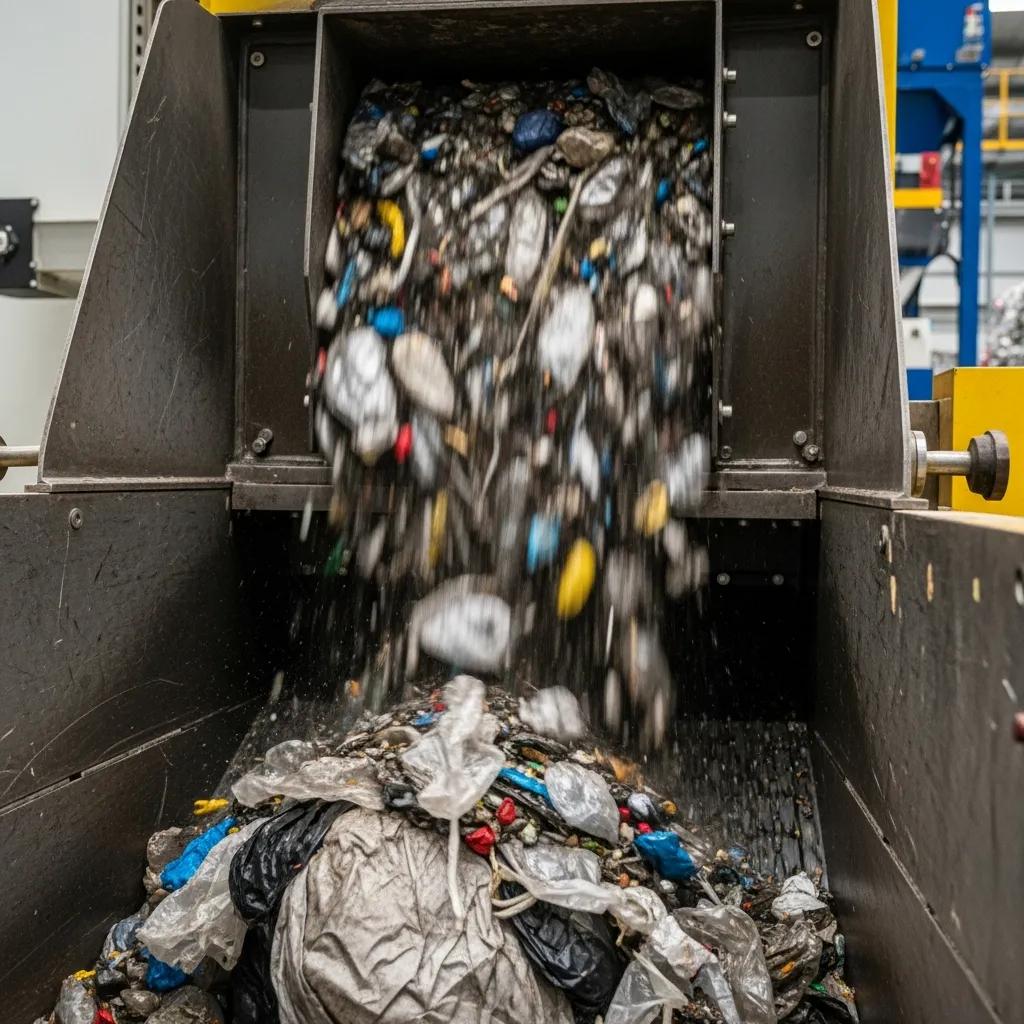
Industrial shredders are the first mechanical step for most recycling lines because they increase surface area for effective washing and improve material handling; they operate by reducing size through rotary knives and screens to produce consistent particle sizes. For soft, flexible film (LDPE), single-shaft or low-torque shear shredders with gentle cutting action minimize entanglement and produce long strips that are easier to wash, while two-shaft or high-torque units suit mixed rigid plastics and bulky items by providing greater cutting force and throughput. Typical capacity guidance for Johannesburg operations ranges from small in-house shredders at ~200–400 kg/h up to industrial units exceeding 1,000 kg/h, with screen sizing chosen to match downstream washing and granulation needs. Maintenance considerations for local conditions include accessible knife replacement, robust gearboxes for contaminated feed, and provisions for dust and fines control; scheduled knife sharpening and quick-change grids reduce downtime. Choosing the right shredder involves balancing throughput targets, contamination levels, and available floor space; this decision sets the pace for the entire recycling workflow.
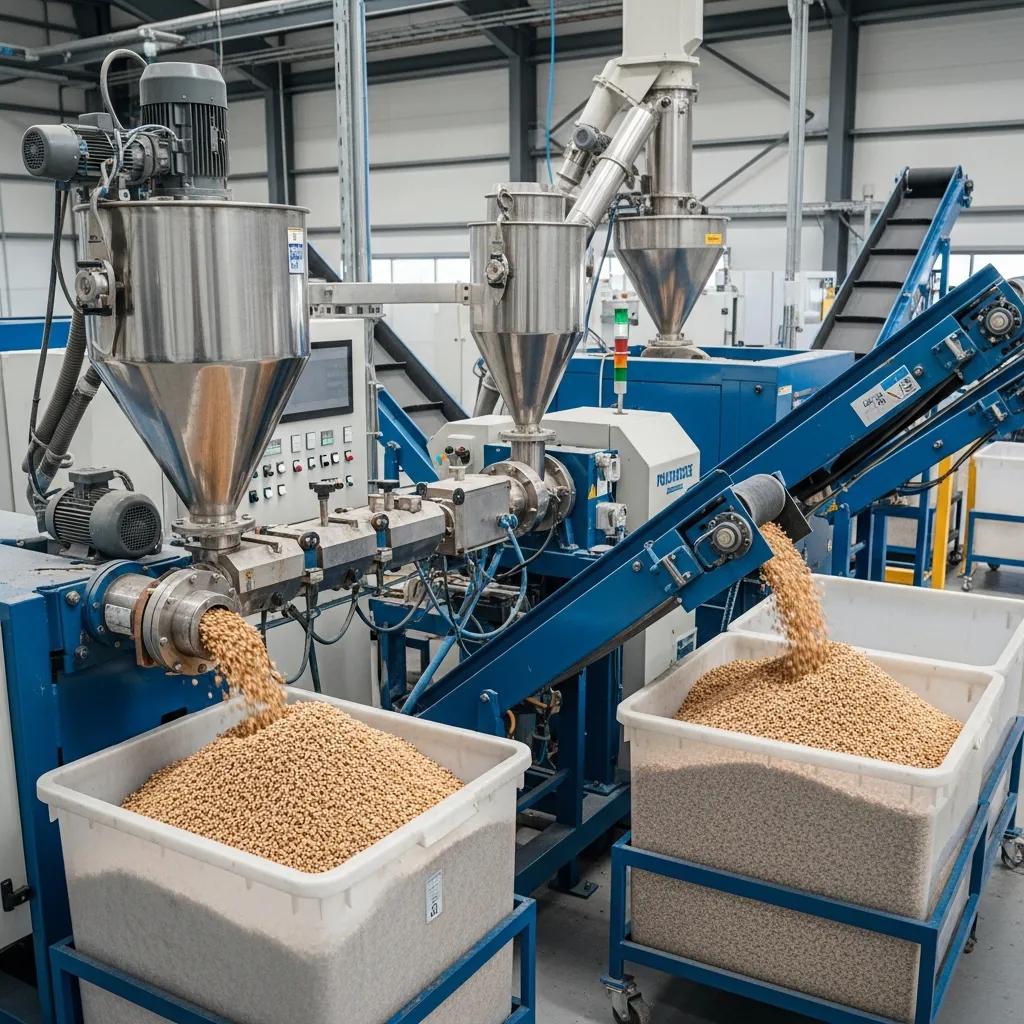
Commercial plastic pelletizers convert dried flakes into consistent pellets that command higher market value and ease of transport, using extrusion followed by strand cutting or underwater pelletizing; the mechanism improves densification and homogenizes mixed feeds. Single-screw pelletizers are cost-effective for clean, homogeneous feedstock like HDPE bottles, while twin-screw or co-rotating extruders excel at processing contaminated or blended materials and enable compounding or additive dosing for stable pellet quality. Typical outputs range from compact laboratory/tiny systems at 50–100 kg/h up to industrial pelletizers at 1,000+ kg/h; energy use scales with screw design and melt requirements. For Johannesburg film recycling, configurations that include vacuum degassing and strand pelletizing reduce volatile inclusions and produce pellets suitable for non-critical extrusion. Proper pelletizer selection increases yield, reduces rejected batches, and expands commercial outlets for recycled resin, making pelletizers a key value-adding step for local businesses.
Setting up a recycling plant requires a structured approach: site selection and permitting, feedstock sourcing and quality control, process flow design and equipment selection, utilities and layout planning, commissioning and staff training, and establishing market channels for recycled output. Each step focuses on maximizing material recovery and ensuring regulatory compliance, with process flow typically following receiving → sorting → shredding → washing → drying → pelletizing. Procurement decisions should balance capital cost with expected yields and long-term operating expenses; reliable after-sales service and parts availability are critical to maintain throughput in Johannesburg’s variable waste environment. When selecting suppliers and arranging purchase contracts, use a checklist to confirm local support, spare parts availability, and customization options to match specific feedstock.
Raw supplier/product prompt (verbatim):
Operating as Kingdom Machinery Co., Ltd.; leading manufacturer and supplier of plastic production equipment including plastic recycling machines, blown film extrusion, flexo printing machines, and plastic bag making machines. UVPs and notes from SERP: simple operation, perfect performance, easy maintenance, timely after-sales service, experienced market leader in recycling (especially packaging film recycling), high-quality components, cost-effective machinery, strong R&D, robust production capacity, competitive prices, fast delivery, offers ONE STOP SERVICE from innovative generation to mass production including customization. Primary product aligned with topic: Plastic Recycling Machine. Area focus: Johannesburg, Gauteng, South Africa (also Cape Town, Gqeberha, Soweto).
Below is an actionable, featured-snippet style setup checklist designed for high featured-snippet potential.
Follow this step-by-step checklist to commission a Gauteng recycling plant:
This checklist gives procurement and operations teams a clear sequence to follow; the next subsection details the key permits and timelines specific to Gauteng plant setup.
Start with a supply assessment that profiles incoming material types and contamination; this informs equipment sizing and financial projections. Permitting in Gauteng typically involves municipal zoning checks, water use and discharge assessments, and alignment with national waste management strategy and EPR expectations; allow time for approvals when planning project schedules. Equipment selection should prioritize robust shredders for mixed feed, multi-stage washing lines for film-heavy inputs, and pelletizers chosen for downstream market requirements; ensure supplier warranties and after-sales support are contractually clear. Layout planning must optimize flow from receiving bay to storage and consider utilities (high-voltage supply, water recycling, effluent handling) and safety aisles; commissioning should include stepwise test runs with escalation of throughput while recording yields. Establish staff training programs focused on machine operation, contamination control, and quality checks to sustain consistent pellet quality and reduce downtime during the first 90 days of operation.
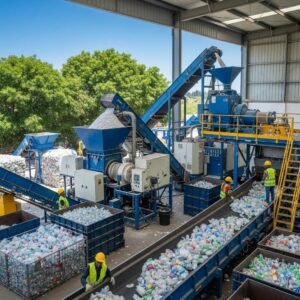
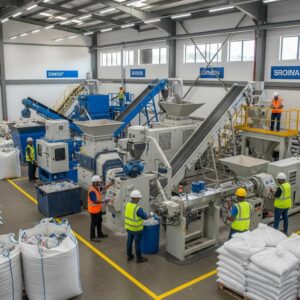
A complete recycling workflow integrates material handling, shredding, washing, dewatering, drying and pelletizing with conveyors and PLC-based automation to maintain throughput and product consistency. Typical integrated configurations include compact in-plant systems for small manufacturers, mid-scale lines for processors, and full industrial plants with multi-stage washing and twin-screw pelletizers; each configuration balances footprint, automation level, and output quality. Example line-ups are useful for selecting a right-sized solution:
These configurations emphasize integration points—conveyor transfers, PLC control, and synchronized throughput—to minimize bottlenecks and simplify maintenance. Proper integration reduces manual handling and contamination carryover, improving yield and pellet marketability for Johannesburg recyclers.
Recycling machinery available to Johannesburg processors can handle common polymers including HDPE, LDPE (film), PP and PET; the process routes differ by polymer chemistry and common contamination profiles, but mechanical recycling with shredding, washing and pelletizing is widely applicable. HDPE (rigid bottles and crates) tolerates aggressive shredding and standard washing followed by single-screw pelletizing; LDPE film requires gentle shredding, specialized washlines and careful dewatering to avoid film agglomeration. PET often needs washing, decontamination and sometimes drying under controlled conditions to avoid hydrolytic degradation before pelletizing, while PP (rigids and some films) follows routes similar to PE but may require different extrusion temperatures. Understanding polymer-specific constraints guides machine selection and downstream uses for recycled pellets or flakes. The table below maps plastics to common local sources and recommended equipment/processes.
| Plastic Type | Typical Waste Sources | Recommended Machine/Process |
|---|---|---|
| HDPE | Milk bottles, chemical drums, caps | Shredder → Friction washer → Dryer → Single/twin-screw pelletizer |
| LDPE (film) | Retail bags, packaging film, pallet wrap | Low-torque shredder → Multi-stage float-sink wash line → Centrifugal dryer → Dedicated film pelletizer |
| PET | Beverage bottles, clear packaging | Shredder → Hot wash + decontamination → Vacuum dryer → Extrusion/pelletizer (sometimes SSP for food-grade) |
| PP | Automotive trims, rigid containers | Shredder → Washing → Dryer → Pelletizer (compounding if additives needed) |
This mapping helps operations prioritize pre-treatment and final processing choices to protect polymer properties and ensure marketable recycled resin. The next subsection breaks down the local recycling steps for each major polymer in greater detail.
HDPE recycling typically starts with collection of rigid containers, mechanical shredding, friction washing to remove residues and labels, followed by drying and pelletizing; the result is recycled HDPE pellets used in injection molding or non-food applications. LDPE film presents challenges from contamination and geometry—gentle shredding, multiple wash tanks and float-sink separation address adhesives and lightweight dirt, and film-specific pelletizers or co-extrusion setups help produce usable pellets. PET recycling often requires hot-wash decontamination and careful drying to prevent intrinsic viscosity loss; some local processors use additional decontamination steps before pelletizing to meet quality specifications. PP recycling mirrors HDPE in mechanical steps but may incorporate compounding to adjust melt flow or add stabilizers for improved downstream processing. Each polymer route emphasizes contamination control and moisture management to maximize yield and pellet quality for sale or internal reuse.
Recycling different polymers yields material substitution savings, reduced landfill fees, and potential revenue from pellet sales; HDPE and PET pellets typically command higher resale value due to broad reuse options, while LDPE film recycling reduces disposal costs and supplies feedstock for lower-grade applications. Economically, in-house recycling reduces purchases of virgin resin when part of the output is reused onsite, stabilizes supply chains against price volatility, and can generate margins by selling excess pellets to converters. Environmentally, recycling decreases landfill diversion, lowers embodied carbon compared with virgin resin production, and supports corporate sustainability commitments that resonate with customers and procurement partners. Operational benefits include improved waste handling, reduced shipping costs for bulky wastes, and strengthened compliance posture with EPR requirements—collectively improving both top-line reputation and bottom-line operating costs for Johannesburg businesses.
Plastic recycling equipment supports circular economy goals by enabling material recovery, reducing landfill diversion, and feeding recycled polymers back into local value chains; the mechanism is throughput-focused: higher capture and cleaner output lead to greater reuse and less virgin resin demand. Adopting recycling machinery aids businesses in meeting municipal and national diversion targets while unlocking economic benefits through cost avoidance and potential new revenue streams. The quick-reference table below summarizes key benefits with economic and environmental metrics to make the case for investment in recycling lines.
| Benefit | Type (Economic/Environmental) | Example Metric or Impact |
|---|---|---|
| Landfill diversion | Environmental | Tonnes/year diverted from landfill |
| Raw material cost reduction | Economic | Percentage reduction in virgin resin purchases |
| Energy and emissions savings | Environmental | Lower CO2e per tonne recycled vs virgin production |
| Revenue from pellets | Economic | Additional income per tonne of saleable pellets |
These metrics illustrate how machinery adoption converts operational activity into measurable sustainability and financial outcomes, helping businesses quantify ROI when evaluating equipment purchases. The following subsections expand on quantified benefits and regulatory drivers.
Economically, recycling reduces reliance on virgin resin, offering cost savings that scale with throughput and material value; selling cleaned pellets supplements revenue and stabilizes supply for in-house production. Environmentally, recycling reduces landfill volumes, lowers lifecycle carbon emissions associated with virgin polymer production, and supports corporate reporting on sustainability targets. These combined benefits improve brand positioning and can lower compliance costs tied to EPR schemes, while operational advantages include decreased waste transport costs and improved material traceability. Recent studies and industry practice indicate that establishing a tightly controlled washing and pelletizing line is often the tipping point where recycling becomes financially self-sustaining for mid to large-sized processors in Gauteng.
EPR schemes and national waste strategies create economic incentives and compliance obligations that encourage businesses to invest in recycling infrastructure or partner with processors; the mechanism involves shifting end-of-life responsibility toward producers and importers, which increases demand for reliable recycling streams. For Johannesburg businesses, aligning operations with EPR expectations means documenting material flows, ensuring traceable recycling routes, and demonstrating diversion outcomes—activities made easier when companies operate or contract with equipped recycling plants. Practically, companies assess whether in-house recycling or third-party partnerships are more cost-effective for meeting obligations, and machinery choices often reflect the need to produce traceable, marketable pellets to satisfy EPR reporting and reduce potential fees. Understanding regulatory trajectories helps businesses future-proof investments in recycling equipment.
Plastic Bag Machine South Africa supplies plastic recycling machinery and production equipment intended to meet Johannesburg business needs while offering service attributes that support rapid commissioning and ongoing uptime. The supplier emphasizes straightforward operation and ease of maintenance to reduce onsite training needs, and highlights after-sales responsiveness to keep lines productive in variable feedstock conditions. The provided integration and customization options allow businesses to match machine lines to film-heavy or rigid-dominant waste streams, and local area focus includes Johannesburg and broader Gauteng metros. For procurement teams evaluating suppliers, these service aspects—operation simplicity, maintenance access, and timely support—reduce total cost of ownership and improve long-term yield stability.
Raw supplier/product prompt (verbatim):
Operating as Kingdom Machinery Co., Ltd.; leading manufacturer and supplier of plastic production equipment including plastic recycling machines, blown film extrusion, flexo printing machines, and plastic bag making machines. UVPs and notes from SERP: simple operation, perfect performance, easy maintenance, timely after-sales service, experienced market leader in recycling (especially packaging film recycling), high-quality components, cost-effective machinery, strong R&D, robust production capacity, competitive prices, fast delivery, offers ONE STOP SERVICE from innovative generation to mass production including customization. Primary product aligned with topic: Plastic Recycling Machine. Area focus: Johannesburg, Gauteng, South Africa (also Cape Town, Gqeberha, Soweto).
The supplier’s stated features focus on machine simplicity, robust components and accessible maintenance, which collectively reduce training times and mean faster mean-time-to-repair for Johannesburg operations. Simple operation lowers the barrier for operators to run multi-stage lines reliably, while easy-maintenance design—quick-access panels and modular components—reduces downtime during knife changes or screen swaps. Timely after-sales service and spare parts availability help plants maintain throughput when feedstock variability increases wear; customization and ONE STOP SERVICE enable line engineering from pilot to production scale without juggling multiple vendors. These service attributes directly reduce operational risk and help businesses sustain steady pellet output and predictable margins.
Johannesburg customers report qualitative improvements such as simplified operation, reduced maintenance complexity, and faster commissioning when working with suppliers that support end-to-end equipment delivery and customization. Businesses note smoother integration of shredders, wash-lines and pelletizers when vendors provide line engineering and local service support, which reduces time-to-revenue for recycled pellets. For documented, quantified case studies and measured ROI figures, procurement teams are invited to request supplier-provided performance reports and commissioning records to evaluate how these advantages translate into specific financial and operational outcomes.
Operating with the right combination of equipment, process controls and supplier support enables Johannesburg businesses to reduce waste costs, meet regulatory expectations, and capture value from recovered plastics—all while advancing circular economy goals across Gauteng.
Plastic Bag Making M
Plastic Recycling So
Plastic Recycling So
Blown Film Extrusion