
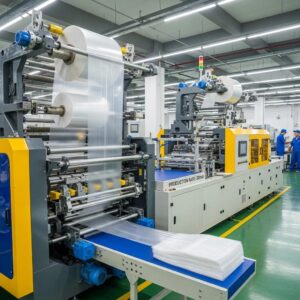
Plastic Bag Making Machines for Sale in Pretoria
Plastic Bag Making M
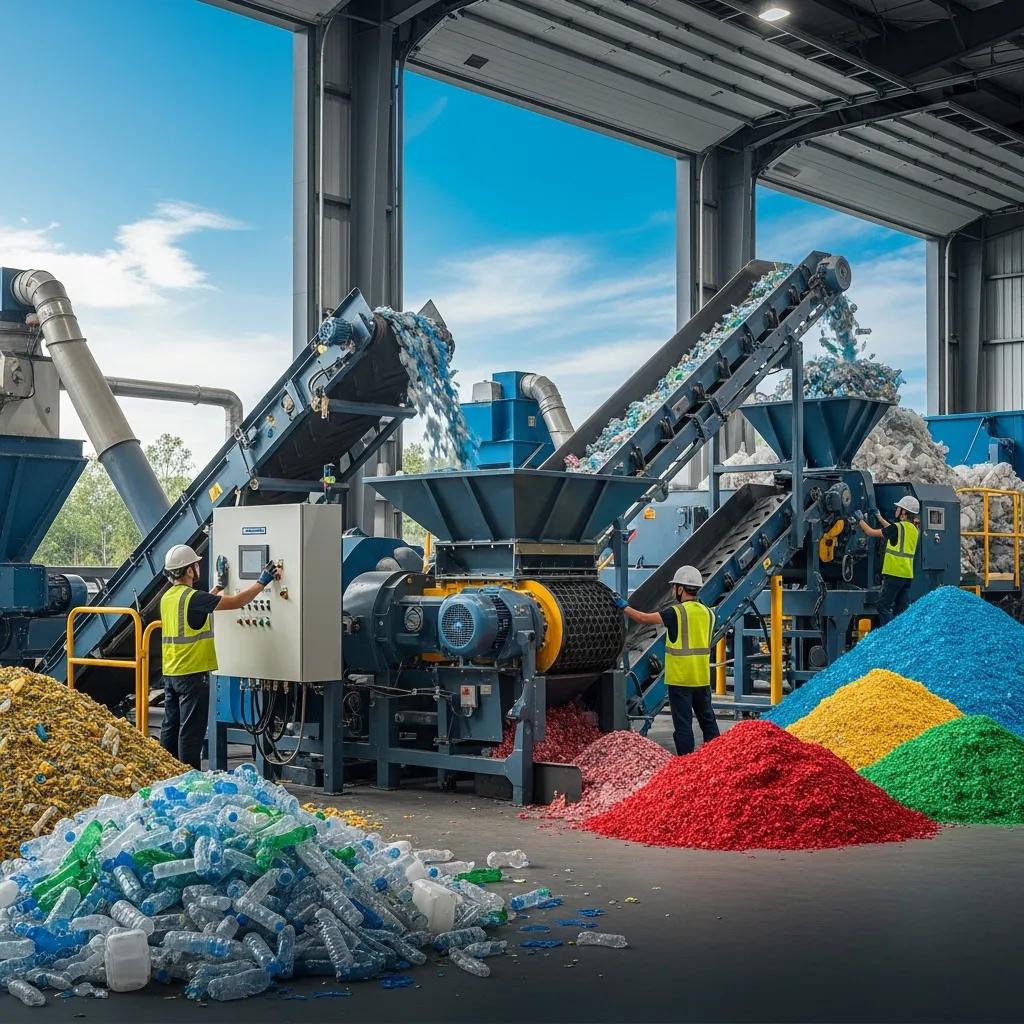
Benoni’s manufacturing and packaging sectors face mounting pressure to reduce waste, cut material costs, and comply with evolving circular-economy expectations. This article explains how industrial plastic recycling machines—shredders, granulators, pelletizers, washing and extrusion lines—convert post-industrial and post-consumer plastic into usable pellets or reprocessable flakes, unlocking cost savings and new revenue opportunities for Benoni businesses. Readers will learn which machines match common feedstocks, how a recycling line operates step-by-step, and the economic and environmental benefits that arise from on-site or local recycling. Practical guidance covers material-specific processing for HDPE and LDPE, machine selection criteria, and starting steps including consultation and financing considerations. Throughout the guide we reference machine categories available through regional suppliers and describe how these systems integrate into production workflows for Benoni, Gauteng and neighbouring areas.
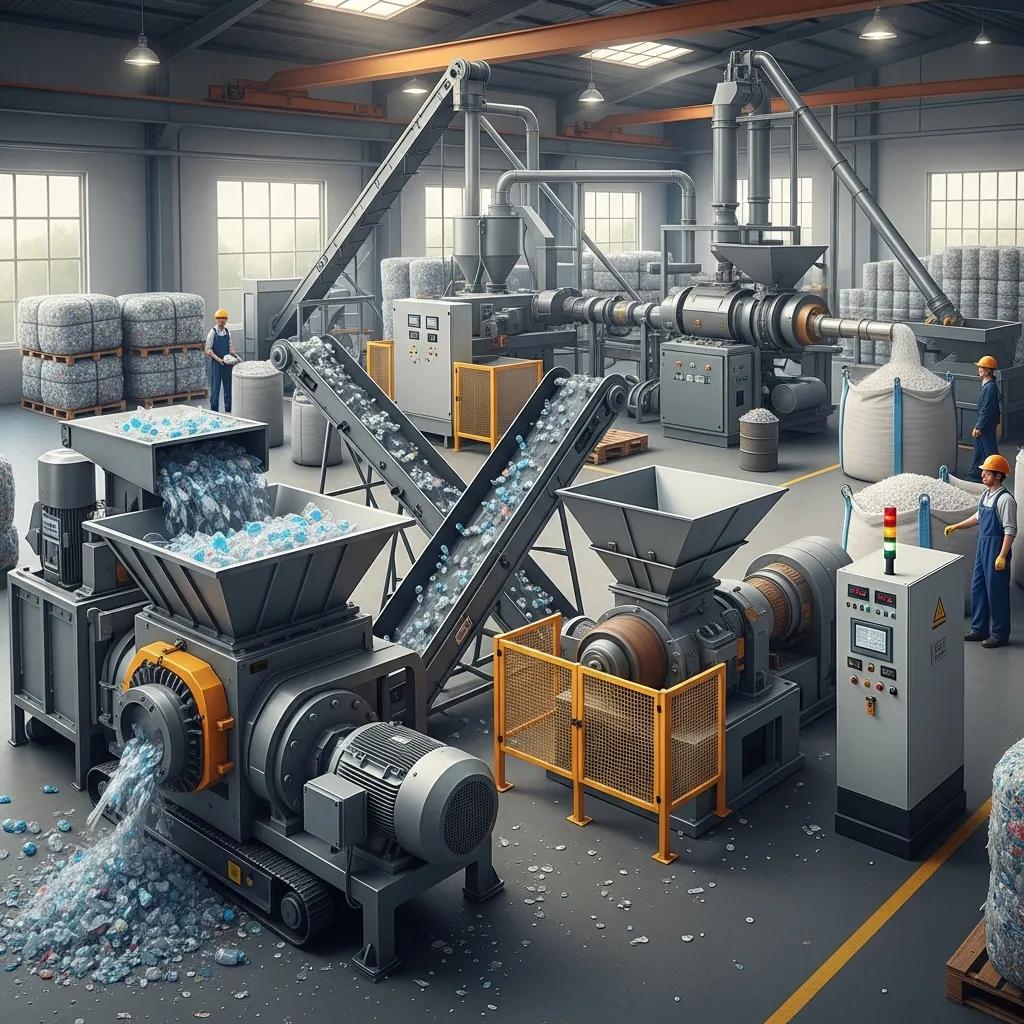
Plastic recycling machines are purpose-built industrial systems that process waste plastic into reusable forms by size reduction, washing, extrusion and pelletizing, delivering material recovery and lower raw material demand. Common categories include shredders and granulators for size reduction, washing lines for films and contaminated materials, extruders and pelletizers for melt filtration and pellet formation, and ancillary equipment like cooling tanks and conveyor systems that support continuous throughput. Choosing the right combination depends on feedstock form (film, rigid parts, bottles), contamination levels, and desired output (pellet size and melt quality). The paragraphs below outline core machine types, typical applications, and a compact comparison to help Benoni buyers prioritize options based on throughput and maintenance needs.
The following table compares primary recycling machine types and their practical attributes for small-to-medium industrial lines in Benoni.
| Machine Type | Typical Throughput (kg/hr) | Suitable Plastics | Core Attributes |
|---|---|---|---|
| Shredder | 100–600 | Mixed rigid plastics, bulky items | Coarse size reduction; robust cutting rotor; low melt quality control |
| Granulator | 50–300 | Film edge trim, sheets, small rigid parts | Fine regrind; cutting rotor and screen pack; regular maintenance on blades |
| Washing & Separation Line | 100–800 | LDPE/HDPE film, contaminated streams | Water cooling, friction washers, density separation; requires wastewater handling |
| Extruder + Pelletizer | 100–1,000 | Clean flakes or washed regrind of HDPE/LDPE/PP | Melt filtration, screw & barrel design, pellet size control via cutter or underwater pelletizer |
A pelletizer converts molten polymer into pellets by forcing melted plastic through a die and cutting strands into uniform granules, producing a reprocessable feedstock for manufacturing. Granulators mechanically cut pre-shredded plastic into more uniform particle sizes suited for feeding extruders and improving melt homogeneity; their cutting rotors and screen packs determine final flake size. Shredders perform primary size reduction of large or bulky items into coarse pieces that are easier to wash, sort, and convey; they tolerate contamination and mixed geometry but produce variable particle sizes. Each machine has specific maintenance needs—blade sharpening for granulators, rotor balance for shredders, and screw/barrel inspection for extruders—and selecting the right combination depends on feedstock type and throughput targets.
These machines are often staged: shredders first, then granulators (if needed), followed by washing and extrusion/pelletizing. Understanding this sequence clarifies equipment needs and helps plan floor space and utility requirements for Benoni operations.
When evaluating recycling equipment, buyers should compare capacity (kg/hr), motor power and energy consumption, cooling method (air vs water cooling), pellet-size control, and accessibility for maintenance and spare parts. Water cooling units are common for high-throughput extrusion lines processing film, while air-cooled pelletizers lower water use but suit specific polymer grades. Additional selection criteria include screen pack size for melt filtration, screw design for viscosity control, and modularity for future capacity upgrades. Local serviceability—availability of spare parts and timely after-sales support—affects operational uptime and total cost of ownership, so factor these into procurement decisions.
A practical checklist helps translate technical specs into business requirements and prepares Benoni purchasers for vendor comparisons and tender specifications.
The plastic recycling process transforms collected waste into pellets through a clear sequence of mechanical and thermal operations that remove contaminants and restore polymer quality for reuse. At a high level, the process flows from collection and sorting to shredding, washing, drying, extrusion and pelletizing, with quality control and melt filtration steps interspersed to ensure consistent pellet properties. Operational considerations for Benoni include handling film contamination, mixed polymers, and adapting washing stages for high dirt loads; each step influences final pellet quality and the economics of reuse versus resale. The following numbered guide clarifies each stage and maps equipment to function so manufacturers can plan lines that match their feedstock and product goals.
These steps show where specific machines fit and the points where material testing and process control reduce variability and improve end-product consistency. The next subsection details how typical Benoni feedstocks like HDPE and LDPE behave in these stages.
Effective project planning starts with clear inputs: daily tonnage, feedstock composition and acceptable contamination levels determine line scale and equipment choices. Collection and pre-sorting prevent mixed-polymer batches that would lower pellet value, while robust shredding prepares material for efficient washing. Washing lines remove residues using friction washers and float-sink separators, and thorough drying reduces moisture to safe extrusion levels. During extrusion, melt filtration and degassing are critical to remove volatile contaminants and entrained water; pelletizers then shape consistent pellets with defined dimensions and cooling to stabilize material.
A disciplined quality-control loop—sampling pellets for melt flow index and color consistency—prevents downstream production rejects and supports internal reuse or commercial sale. Preparing this operational checklist before engaging suppliers streamlines quotation and design phases for Benoni businesses.
HDPE and LDPE differ in density and melting behavior, so equipment settings and washing protocols must adapt accordingly to produce reliable pellets. HDPE’s higher melting point and crystalline structure require screw geometry and temperature control that maintain melt homogeneity without thermal degradation, while LDPE’s lower density and film applications demand careful handling in washing and dewatering to prevent agglomeration. Float-sink separation is effective where density differences exist, and tailored screw profiles optimize throughput and melt pressure for each polymer. Monitoring melt flow index and adjusting pellet size or cooling approach maintains consistent pellet properties for downstream uses like blow film extrusion or pipe production.
Recognizing these material-specific needs reduces processing rejects and improves the value of recycled pellets for Benoni manufacturers, making machine selection and operational control central to commercial recycling success.
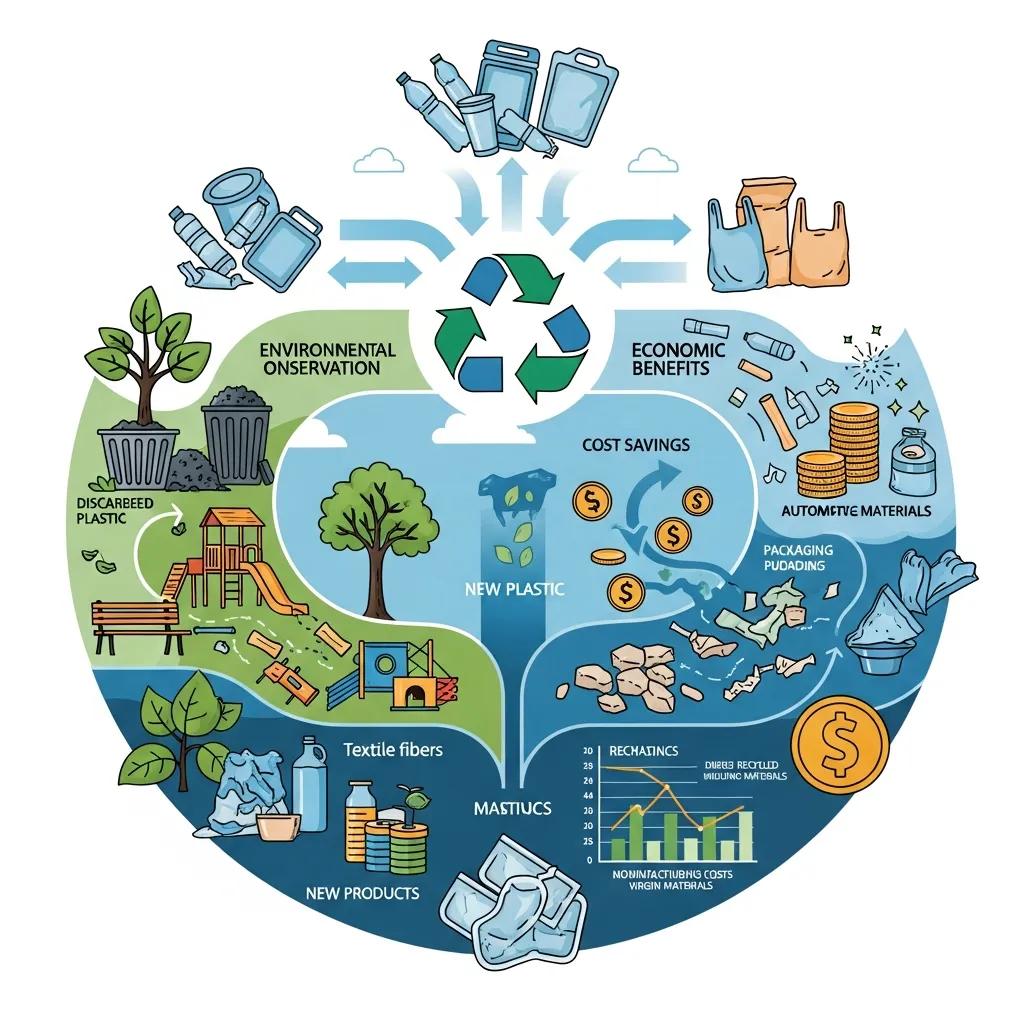
Recycling plastic on-site or locally converts a waste liability into a resource by lowering disposal costs, reducing raw-material purchases, and creating internal feedstock or saleable pellets—benefits that support profitability and resource efficiency. Beyond direct cost savings, recycling aligns businesses with circular-economy goals and extended producer responsibility (EPR) trends, helping mitigate regulatory risks and improving brand stewardship. Environmental outcomes include reduced landfill volumes and lower embodied carbon when recycled pellets displace virgin resin. The list below captures primary economic and environmental advantages that matter for Benoni operations and communities.
These outcomes are reinforced when recycling is paired with process controls and market development for recycled material. The following table summarizes economic metrics and environmental impacts businesses should consider when evaluating recycling investments.
| Metric | Business Impact | Typical Expectation |
|---|---|---|
| Investment Scale | Capital and installation planning | Ranges from compact lines for small throughput to full-scale plants |
| Operational Savings | Lower disposal and material purchase costs | Ongoing reduction in variable costs and waste charges |
| Revenue Potential | Sale or internal use of pellets | Generates secondary income or reduces raw-material spend |
| Environmental Impact | Landfill diversion and lower embodied carbon | Contributes to local circular-economy targets and EPR compliance |
Understanding these metrics helps Benoni decision-makers build financial models and sustainability narratives that support funding and operational approval. The next subsection outlines concrete cost-savings channels and revenue opportunities.
Operational savings arise from substituting recycled pellets for virgin resin, reducing purchase volumes and exposure to raw-material price volatility, and lowering waste-transport and disposal fees by diverting material. Additional revenue can come from selling cleaned pellets to local converters or aggregators when quality and consistency meet market standards. Internal reuse—feeding r-pellets back into blown film extrusion, for example—captures value immediately and shortens supply chains. To realize these gains, businesses must track material yields, contamination losses, and processing costs to estimate payback periods and ensure the line operates at viable utilization levels.
A disciplined commercialization plan—identifying buyers, required specifications, and price points—converts technical recycling capacity into predictable financial returns for Benoni firms.
Recycling supports circular-economy objectives and can help companies align with Extended Producer Responsibility frameworks increasingly emphasized in South African policy discourse. By reducing landfill inputs and creating local recycling loops, businesses contribute to municipal goals and demonstrate responsible material stewardship to customers and regulators. Implementing recycling systems also creates local jobs and skills in materials handling, operation and maintenance of industrial equipment, supporting regional economic benefits. Framing recycling investments within sustainability reporting and procurement policies strengthens corporate narratives and can improve access to green procurement opportunities.
Linking operational recycling outcomes to local policy objectives makes investment cases more compelling and positions Benoni businesses as partners in regional waste-reduction initiatives.
Plastic Bag Machine South Africa (operating under Kingdom Machinery Co., Ltd.) provides a range of machines relevant to industrial recycling needs, including plastic recycling machines, plastic pelletizer machines, water cooling plastic recycling machines, blown film extrusion equipment and flexo printing machines. The company emphasizes practical buyer advantages such as simple operation, easy maintenance, strong after-sales service, and quality assurance protocols like 100 percent final inspection. These attributes can shorten commissioning time, reduce downtime risk and simplify operator training for Benoni firms seeking to deploy recycling lines.
Explicit value propositions available from the supplier profile translate into buyer outcomes: simple operation reduces training overhead, easy maintenance lowers lifecycle labor requirements, and timely after-sales service supports uptime and rapid repairs. Quality assurance practices, including 100 percent final inspection, aim to deliver machines with consistent performance, while warranty terms—such as a two-year warranty on timer switches—provide discrete coverage for specific components. The supplier’s stated strengths in R&D and one-stop/customized product offerings suggest the ability to adapt systems to particular feedstocks and integration needs, and large-scale production capability can support competitive pricing and faster delivery timelines.
These supplier claims should be verified during procurement conversations, and they provide a concise benchmark when assessing vendor proposals for Benoni recycling projects.
Available regional service-area references include Benoni, Gauteng, Johannesburg, Cape Town, Gqeberha, Soweto and broader South Africa, indicating the supplier’s market reach and relevant experience in similar operating environments. Where explicit case-study data is available from vendors, buyers should request anonymized performance summaries showing throughput achieved, downtime statistics, and pellet quality metrics to validate vendor claims. If detailed success stories are not provided upfront, prospective customers can ask for references and documented outcomes to inform risk assessment.
Requesting concrete operational metrics from suppliers helps Benoni businesses judge fit and expected performance before committing to equipment acquisitions.
Benoni businesses can process common polymers such as HDPE, LDPE, PP and PET using appropriately configured recycling lines; each polymer type presents distinct feedstock forms and machine compatibility considerations. HDPE and PP are common in rigid containers and are well-suited to shredding, washing and extrusion/pelletizing, while LDPE often appears as films and requires effective washing, dewatering and film-specific handling to avoid agglomeration. PET—frequently from bottles—requires thorough washing and often a drying stage before extrusion due to its hygroscopic nature. The table below maps common feedstock forms to recommended machine types and practical notes for Benoni operators.
| Polymer Type | Common Feedstock Forms | Recommended Equipment | Notes |
|---|---|---|---|
| HDPE | Crates, drums, bottles | Shredder → Washing → Extruder/Pelletizer | Higher melt point; robust screw design needed |
| LDPE | Film, bags, agricultural film | Shredder → Washing/Separation → Extruder (water cooling) | Film handling and float-sink separation critical |
| PP | Rigid packaging, automotive trims | Shredder → Granulator → Extruder/Pelletizer | Similar to HDPE but lower density |
| PET | Bottles, thermoforms | Shredder → Washing → Drying → Extruder/Pelletizer | Requires effective drying pre-extrusion |
This mapping helps Benoni businesses determine capital and operational priorities based on materials handled and desired outputs.
HDPE recycling commonly produces pellets suitable for household goods, piping and crates when processed with high-shear extrusion and proper filtration; contamination control is vital to retain mechanical properties. LDPE film recycling often yields regrinds used in lower-grade film or as filler in compound formulations and benefits from water-cooling extruders to manage thermal history. PP recycles similarly to HDPE but may require adjusted processing temperatures and screw geometries. PET recycling demands rigorous drying to prevent hydrolysis during melt processing and benefits from crystallization control if used for fiber or re-extruded bottle-to-bottle applications.
Selecting compatible machines and tuning process parameters ensures the recycled pellets meet the mechanical and aesthetic requirements of intended reuse scenarios.
Film recycling presents unique challenges: thin geometry, high contamination with labels and adhesives, and a tendency to tangle in equipment necessitate pre-flattening, robust washing and well-designed dewatering systems. Typical film lines use friction washers, float-sink tanks and rinse stages followed by centrifuge drying before extrusion. Rigid plastic recycling relies more on heavy-duty shredding and granulation, with size reduction supporting efficient washing and melt filtration. Quality control for both feedstock classes includes monitoring moisture, contaminant levels and melt-flow characteristics to ensure pellets meet downstream processing requirements.
Recognizing these contrasts guides Benoni operations to invest in film-specific washing modules or heavier shredding/granulation units according to their predominant waste stream.
Getting started requires a structured approach: assess feedstock and volumes, define target pellet specifications, select appropriate equipment and plan site utilities, and secure financing and supply-chain arrangements. Early-stage steps include measuring daily or weekly waste quantities, sampling contamination levels, and estimating available floor space and utility capacity. Engaging a supplier or consultant to prepare a site assessment and rough budget helps clarify installation timelines, training needs and expected throughput. The checklist and pro-forma information below outline practical steps Benoni businesses should gather before requesting formal quotes.
Following this sequence reduces ambiguity during procurement and helps suppliers deliver tailored proposals aligned with Benoni business goals.
When requesting quotes, provide suppliers with essential data to speed accurate proposals: feedstock composition and average tonnage, required output quality (pellet size, MFI), available floor space and utilities, and any regulatory or environmental constraints. Expect consultations to include site assessments, preliminary equipment layouts, estimated budgets and lead times, and discussion of after-sales service and spare-part availability. Clear, well-documented inputs enable vendors to recommend appropriate shredders, granulators, washing lines and extruder/pelletizer configurations and to identify required pre-treatment or secondary processes.
Providing detailed technical and operational expectations up front helps Benoni buyers compare offers on an apples-to-apples basis and reduces the risk of scope changes during installation.
Financing industrial recycling equipment typically involves equipment leasing, bank loans, asset-based financing or supplier financing arrangements; each option balances capital outlay with cash-flow impacts and tax considerations. Businesses should evaluate payback periods based on projected material savings, potential pellet sales and avoided disposal fees, and consult financial advisors to compare loan terms and incentives. Suppliers may offer guidance on financing routes or references to financing partners, and buyers should request total cost of ownership analyses to inform decision-making. Careful financial planning—including sensitivity analysis for throughput and pellet price—improves the likelihood of a successful implementation in Benoni’s operating context.
This financial groundwork, combined with technical planning and supplier due diligence, positions Benoni businesses to implement sustainable and economically sound recycling operations.
Plastic Bag Making M
Plastic Recycling So
Plastic Recycling So
Plastic Recycling So