
Plastic Bag Making Machines for Sale in Pretoria
Plastic Bag Making M
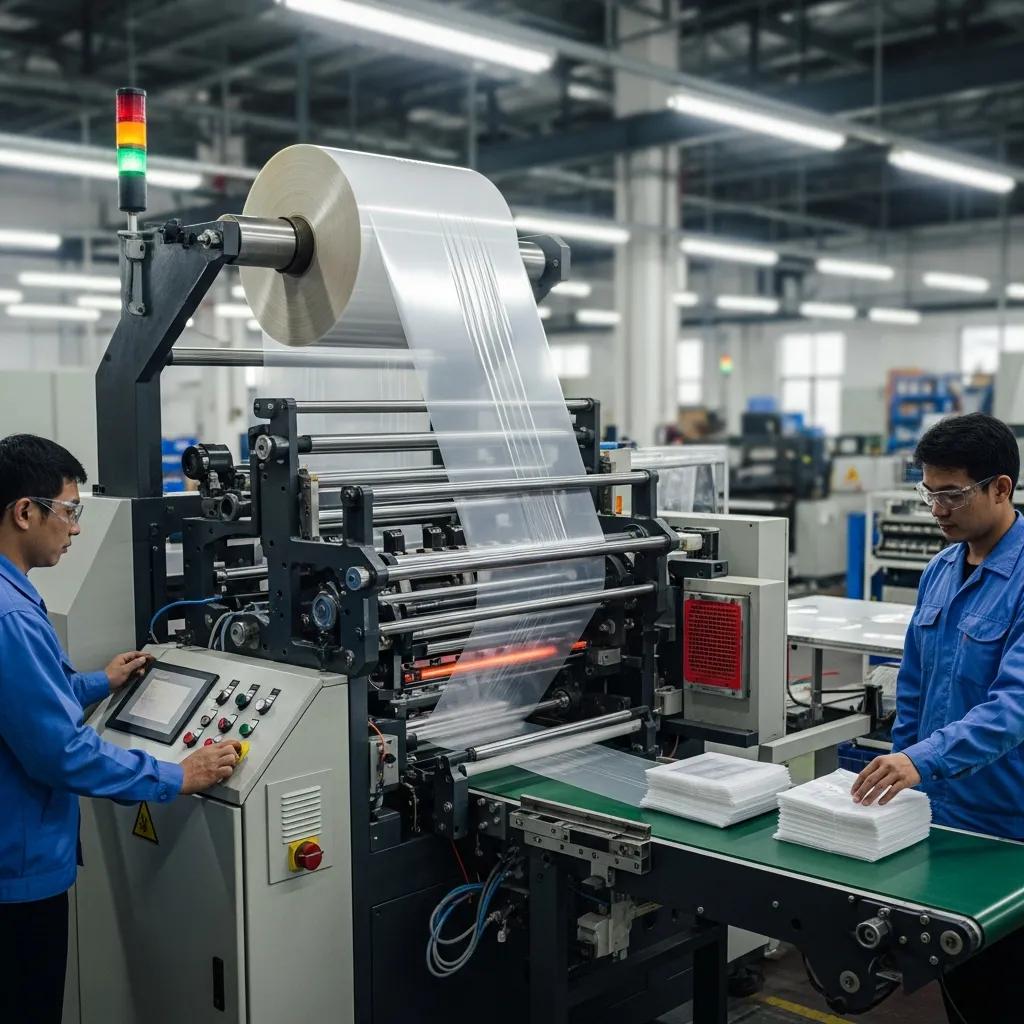
Plastic bag making machines are industrial converting systems that transform polymer film into finished bags through processes such as cutting, sealing, printing and winding. Selecting the right machine impacts production capacity, product consistency, regulatory compliance for recycled content, and overall return on investment for Johannesburg plastic bag factories and converters. This guide explains machine classes, upstream blown film extrusion options, flexo printing for branding, and recycling equipment that enables recycled-content feedstock — all tailored to bag making equipment needs in Gauteng. Readers will learn how automatic T-shirt, side-seal and bottom-seal machines operate, how blown film lines differ by layer count, why flexo presses are preferred for film printing, and how recycling machines close the loop for compliance with South African mandates. Practical procurement guidance and where to source reliable machines and support in Johannesburg are included to help manufacturers move from specification to purchase with confidence.
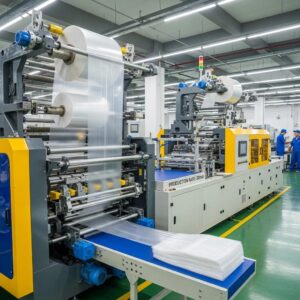
Plastic bag making machines cover several classes designed for specific bag formats, throughput and automation levels. These machines range from automatic T-shirt bag makers for retail sacks to side-seal and bottom-seal converting lines for gusseted or flat bags, each delivering different outputs in kg/h and bag dimensions. Choosing between machine classes depends on film type (HDPE, LDPE, LLDPE), production speed, integration with flexo printing and downstream finishing such as perforation or handle placement. Understanding the trade-offs between simplicity, changeover time and integration with upstream blown film extrusion helps buyers match equipment to market demand and cost targets.
Automatic machines and converting lines commonly found in Johannesburg include:
The quick comparison table below helps map machine classes to typical output and film types for easier shortlist creation before detailed specification reviews.
| Machine Type | Typical Output / Film Type | Common Application |
|---|---|---|
| Automatic T-shirt bag making machine | 150–400 kg/h / HDPE, LLDPE | Retail carrier bags, grocery sacks |
| Side-seal bag machine | 50–250 kg/h / LDPE, LLDPE | Packaging sleeves, produce bags |
| Bottom-seal bag machine | 100–350 kg/h / HDPE, reinforced blends | Garbage bags, heavier carry bags |
This table clarifies which machine classes suit specific production goals and sets expectations that feed into equipment demos and site visits. The next subsection describes how automatic T-shirt bag making machines accomplish continuous high-speed output.
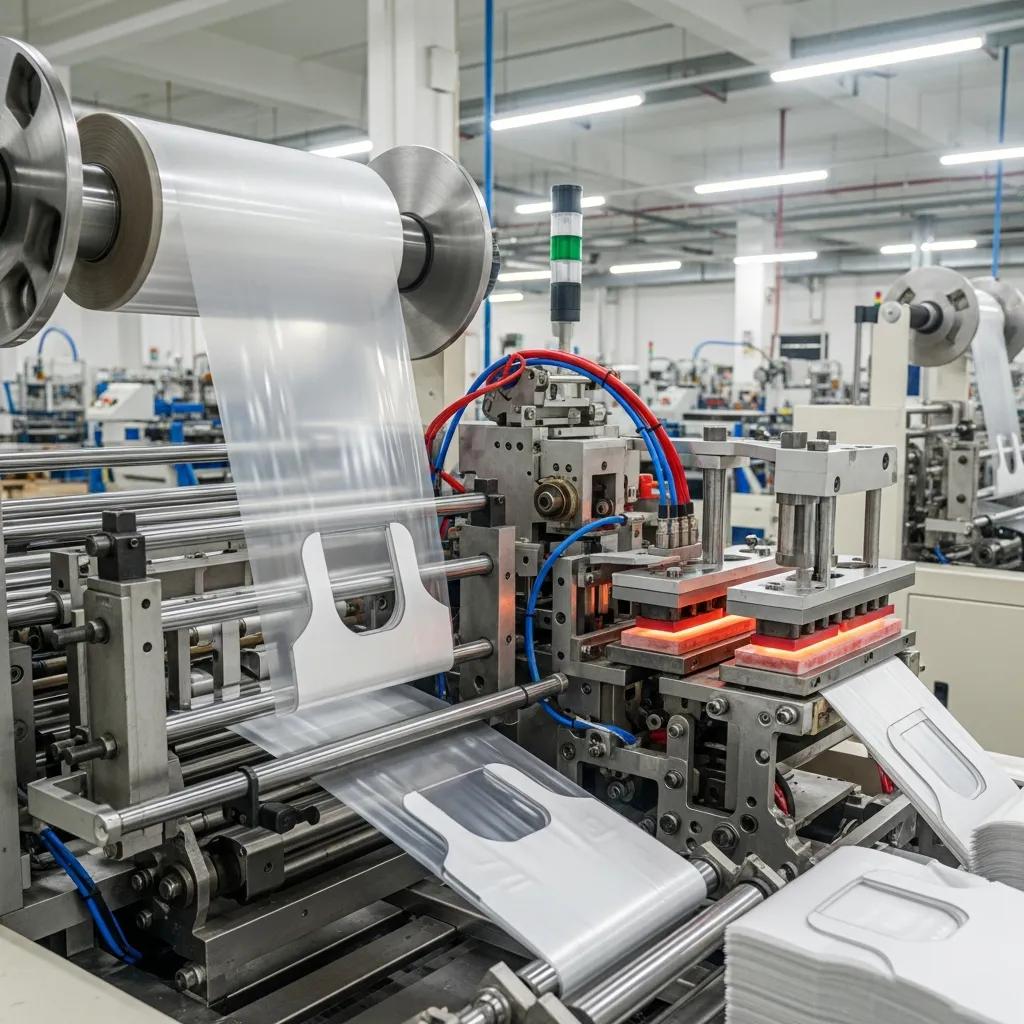
An automatic T-shirt bag making machine forms handles and seals neck holes by continuously feeding film through forming and cutting stations. The process begins with a roll of printed or plain film that is unwound, guided through forming shoulders, sealed at the neck, and then cut and stacked into bundles by automated conveyors. Key components include the unwind unit, forming shoulder, sealing and cutting bars, PLC control for synchronization, and a stacking system for finished bags. Regular preventive maintenance on sealing bars and timely knife adjustments preserve bag quality and uptime, which is essential for meeting high daily output targets and minimizing operator intervention.
Side-seal and bottom-seal machines differ mainly in sealing geometry and the bag formats they produce, with each offering advantages for specific packaging needs. Side-seal machines apply a longitudinal weld along the film edge and transverse seals to create flat bags or gusseted formats; they excel in applications requiring simple, low-cost conversion with fast changeovers. Bottom-seal machines form the bag base with transverse welds and are optimized for strength and load capacity, making them suitable for refuse and heavy carry bags; however, tooling complexity and cycle synchronization can increase maintenance needs. Considerations such as tooling spare parts, sealing bar temperatures and changeover time inform which machine class offers the best balance of throughput and OEE for your production line.
Blown film extrusion machines produce the film rolls that feed bag making equipment by melting and extruding polymer through an annular die, inflating a film bubble and cooling it to create tubular film. This upstream process controls film width, thickness and layer structure, supplying consistent rolls for T-shirt, side-seal or bottom-seal machines and enabling control over mechanical properties like puncture resistance and elongation. Blown film lines can process virgin resins as well as recycled pellets when configured with appropriate screw design and feed systems, making them central to meeting recycled content mandates and reducing material costs. Understanding mono- versus multi-layer options helps buyers decide whether to invest in advanced co-extrusion for barrier or strength performance.
| Extruder Model (Type) | Film Width / Layer Count / Output | Suitable Resin |
|---|---|---|
| Mono-layer blown film line | 600–1200 mm / 1 layer / 150–400 kg/h | LDPE, LLDPE |
| 3-layer co-extrusion line | 800–1800 mm / 3 layers / 200–600 kg/h | HDPE/LDPE blends, recycled blends |
| 5-layer barrier line | 1000–2200 mm / 5 layers / 300–800 kg/h | Functional layers, high recycled content |
This comparison highlights how layer count, film width and output vary by line type and helps converters decide which extruder model fits their product range and recycled content strategy. The next subsection outlines material compatibility and processing considerations.
After selecting appropriate blown film capabilities, manufacturers in Johannesburg often seek suppliers that can deliver integrated blown film lines compatible with downstream bag making and printing equipment. Suppliers in the market emphasize simple operation, easy maintenance, and timely after-sales service to reduce commissioning time and ensure roll-to-bag consistency.
Blown film extrusion machines process common polyolefins such as LDPE, LLDPE and HDPE, and can accommodate blends with recycled plastic pellets when the extruder screw and die are specified for varied melt pressures. Each resin offers distinct film properties: LDPE provides clarity and sealability, LLDPE adds tensile strength and puncture resistance, while HDPE yields stiffer films suited to carrier bags. Processing recycled blends requires attention to moisture, contaminant removal and screw geometry to maintain melt homogeneity and avoid gauge bands. Implementing robust quality control, including thickness measurement and inline edge trimming, ensures film produced for downstream bag making meets dimensional and mechanical specifications.
Mono-layer blown film is simpler and lower cost, offering acceptable mechanical properties for many single-use and retail bag formats, while multi-layer co-extrusion enables functional layers for barrier, abuse resistance or adhesion to printing inks. Multi-layer lines add complexity and cost but permit tailored properties—such as an external wear layer, a core recycled blend for sustainability, and an inner sealant layer for heat sealing—which can improve performance while increasing recycled content without sacrificing functionality. Buyers should weigh initial capital and operating complexity against product performance gains; for applications demanding recycled content with retained strength, co-extrusion often provides the best long-term value by enabling targeted layer composition.
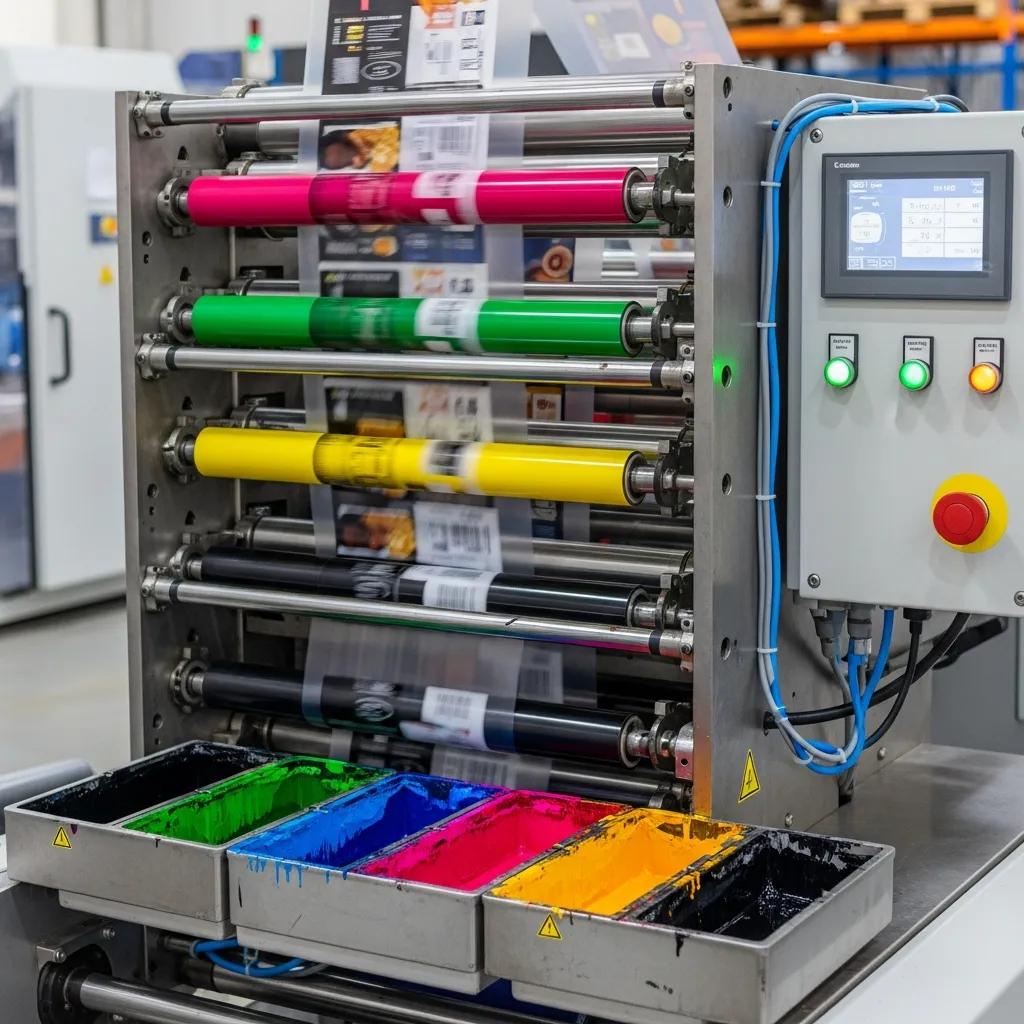
Flexo printing machines are the industry standard for printing on plastic film and finished bags because they provide high-speed, multi-color printing with good ink transfer and consistent registration across long runs. Flexographic presses use anilox rollers and polymer plates to apply solvent-based or UV inks that adhere well to polyolefin films, and they support quick changeovers for different packaging SKUs. For Johannesburg converters targeting retail or branded packaging, flexo printing delivers cost-effective per-unit decoration at scale and allows special finishes like varnish or metallic effects when combined with appropriate drying systems. Deciding on the number of printing stations, web width and ink system is key to matching press capability to your product mix and run lengths.
These benefits make flexo presses a compelling choice for packaging lines that require consistent print quality and high run efficiency. The following subsection details the specific advantages of multi-color flexo presses.
Multi-color flexo presses allow converters to reproduce complex brand artwork with accurate color registration and high throughput, reducing per-unit cost as run length increases. Each additional color station expands creative possibilities and supports spot colors or photographic effects, which improve on-shelf appeal and perceived product value. Operationally, well-designed flexo systems with solvent recovery or UV curing reduce drying footprint and speed up web handling, enhancing overall line efficiency. Routine plate care, precise anilox selection and ink formulation management are essential to sustain consistent print density and minimize downtime during changeovers.
Flexographic printing increases bag appeal by enabling full-color logos, promotional messaging and variable graphics that differentiate products at retail and support brand recognition. High quality print enhances perceived value and can be combined with surface finishes like gloss or matte varnishes to create distinct tactile impressions for customers. Pre-press preparation—accurate color separations, plate screening and ink selection—ensures that print quality translates from digital proofs to film at press speed. Aligning substrate selection with ink chemistry and drying method reduces defects and produces durable, fade-resistant prints suitable for retail distribution.
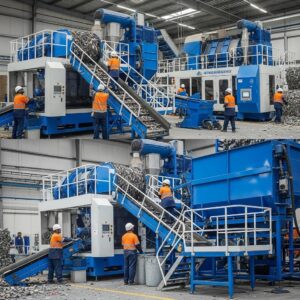
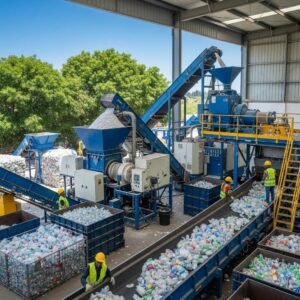
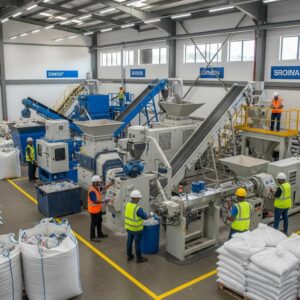
Plastic recycling machines—shredders, wash lines, granulators and pelletizers—convert post-industrial film scrap and post-consumer waste into regrind or pellets that can feed blown film extrusion and bag making lines. This internal loop reduces reliance on virgin resins, lowers material costs and supports compliance with recycled content mandates that many South African stakeholders are implementing. Recycling equipment quality determines end-product purity and performance; properly designed wash and separation stages remove contaminants and improve the mechanical properties of recycled pellets. Integrating recycling machines into production enables traceable recycled content streams, which are essential for regulatory reporting and for building sustainable product claims.
Common recycling equipment types include:
These processing steps produce usable feedstock for blown film lines and help converters achieve targeted recycled content percentages while preserving film performance. The next subsection lists feedstock types suitable for recycling machines.
Within this context, Plastic Bag Machine South Africa supplies plastic recycling machines alongside blown film and bag making equipment, offering after-sales support, spare parts and integration assistance to help manufacturers implement closed-loop production and meet recycled content targets.
Recycling machines commonly process film scrap, PE bags, agricultural film and post-industrial trim, with limitations for mixed polymers or heavily contaminated loads. Pre-sorting to separate PE from PP or PET, and removing inert contaminants, increases the quality and yield of recycled pellets, which directly impacts downstream film integrity and sealability. Washing stages remove soils, inks and adhesives while flotation and density separation help isolate polymer types for cleaner reprocessing. Output quality metrics such as melt flow index and ash content determine suitability for blending into blown film formulations and must be monitored to ensure production consistency.How Do Recycling Machines Help Meet South Africa’s Recycled Content Mandates?
Recycling machines enable manufacturers to produce verified recycled pellets and regrind that can be blended into blown film and bag formulations to reach mandated recycled content percentages. Implementing in-house recycling provides traceability and documentation of material flows, which simplifies compliance reporting and reduces dependence on external recyclers. Practical steps include establishing quality checkpoints for incoming waste, defining blend recipes to preserve mechanical properties, and maintaining records of batch compositions for audits. Combining recycling capacity with robust quality assurance helps Johannesburg converters align operations with national recycled content milestones while controlling material costs.
Procurement of bag making equipment hinges on balancing purchase price against total cost of ownership, factoring in capacity, energy consumption, maintenance, spare parts availability and local service. Buyers should evaluate machine reliability, warranty terms, availability of local technical support and the ease of obtaining consumables and tooling. Energy efficiency and uptime translate directly to ROI, so consider motor sizing, control systems (PLC) and the availability of predictive maintenance features. Financing options and supplier training commitments also influence the speed of ramp-up and the long-term profitability of a new line.
| Cost Factor | Short-term | Long-term |
|---|---|---|
| Purchase price | Capital outlay | Depreciation impact |
| Energy consumption | Operating cost per hour | Lifecycle energy spend |
| Maintenance & parts | Spare parts inventory | Downtime and TCO |
| After-sales service | Commissioning support | Uptime and ROI years |
This EAV table aligns procurement drivers with immediate and lifecycle impacts to aid decision making. The next subsection explains how pricing and after-sales service affect purchase choices.
When evaluating suppliers, prioritize those that combine competitive pricing with demonstrable after-sales service, spare parts logistics and operator training to protect your production continuity.
Upfront price is only one component of the total cost; after-sales service quality substantially affects uptime, repair lead times and lifecycle cost of bag making equipment. Suppliers offering timely spare parts, remote troubleshooting and structured training reduce mean time to repair and preserve production schedules, which improves ROI. Evaluating service agreements should include response times, availability of critical spare parts and whether the supplier offers preventive maintenance programs. Prioritizing vendors with local support capabilities and clear service SLAs mitigates the risks of extended downtime and hidden replacement costs.
Ease of operation and straightforward maintenance reduce dependency on specialist technicians and lower overall labor costs while improving uptime. Machines with accessible sealing units, modular components, clear PLC interfaces and documented maintenance schedules enable operators to perform routine tasks and rapid adjustments. Training programs for operators and maintenance staff shorten the learning curve and protect equipment performance during scale-up. Implementing a simple preventive maintenance checklist and stocking critical spare parts are practical steps to maintain consistent output and extend machine service life.
Local supplier evaluation should focus on technical fit, references, demonstration capability and the ability to provide installation, spare parts and training within South Africa. Shortlisting suppliers requires review of machine specifications against required throughput, film compatibility and integration with existing lines; visiting demonstration sites or arranging pilot runs provides direct evidence of machine performance. Expect suppliers to support commissioning, offer operator training and maintain spare part inventories to minimize logistical delays and maximize uptime. When comparing offers, weigh technical capability and local support against price to identify the best long-term partner for your factory.
Plastic Bag Machine South Africa positions itself as a supplier of plastic bag production machinery in South Africa, offering bag making machines, blown film extrusion machines, flexo printing machines and plastic recycling machines. The company emphasizes simple operation, perfect performance, easy maintenance, timely after-sales service, competitive pricing and fast delivery, following a one-stop service model to support Johannesburg manufacturers. For buyers seeking integrated lines and local support, evaluating such supplier claims through references and service agreements helps ensure alignment between production needs and supplier capability.
Plastic Bag Machine South Africa serves local manufacturers by supplying a range of converting, extrusion and recycling equipment while supporting installation, training and after-sales maintenance. Their service model emphasizes timely after-sales support and spare parts availability to reduce lead times and maintain production continuity. By offering integrated solutions that combine bag making machines, blown film lines and recycling capability, they enable converters to streamline procurement and simplify responsibility for system interoperability. Local presence for logistics and training reduces commissioning time and supports faster return on investment.
Kingdom Machinery Co., Ltd., referenced by suppliers in the market, is a manufacturer noted in industry sources for strong R&D capabilities and an extensive installed base of machines globally. Reported strengths include practical machine performance, ease of maintenance and a product portfolio that spans extrusion, converting and recycling solutions suitable for bag production lines. For buyers, manufacturer stability and a large installation footprint can translate into proven designs, available spare parts and established operational profiles that reduce technical risk. Evaluating manufacturer claims alongside local supplier support ensures the selected equipment meets both technical and service expectations.
Plastic Bag Making M
Plastic Recycling So
Plastic Recycling So
Plastic Recycling So