
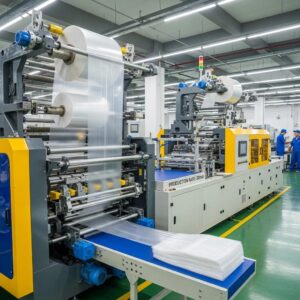
Plastic Bag Making Machines for Sale in Pretoria
Plastic Bag Making M
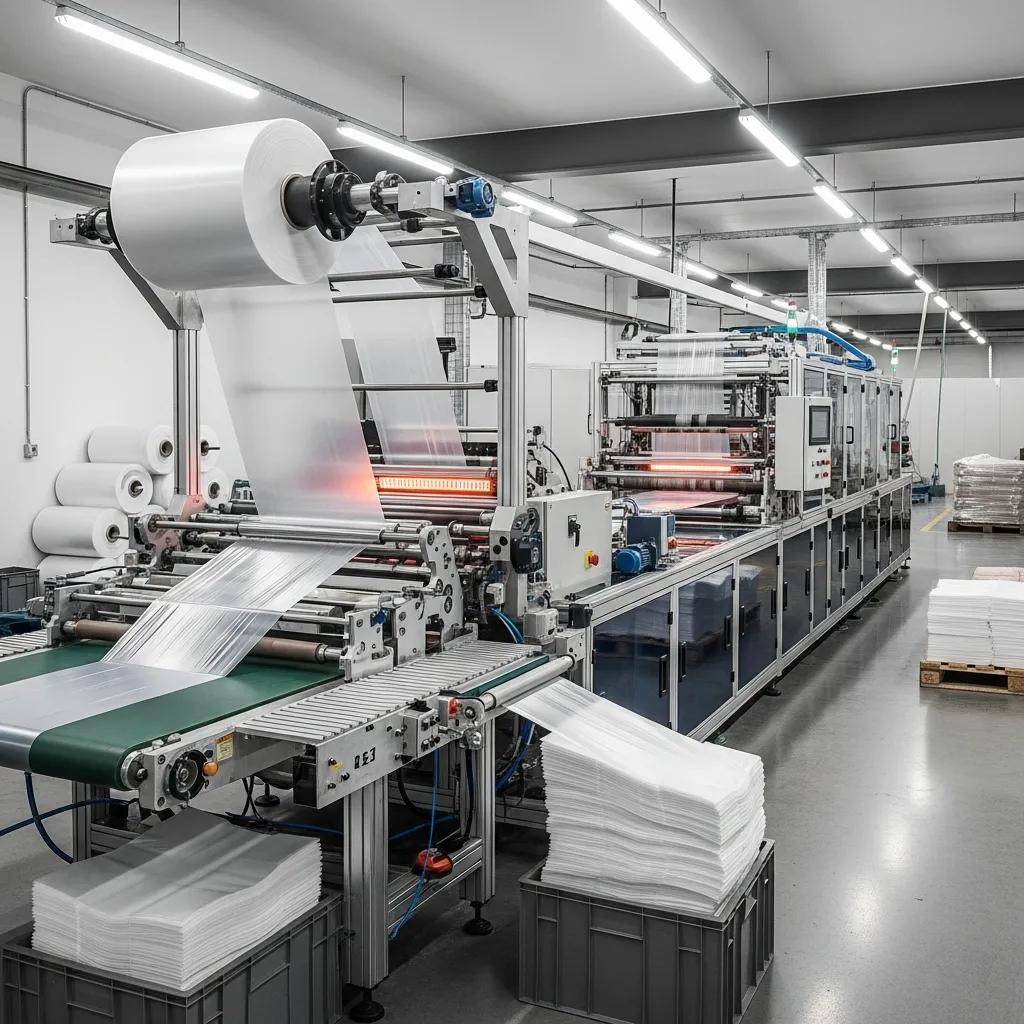
Plastic bag making machines are integrated production lines that convert resin into film, print designs, and cut or seal finished bags; this guide explains the costs and financial implications for buyers in South Africa. Readers will get realistic price bands for core equipment (blown film extrusion, flexo printing, bag making), the main cost drivers, a clear ROI framework with line-item cost components, and practical financing and negotiation tactics tailored to local procurement. Entrepreneurs, packaging manufacturers, and production managers will benefit from comparisons between small-scale and industrial lines, maintenance and energy considerations, and guidance on customization trade-offs. The article covers typical capital and operational cost elements, worked examples for payback and ROI, and actionable checklists for procurement and maintenance. Throughout, we integrate relevant product categories offered by major suppliers to illustrate choices without prescriptive endorsements, enabling informed decisions on machine selection, sizing, and total cost of ownership.
Typical price ranges for plastic bag making equipment vary by machine type, capacity, and feature set; small-scale lines start at lower capital outlay while industrial, multi-station lines demand higher investment due to throughput and automation. Cost bands are driven by productionCapacity (kg/hr), numberOfLayers, printStations, and ancillary units such as rewinders and slitting units, with importation, installation and customization adding to capitalCost. Understanding these bands helps buyers scope projects and compare quotes from suppliers that manufacture blown film extrusion, flexo printing, and recycling systems. Below is an at-a-glance comparison of common machine categories and indicative output ranges to aid initial budgeting and specification decisions. Suppliers often offer modular configurations—an extruder plus bag making and printing units—so combine rows when building a full production line estimate.
| Machine Category | Key Specification | Indicative Price Range (ZAR, approximate) |
|---|---|---|
| Small blown film extruder (mono) | outputCapacity: 50–150 kg/hr | ZAR 200,000 – ZAR 400,000 |
| Mid-range 3-layer blown film line | outputCapacity: 200–400 kg/hr | ZAR 500,000 – ZAR 1,000,000 |
| Flexo printing unit (2–4 colors, inline) | colorStations: 2–4 | ZAR 250,000 – ZAR 800,000 |
| Complete small bag making line (extruder + bag maker) | bagsPerMinute: 20–80 | ZAR 400,000 – ZAR 1,200,000 |
| Industrial integrated line (multilayer + high-speed printing) | outputCapacity: 500+ kg/hr | ZAR 1,500,000 – ZAR 4,500,000 |
This table illustrates how specifications such as layers, printStations, and throughput change capitalCost; the next subsections break down blown film and flexo pricing in greater detail, including consumables and add-on considerations.
A blown film extrusion machine’s price hinges on layer count, screw diameter, and rated outputCapacity; mono machines designed for low-volume operations cost significantly less than 3-layer or 5-layer extruders used for barrier or co-extruded films. The main cost drivers are the extruder motor and gearbox, screw and barrel metallurgy, die head complexity, and the cooling ring and haul-off/winder quality. Higher-output models (e.g., 200–500 kg/hr) require larger screws and more robust frame and control systems, which increases capital outlay but lowers material cost per kg produced. Buyers should budget for spare screws/dies, installation, and potential customs/shipping fees when importing equipment, as these additional costs can add 10–20% to the machine price and influence total landed cost.
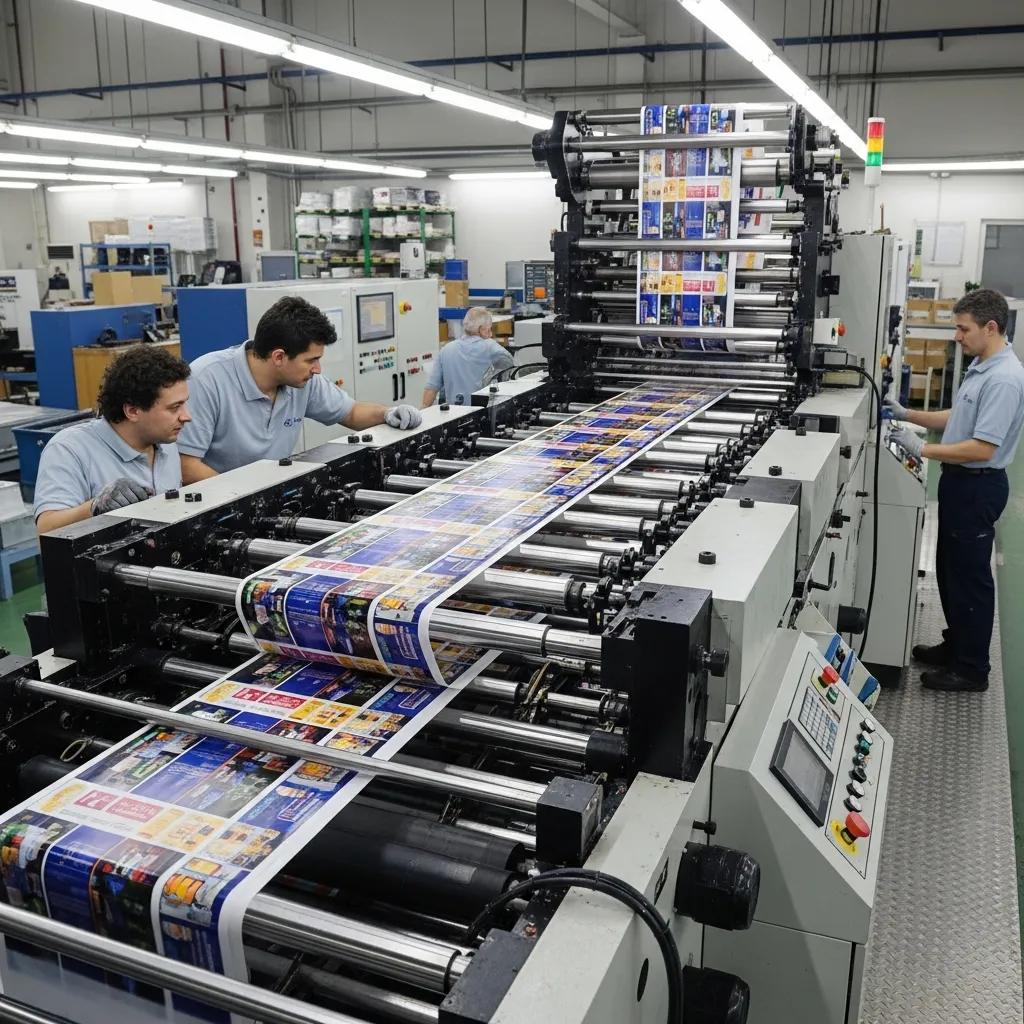
Flexo printing machine pricing depends primarily on the numberOfColors, registration accuracy, and web handling speed; a 2-color inline unit for simple logos will be in a lower price band, while a 4- to 6-color unit with precise registration and high-speed capabilities commands a premium. Recurring consumable costs—printing plates, anilox rollers, and inks—represent ongoing operational expenses that influence total cost of ownership; plate replacement cycles and ink formulations for different substrates (HDPE, LDPE, PP, biodegradable film) affect running cost. Deciding between inline and offline printing hinges on production volume and flexibility: inline printing raises initial capitalCost but reduces handling and cycle times, often justifying the expense for medium-to-high throughput operations where print quality and uptime matter.
Machine cost reflects a combination of technical specs, build quality, and service considerations; five to seven ranked factors typically explain most of the variance in price. Key drivers include productionCapacity and throughput, automation and control systems, construction materials and brand reputation, additional equipment (printing, slitting, recycling add-ons), and energy efficiency plus local support and warranty terms. Evaluating suppliers on these axes lets buyers balance capex against expected opex savings and uptime reliability.
The main cost drivers are:
Assessing these drivers in combination helps define the optimal specification. The next paragraphs explain capacity and automation impacts in depth so you can translate requirements into realistic budgets.
Capacity, expressed as kg/hr or bags/min, has a near-linear relationship with equipment size and cost: higher outputCapacity requires larger screws, stronger motors, heavier frames, and enhanced cooling and take-off systems, increasing capitalCost. Economies of scale emerge as per-unit fixed cost declines with throughput, so an industrial line may cost more overall but deliver a lower cost-per-bag at high utilization. Right-sizing is important: purchasing an oversized line raises financing and energy burdens, while undersized equipment forces reliance on subcontracting or lost sales. Use demand forecasts and utilisation scenarios to choose capacity bands that match projected market share and growth.
Automation components—PLCs, HMIs, servo motors, automatic bag counting, and in-line sensors—increase upfront price but typically reduce labourCost, variability and scrap rates, improving quality consistency. Advanced control systems enable faster changeovers and predictive maintenance alerts, which lower downtime and serviceCost over the machine lifecycle. For low-volume operations, semi-automatic systems may be cost-effective; for continuous, high-volume production, fully automated lines justify higher capex through OPEX savings. Evaluating total cost of ownership (TCO) rather than purchase price reveals where automation delivers the best ROI.
Calculating ROI for a plastic bag making line requires separating capitalCost from annual operating expenses and applying production assumptions to revenue projections; a simple formula is ROI% = (Annual net profit / Initial capital cost) × 100, with payback period = Initial capital cost / Annual net cash flow. Core cost components include machine price, installation and commissioning, shipping/customs, energyCost, labourCost, maintenanceCost, and consumables. A worked example clarifies the approach: estimate annual production (kg and bags), subtract material and operating costs to find annual net profit, then compute payback and ROI to compare purchase options. The table below breaks down typical capital and annual operational cost lines to feed into the calculation.
This EAV table shows capital vs annual operational items for ROI modelling:
| Cost Component | Category | Typical Annual / One-off Value (indicative) |
|---|---|---|
| Machine price | capitalCost | ZAR 600,000 — ZAR 3,000,000 (one-off) |
| Installation & commissioning | capitalCost | ZAR 30,000 — ZAR 200,000 (one-off) |
| Shipping & customs | capitalCost | ZAR 15,000 — ZAR 250,000 (one-off) |
| Energy consumption | operationalCost | ZAR 70,000 — ZAR 350,000 / year |
| Labour (operators & maintenance) | operationalCost | ZAR 120,000 — ZAR 700,000 / year |
| Maintenance & spare parts | operationalCost | ZAR 40,000 — ZAR 250,000 / year |
| Consumables (inks, plates, films) | operationalCost | ZAR 60,000 — ZAR 350,000 / year |
Use these components to calculate annual net cash flow: Revenue from bag sales − (material cost + energy + labour + maintenance + consumables + other overheads). That net cash flow drives payback and ROI metrics used in procurement decisions. The next subsection lists typical initial vs recurring cost items in practical detail.
Initial investments include machine price, shipping and customs, installation, tooling (dies, plates), and training; these are capitalCost items that may be depreciated.
Operational costs recur annually and include energyCost (motors, heaters), raw material (resin) consumption, labour wages for operators and maintenance, consumables like inks and printing plates, and periodic spare parts replacement. One-off contingencies should be budgeted for commissioning and unforeseen site work. Recognizing which costs are fixed versus variable is essential for sensitivity analysis: variable costs change with productionVolume, while fixed costs affect baseline profitability. Understanding this split enables accurate scenario modelling for payback and ROI.
Market demand, utilisation rate, and sales pricing determine revenue and hence ROI: higher utilisation spreads fixed costs over more units, improving margin. Pricing strategies—bulk discounts to wholesalers, private-label contracts, or branded retail pricing—affect average selling price per bag and margin structure. Product mix matters: printed or multi-layer bags command higher prices but increase material and production complexity. Sensitivity testing across price per bag and utilisation rates shows how payback shifts with realistic demand scenarios. Use conservative and optimistic demand scenarios when calculating payback to capture risk and upside potential.
Buyers typically access bank loans, equipment leases, vendor financing, and owner equity to fund machinery; government grants or industrial funding programs may exist but require eligibility checks with local agencies. Choosing between leasing and buying affects balance-sheet treatment and monthly cash flow: leasing reduces initial capital outlay but may cost more over the full term, while loans convert capex into financed debt with interest. Vendor financing or structured payment plans can ease procurement, especially when combined with supplier services like installation and training.
The list below outlines common financing routes and high-level considerations for each.
After selecting a route, negotiate terms and evaluate total financed cost including interest, fees, and any collateral requirements. Many suppliers offer one-stop service and customization support to help structure procurement, so discuss financing and payment options during supplier quotation to align machine specification with cash flow.
At a high level, government grants and industrial development loans are sometimes available through development agencies or sector-specific support programmes; eligibility commonly depends on the applicant’s business structure, local content commitments, job creation, and project scale. Buyers should consult regional industrial development corporations and commercial banks that administer such schemes, and prepare documentation covering business plans, cashflow projections, and equipment specifications. Because incentive availability changes, engage a specialist advisor or the supplier’s sales team to identify current programmes and determine whether a particular project qualifies. Suppliers that offer procurement assistance can simplify the application process and help highlight cost components that improve grant eligibility.
Negotiation should focus on total value rather than headline price: leverage bulk purchase discounts, bundled packages (extruder + bag maker + printer), trade-in allowances, and flexible delivery timelines to extract better terms. Ask for detailed breakdowns of warranty, spare parts pricing, lead times, and service response times; negotiate included spare parts or extended warranty where possible. Use competitive quotes to create leverage, and consider staging payments linked to milestones like factory acceptance testing and successful commissioning. Red flags include vague spare parts policy, unclear warranty scope, and lack of documented service availability; vet suppliers on after-sales support and parts availability before finalising price.
A practical negotiation checklist:
These negotiation levers help reduce upfront cost or increase value, improving cashflow and ROI potential for the buyer.
Maintenance and operational costs form a significant portion of total cost of ownership (TCO) and directly influence uptime, yield, and long-term profitability. Routine operator checks and preventive maintenance reduce the likelihood of major breakdowns but require scheduled labour and spare parts budgets. Consumables and wear parts (bearings, belts, heating elements, gearboxes) should be included in annual maintenanceCost forecasting. Energy consumption is another major component—optimizing power usage with inverters and efficient heaters lowers annual operating expenses and can materially impact payback. The next subsections outline typical maintenance schedules and quantify how energy efficiency changes long-term expenses.
The following maintenance schedule helps plan recurring service tasks and cost buckets.
Summary: systematic maintenance reduces downtime and unexpected repair costs while preserving production quality and machine life.
Typical maintenance includes daily operator checks (cleaning, visual inspection), weekly preventive tasks, monthly component inspections, and annual servicing for gearbox, bearings, and electrical systems; consumable replacement intervals vary by usage intensity.
Estimated maintenanceCost buckets include routine labour, parts replacement, and periodic overhaul; plan for a baseline annual maintenance budget expressed as a percentage of machine price (commonly 3–7% of capitalCost per year) plus ad-hoc repair reserves.
Service agreements or extended warranties from reputable suppliers reduce uncertainty and guarantee access to genuine spare parts, which is valuable for minimizing extended downtime and preserving throughput.
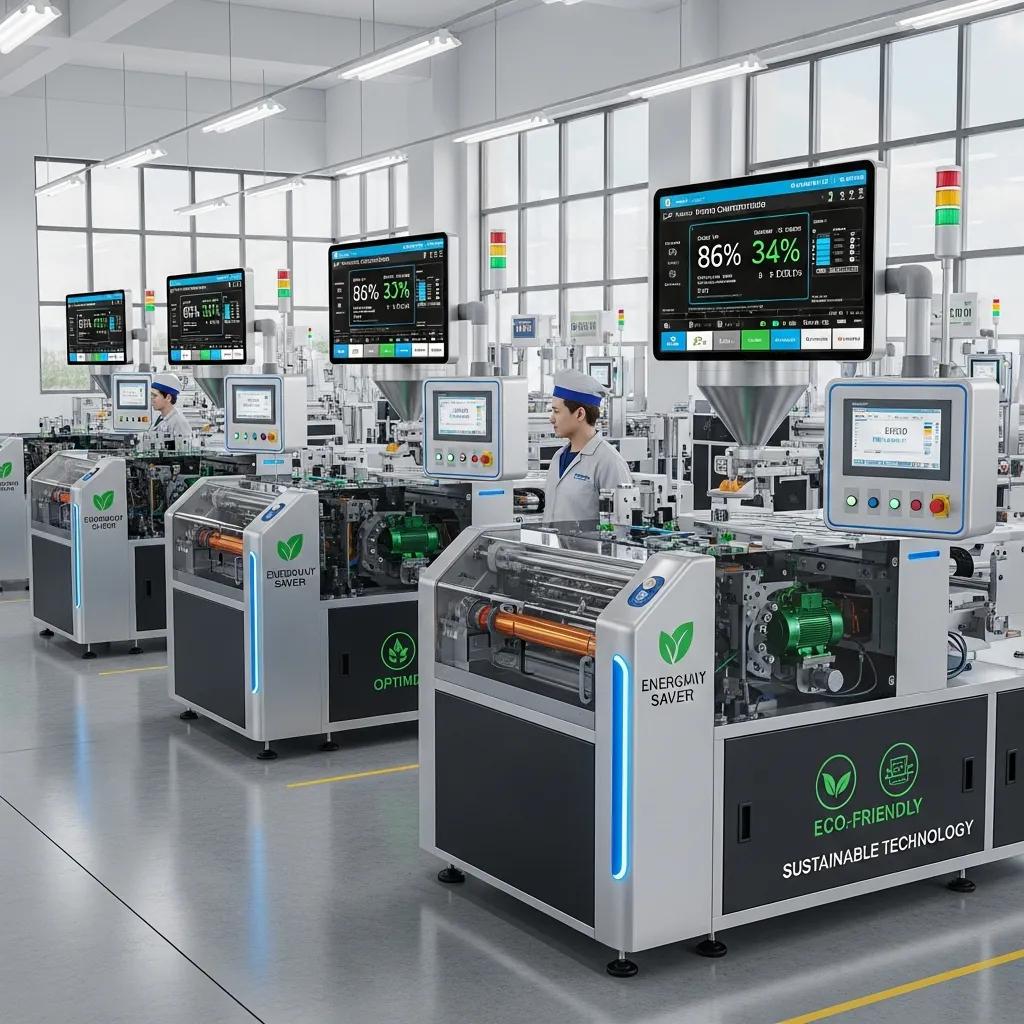
Energy consumption—driven by extruder heaters, motors, and cooling systems—can account for a substantial share of OPEX, often 15–35% depending on production hours and machine efficiency.
Upgrading to inverter-driven motors, efficient barrel heating, and optimized screw designs reduces energy draw and shortens payback when energy prices are high.
Example: a more efficient extruder that saves 20% energy might reduce annual energyCost by tens of thousands of rand depending on utilization, shortening payback by months.
Conduct an energy audit when comparing models and include projected energy savings in ROI models to determine whether higher initial capex for efficiency pays off over the machine lifetime.
Small-scale and industrial lines differ markedly in capitalCost, footprint, staffing needs, and recommended use cases; small-scale lines suit local, bespoke or test production, while industrial lines target high-volume continuous manufacturing. Key trade-offs include price per unit produced, flexibility versus throughput, and upgrade path complexity: small lines offer lower initial capex and simpler maintenance, whereas industrial lines demand higher capex but yield lower unit costs and support inline printing and recycling integration. The table below compares representative attributes to guide selection based on business model and market targets.
| Line Type | Typical productionCapacity | Typical Capital Cost Range | Footprint & Staffing |
|---|---|---|---|
| Small-scale line | 50–200 kg/day | ZAR 200,000 – ZAR 700,000 | Compact footprint, 1–2 operators |
| Mid-range production line | 200–500 kg/day | ZAR 500,000 – ZAR 1,800,000 | Moderate footprint, 2–4 operators |
| Industrial integrated line | 500+ kg/day | ZAR 1,500,000 – ZAR 4,500,000+ | Large footprint, multi-shift staffing |
This comparison highlights how capacity drives price and operational requirements; the following H3s explain production capacity pricing and customization trade-offs to help determine the right investment path.
Pricing increases with capacity bands because higher production requires larger extruders, higher-spec motors, expanded cooling and winding subsystems, and more robust frames—each element adding to capitalCost. Decision guidance: entrepreneurs with uncertain demand should prefer modular, scalable equipment to phase capacity; established manufacturers with steady high-volume orders should invest in industrial lines to achieve lower cost per bag. Consider phased investment: start with a mid-range line with modular expansion slots for additional printStations or a higher-capacity extruder when demand materializes.
Customization—such as specialized die heads, additional printStations, multilayer capabilities, or bespoke automation—adds upfront cost (often 10–25% above base machine price) but can create product differentiation and higher margins. Upgrades that improve automation or energy efficiency can shorten payback through reduced labour and energyCost, while custom tooling provides access to unique product formats for premium pricing.
However, heavily customised machines may have longer lead times and more complex service requirements; weigh the incremental margin gains against increased warranty and spare parts considerations before committing to bespoke options.
For buyers seeking procurement support or tailored ROI modelling, contact Plastic Bag Machine South Africa (operating as Kingdom Machinery Co., Ltd.) for specification guidance and to discuss customization and one-stop service options. Their product categories include blown film extrusion, flexo printing, bag making, and recycling machines and they provide after-sales support and customization services that can influence payback outcomes.
This final guidance ties specification, financing, maintenance, and supplier support into a coherent procurement strategy for South African buyers considering plastic bag production investments.
Plastic Bag Making M
Plastic Recycling So
Plastic Recycling So
Plastic Recycling So