
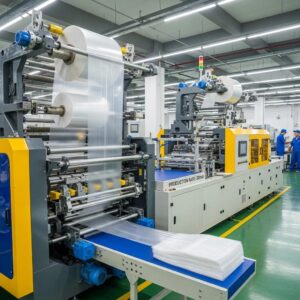
Plastic Bag Making Machines for Sale in Pretoria
Plastic Bag Making M
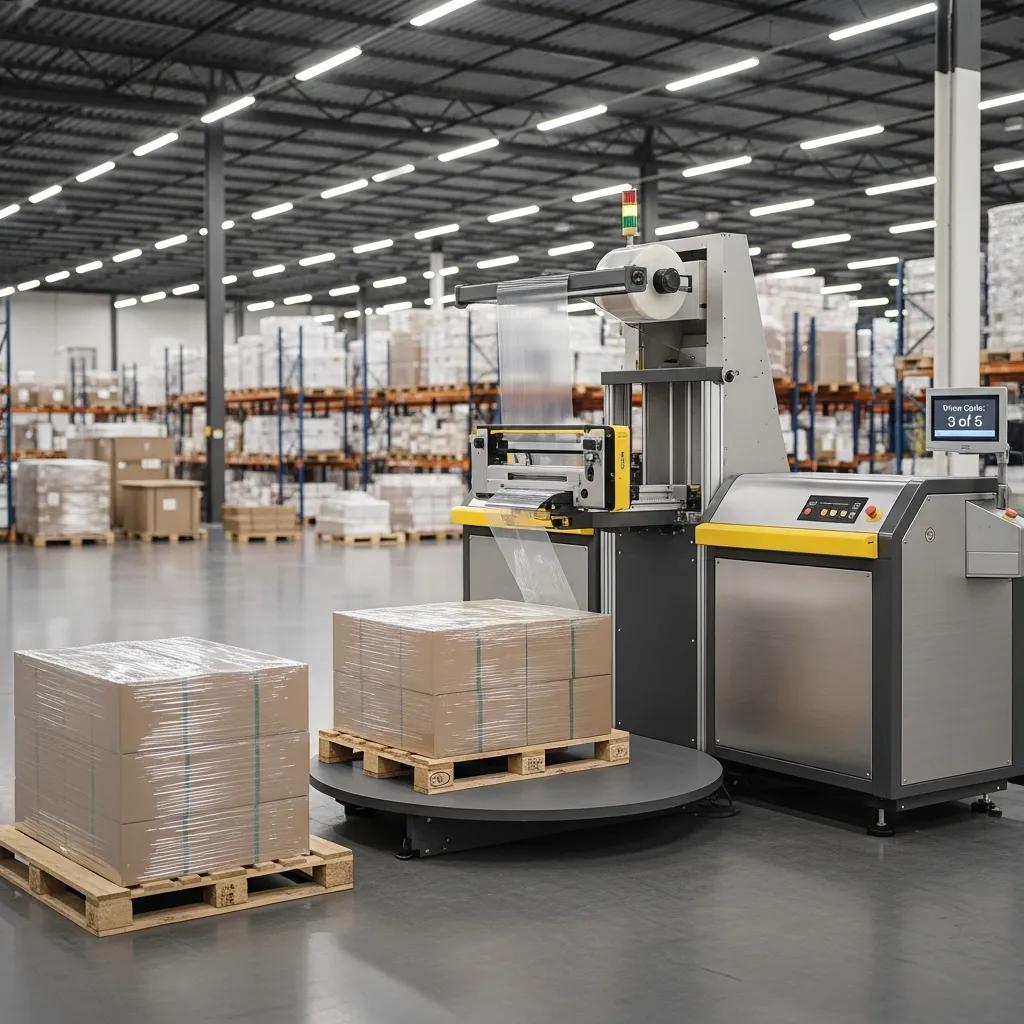
Stretch film machines wrap palletised loads with stretchable plastic film using controlled tension and programmed wrap cycles to secure goods for transport and storage. This guide explains how stretch film machines work, why they matter for Vereeniging businesses, and how the right equipment improves pallet stability, reduces damage, and speeds dispatch. Readers will learn the main machine types used in the Vaal Triangle, essential features of automatic wrappers, local sourcing and service considerations, ROI tactics tied to film optimisation, and maintenance practices that extend machine life. Practical checklists, comparison tables, and supplier guidance are included to help packaging managers select and evaluate equipment such as semi-automatic turntables, automatic orbital systems, and inline wrappers. By the end you will understand technical trade-offs, how to quantify film and labour savings, and where to find reliable suppliers and after-sales support for stretch film machines in Vereeniging and surrounding logistics hubs.
Stretch film machines are industrial packaging devices that apply elastic film around pallets by tensioning and wrapping the film carriage or turntable in a controlled pattern, creating a tight, protective coating. The mechanism relies on film pre-stretch, carriage speed, and tension control to distribute holding force evenly across the load, which prevents shifting and protects goods from dust and moisture during transport. For Vereeniging warehouses and distribution centres, these machines standardise wrapping quality, increase throughput compared with manual wrapping, and reduce claims from damage. Understanding the mechanics of pre-stretch and carriage types helps operators choose settings that balance film usage with load security, which directly affects packaging cost and dispatch reliability. The next section compares the main machine types and matches them to typical local business needs.
The primary function of a stretch film machine is to secure pallet loads by applying elastic film under controlled tension and wrap patterns so crates and boxes behave as a single stable unit during handling and transit. Machines automate the repetitive motion of wrapping while maintaining consistent overlap and film tension, which improves reproducibility and reduces operator variability common with hand wrapping. In practical workflow terms, a pallet arrives at the wrapping station, the machine parameters are selected for load profile, the cycle runs automatically, and the pallet is ready for forklift handling or truck loading. This automated sequence reduces cycle time per pallet and ensures every load meets the same containment standard. Consistent wrapping translates into fewer shipment damages and smoother logistics operations across the Vaal Triangle.
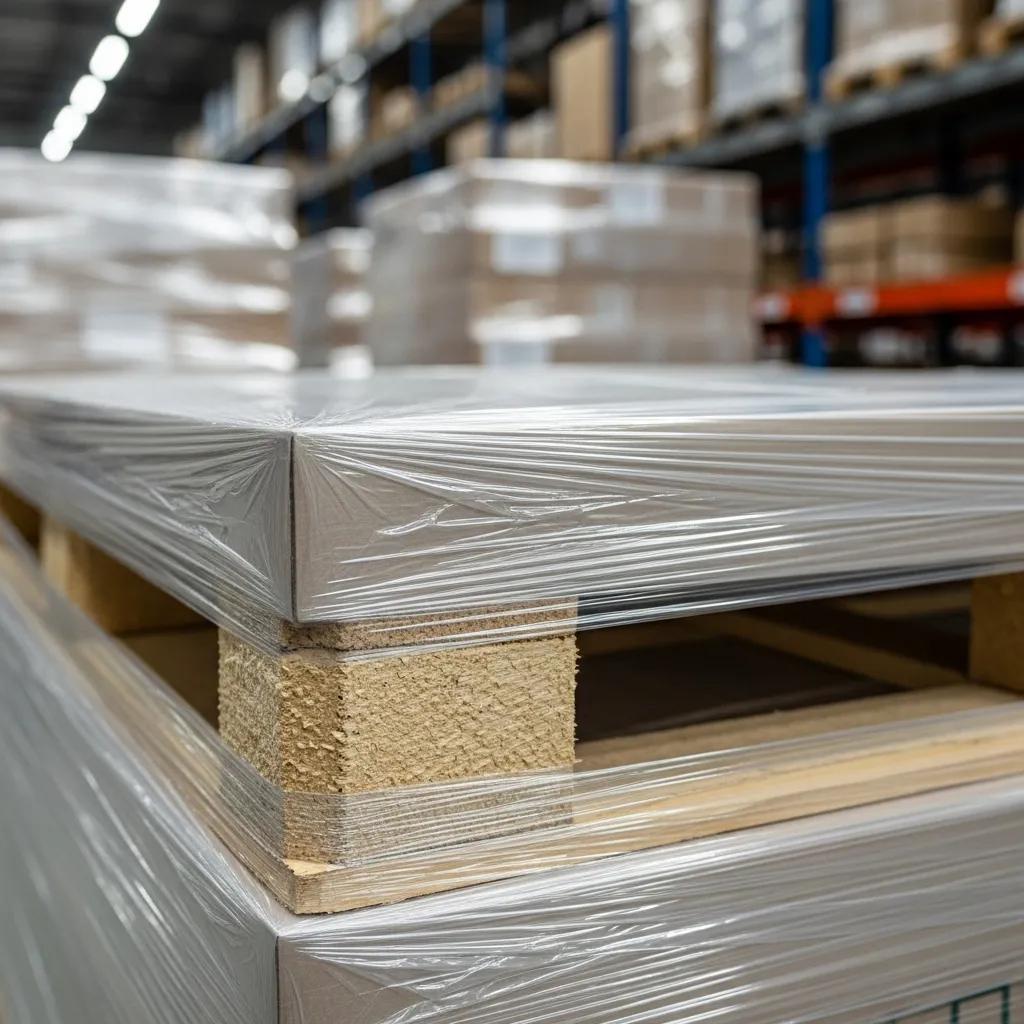
Stretch film machines enhance stability by applying pre-stretched film with controlled tension so that the film grips pallet corners and irregular surfaces, creating clamping forces that resist lateral and vertical movement. Pre-stretch units and tension regulators allow operators to use thinner film at higher stretch ratios, which increases holding power while reducing material consumption and cost per pallet. This containment protects against common failure modes such as load shift, box collapse, and toppling during braking or cornering on transport routes, and also provides a barrier against dust, moisture and minor impact. Improving stability with correct wrap patterns and corner reinforcement reduces product damage claims and improves overall supply chain reliability.
The following list summarises the protective benefits machines deliver:
These protection benefits lead naturally into a comparison of machine types to match operational requirements.
Selecting the right stretch film machine depends on throughput, floor space, operator availability, and the size and fragility of typical loads handled in Vereeniging operations. The main categories are semi-automatic turntable wrappers, automatic rotary ring (orbital) wrappers, and inline/robotic systems; each offers different throughput, footprint and capital cost profiles suited to small warehouses, medium distribution centres, or high-speed packing lines. Matching machine hyponyms like turntable, orbital, and inline wrappers to business scale helps packaging managers prioritise features such as film pre-stretch ratio, carriage type, and integration with conveyors. The table below contrasts typical machine types across key attributes to make selection straightforward.
| Machine Type | Key Characteristic | Typical Suitability |
|---|---|---|
| Turntable Wrapper | Pallet rotates; simple footprint | Small to medium throughput; lower capital cost |
| Automatic Rotary Ring (Orbital) | Load moves through ring; high stability | Long, narrow loads such as doors or pipes; medium throughput |
| Inline/Robotic Wrapper | Integrated with conveyors; high speed | High-volume distribution and automated lines |
This comparison clarifies that footprint and throughput are primary decision drivers; the next subsection examines automation level trade-offs in more detail.
Automatic stretch film machines perform the wrapping cycle without operator involvement, handling pallet indexing, wrap counts, and film cut-and-seal actions, which yields higher throughput and lower labour per pallet. Semi-automatic machines require an operator to attach film and start the cycle, offering lower capital cost and flexible operation for mixed workloads but higher labour input. Throughput differences commonly range from a few dozen pallets per hour for semi-automatic turntables to 60+ pallets per hour for fully automatic systems integrated into conveyors, making automatic wrappers preferable for continuous packing lines. Cost trade-offs should factor expected daily pallet volumes, available floor space, and the value of reduced manual handling, as these elements determine payback timelines. Understanding these trade-offs guides the practical choice between automation levels for Vereeniging operations.
Choosing the right equipment starts with a checklist of criteria: pallets per day, average pallet dimensions and weight, available floor space, integration needs with conveyors or forklifts, and film type compatibility (e.g., LLDPE). Evaluate projected growth to avoid undersizing equipment and conduct pilot runs or demos to confirm wrap patterns and cycle times meet real-world needs. When testing, measure film usage per pallet and cycle time under representative loads to estimate operating cost and ROI. Procurement decisions should prioritise local serviceability and parts availability to reduce downtime risks. These evaluation steps lead naturally to considering specific automatic wrapper features that deliver the most operational value.
Before the next section, consider this brief summary list describing machine selection steps:
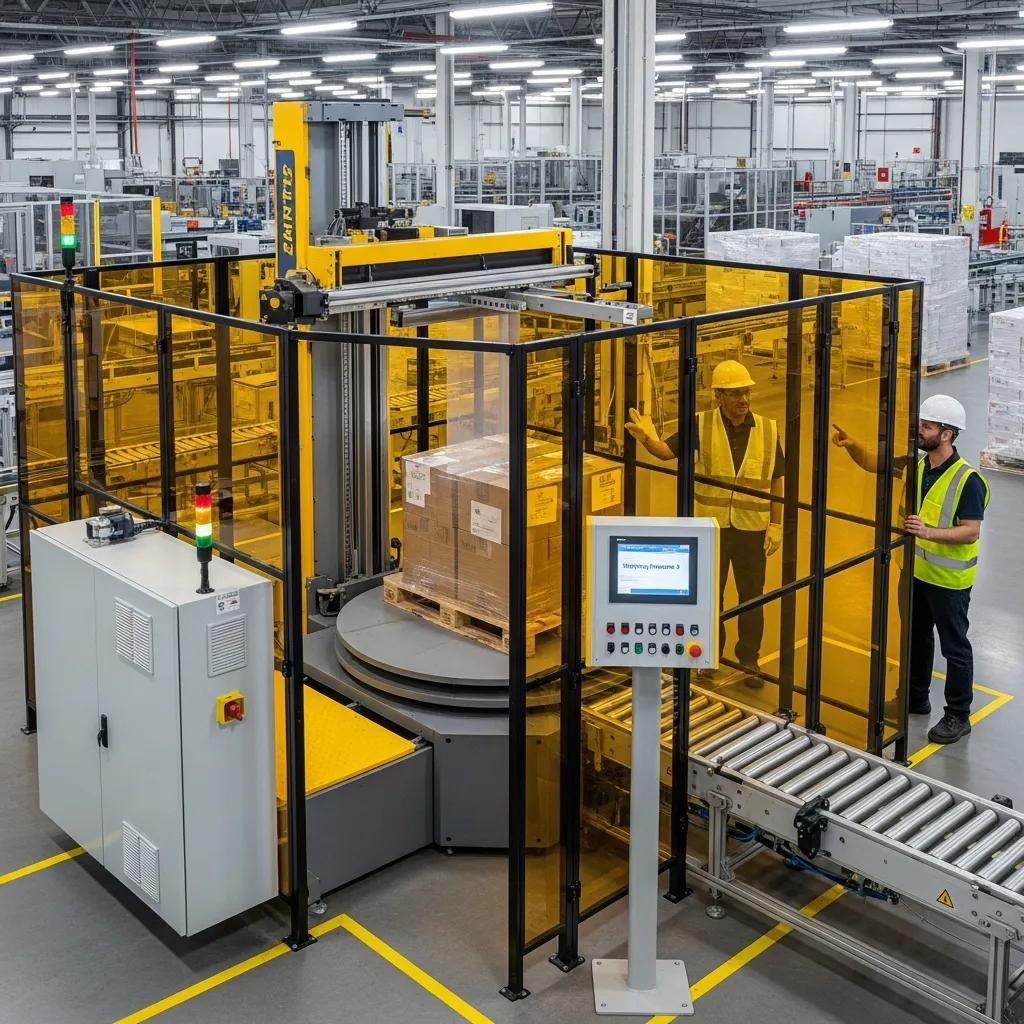
Automatic stretch wrappers deliver a set of technical features—pre-stretch systems, programmable wrap patterns, variable carriage types, and safety enclosures—that translate directly into film savings, higher throughput, and lower labour costs for South African packaging operations. Pre-stretch units enable film stretching before application to increase holding force per metre of film, often reducing film consumption significantly while maintaining load security. Programmable controls let operators define top and bottom wrap counts, corner reinforcement, and cycle speeds to match diverse cargo, improving both protection and speed. Energy-efficient drives and enclosed safety features help meet workplace safety expectations while lowering operating costs.
The table below maps key features to measurable benefits so procurement teams can prioritise technical specifications during supplier discussions.
| Feature | Attribute | Direct Benefit |
|---|---|---|
| Pre-stretch unit | Film stretched before application | Film savings (%) and lower material cost |
| Programmable wrap patterns | Adjustable top/bottom cycles | Improved load protection and process repeatability |
| Film carriage type | Powered vs gravity | Consistent tension control and reduced film breakage |
| Safety enclosure | Guarding and interlocks | Worker safety and regulatory compliance |
If you need tailored equipment details or to request a local quote for Vereeniging, suppliers can often match machine features to pallet profiles and expected throughput; for local requests, specify pallets/hour, average pallet dimensions, and preferred film type to get rapid recommendations.
Automatic wrappers reduce labour costs by replacing repetitive hand wrapping tasks with automated cycles that require minimal operator oversight, which lowers the number of staff needed per shift and decreases operator fatigue. With predictable cycle times and programmable wrap patterns, throughput becomes consistent across shifts, enabling tighter scheduling for loading and transport and reducing idle forklift time. Numeric examples help illustrate impact: automating a line processing 40 pallets per hour can cut one full-time wrapper operator on that line while maintaining or improving throughput, directly reducing labour spend. In addition to direct labour savings, automation decreases film-related rework and damage handling, which further improves overall process efficiency and cost control. These operational gains tie closely to film optimisation strategies discussed in the ROI section.
Modern stretch film machines with high pre-stretch ratios and precise tension control reduce film consumption per pallet, enabling thinner films to perform like thicker options and lowering plastic waste and packaging cost. Compatibility with recycled or lower-gauge LLDPE films allows procurement teams to prioritise circularity without sacrificing load security when machine parameters are tuned appropriately. Energy-efficient drives and smart standby modes further reduce electrical consumption during low-activity periods, contributing to lower operational emissions across packing operations. Implementing film optimisation protocols, tracking film metres per pallet, and transitioning to films with higher recycled content are practical steps that reduce environmental footprint while improving cost-per-pallet metrics. These sustainability advantages are often quantifiable and feed directly into ROI calculations.
Local sourcing options for stretch film machines include authorised distributors, national resellers with local stock, direct manufacturer channels that arrange import and service, and rental providers for temporary capacity spikes. Key evaluation criteria when sourcing locally are parts and spare availability in the Vaal Triangle, response times for on-site service, warranty terms, and the availability of operator training and commissioning. When vetting suppliers, request references, review service-level commitments, and confirm lead times and spare parts policies to ensure minimal downtime. The following checklist helps procurement teams evaluate potential vendors and establish expectations before purchase.
Plastic Bag Machine South Africa operates under Kingdom Machinery Co., Ltd.; manufacturer and supplier of plastic processing machinery including stretch film machines, blown film extrusion machines, flexo printing machines, and plastic recycling machines. The company is based in China and markets and sells products across South Africa (mentions include Johannesburg, Cape Town, Gqeberha, Soweto). Stated value propositions in the SERP report include: simple operation, perfect performance, easy maintenance, timely after-sales service, leading manufacturer with R&D capabilities, one-stop service (innovation to mass production, customization), competitive pricing, fast delivery, two-year warranty for timer switches and 24-hour online service.
This supplier description shows one route to obtain machines, spare parts, and after-sales support; the next subsection outlines specific local supplier vetting steps and expected service models.
Local suppliers range from national distributors with dedicated service teams to import partners that coordinate shipment and local commissioning; many also supply complementary packaging consumables like LLDPE film. To vet suppliers, ask for recent customer references in the Vaal Triangle, confirm parts stocking points, and validate availability of trained technicians who can respond within acceptable windows. Ensure suppliers can demonstrate installation and commissioning capabilities and provide operator training to achieve desired wrap quality quickly. Evaluating these factors reduces procurement risk and shortens time to productive operation.
After-sales models typically include installation and commissioning, preventative maintenance contracts, stocked spare parts, remote troubleshooting, and operator training; warranty terms vary by supplier and component. Negotiate service contracts that include response times, spare-parts guarantees, and preventive maintenance visits to minimise unplanned downtime. Recommended contract items to request include defined SLAs, a parts list with lead times, and training sessions for both operators and maintenance staff. Clarifying these elements during procurement ensures predictable lifecycle costs and supports long-term machine performance.
The following table shows key service items to evaluate when comparing suppliers:
| Service Offering | Characteristic | Why It Matters |
|---|---|---|
| Installation & Commissioning | On-site setup and tuning | Ensures optimal machine performance from day one |
| Preventative Maintenance | Scheduled visits and checks | Reduces unexpected failures and extends lifespan |
| Spare Parts Stocking | Local inventory of wear parts | Shortens downtime and repair lead times |
| Remote Support | Telephone or online troubleshooting | Fast diagnostics to reduce on-site visits |
This service checklist guides procurement teams toward suppliers that can support continuous operations in the Vaal Triangle.
Maximising ROI combines equipment selection with operational discipline: tune pre-stretch and tension for minimal film use, standardise wrap programs for common pallet types, and train operators on quick changeovers and first-line maintenance. Film optimisation often yields the largest direct savings—improvements such as increasing pre-stretch from 100% to 200% can reduce film consumption per pallet by a meaningful percentage while maintaining or improving containment. Tracking KPIs like film metres per pallet, pallets per labour hour, and downtime hours provides measurable evidence of improvement and a basis for payback calculations. Below is a table with realistic ROI scenarios for common business types in the region to illustrate savings and payback periods.
| Business Type | Baseline pallets/day | Film usage (m/pallet) | Estimated annual savings / Payback |
|---|---|---|---|
| Small warehouse | 60 | 20 | Film cost reduced by ~15% → payback 12–18 months |
| Medium distributor | 200 | 18 | Film and labour savings → payback 8–12 months |
| Large distribution | 600 | 15 | Significant film & labour savings → payback 4–8 months |
These scenarios are illustrative but show how film optimisation plus automation shortens capital payback and improves unit economics. The next paragraphs outline concrete tactics and measurement approaches.
Optimised film usage through higher pre-stretch ratios and precise tension control commonly reduces film consumption by 10–30%, depending on baseline practices and film quality. Automation can cut labour associated with wrapping tasks by 30–70% per line, depending on existing staffing levels and shift patterns, while increasing pallet throughput and reducing rework from inconsistent manual wraps. To measure improvements, track film metres per pallet before and after tuning, record labour hours tied to wrapping tasks, and calculate material cost savings over a typical month to project payback. These metrics allow procurement and operations teams to quantify ROI and justify investment in automatic wrappers or upgrades.
When direct local case studies are unavailable, structure hypothetical or anonymised examples to demonstrate impact: describe the challenge (inconsistent wraps and high film usage), the solution (automatic pre-stretch wrapper and operator training), and results (reduced film usage, fewer damage claims, faster dispatch). Capture metrics such as film metres per pallet, pallets per hour, downtime minutes, and calculated payback period to make the case compelling. Tracking these metrics over a 3–6 month pilot period provides reliable data to scale improvements across multiple lines or sites. Documenting results in this structured way helps replicate success for similar Vereeniging operations.
Practical ROI steps summarised in checklist form:
Preventive maintenance, timely spare parts replacement, operator-level daily checks, and access to qualified technicians form the foundation of long-term machine reliability. Routine maintenance tasks include daily cleaning of the film path, weekly inspection of rollers and bearings, monthly checks of drive belts and pre-stretch rollers, and scheduled lubrication and electrical inspections per manufacturer guidance. Keeping a small inventory of consumables—film carriage parts, blades, belts—reduces downtime when wear items need replacement, and documented maintenance logs make troubleshooting faster. The next subsection provides practical maintenance steps operators can perform safely before calling technical support.
Daily checks should include verifying film path cleanliness, confirming tension settings, and visually inspecting film carriage components for wear; these checks prevent common faults like film tears and inconsistent tension. First-line troubleshooting steps include re-threading film correctly, resetting carriage tension to default, and verifying program parameters if wrap patterns appear incorrect. For electrical faults or mechanical failures beyond basic fixes, escalate to trained technicians to avoid causing further damage. Regular training for operators on safe maintenance tasks reduces reliance on external service calls and keeps the line running smoothly.
Local support options typically include authorised service partners, independent technicians with packaging equipment expertise, and national distributors offering regional field support; assess potential providers based on certifications, parts availability, and demonstrated response times. When selecting a support partner, require proof of experience with wrapper hyponyms (turntable, orbital, inline), ask for spare-parts lead times, and confirm whether preventative maintenance contracts are available. Good local partners provide fast response, scheduled maintenance plans, and access to replacement parts that keep mean time to repair low. Establishing a relationship with a reliable service provider is essential to preserve uptime and protect ROI.
Maintenance checklist summary:
This completes the operational guidance to select, operate, and maintain stretch film machines for Vereeniging packaging needs.
Plastic Bag Making M
Plastic Recycling So
Plastic Recycling So
Plastic Recycling So