
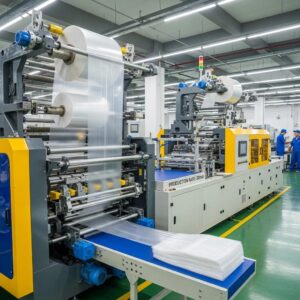
Plastic Bag Making Machines for Sale in Pretoria
Plastic Bag Making M
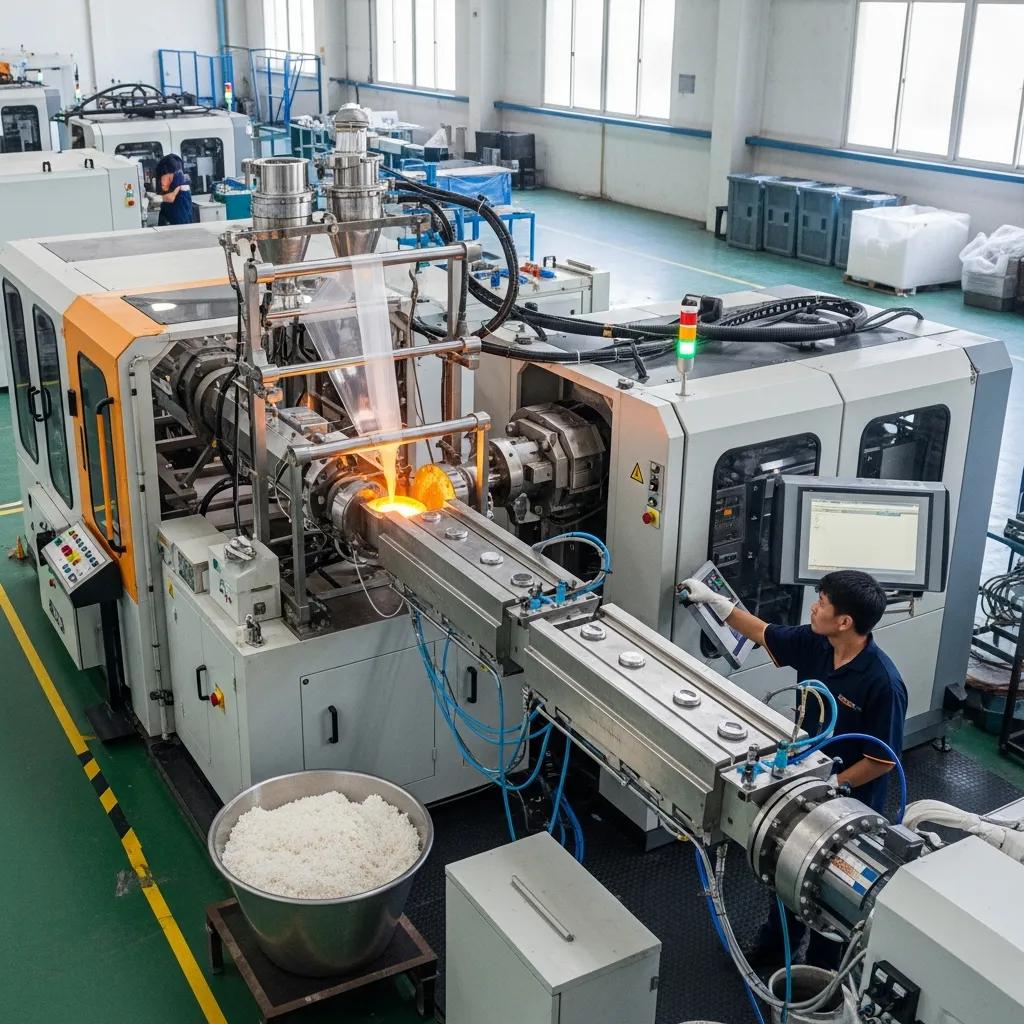
Blown film extrusion is an industrial process that converts polymer resins into continuous plastic film by extruding a molten tube and inflating it into a controlled bubble for cooling and winding. This guide explains how blown film extrusion machines available to manufacturers in George and the broader Garden Route can help produce HDPE, LDPE and LLDPE films for bags, agricultural covers and packaging. Many local businesses seek machines that combine reliable performance, easy operation and rapid after-sales support to minimise downtime and speed time-to-market. The article maps buyer priorities, compares machine types, outlines key specifications and shows how blown film lines integrate with printing, bag-making and recycling equipment. You will also find practical steps to request a quote and what information suppliers need to size a line correctly. Throughout we use regional context—George, Garden Route and nearby South African markets—to make machine selection and procurement guidance directly actionable.
Blown film extrusion machines in George give manufacturers close technical support, faster spares delivery and lower transport costs compared with sourcing solely from distant suppliers, which improves uptime and predictable production starts. Local availability shortens lead times and reduces logistical uncertainty, while regional service providers can handle on-site commissioning, operator training and routine maintenance to keep lines running. Choosing local supply also simplifies warranty response and parts replacement, which matters when producing market-sensitive products like retail bags and agricultural films.
Manufacturers in George gain three core advantages from local blown film extrusion supply:
These buyer benefits make local purchasing attractive for businesses targeting rapid scale-up and consistent product quality, and they lead into practical considerations about support scenarios and delivery impacts.
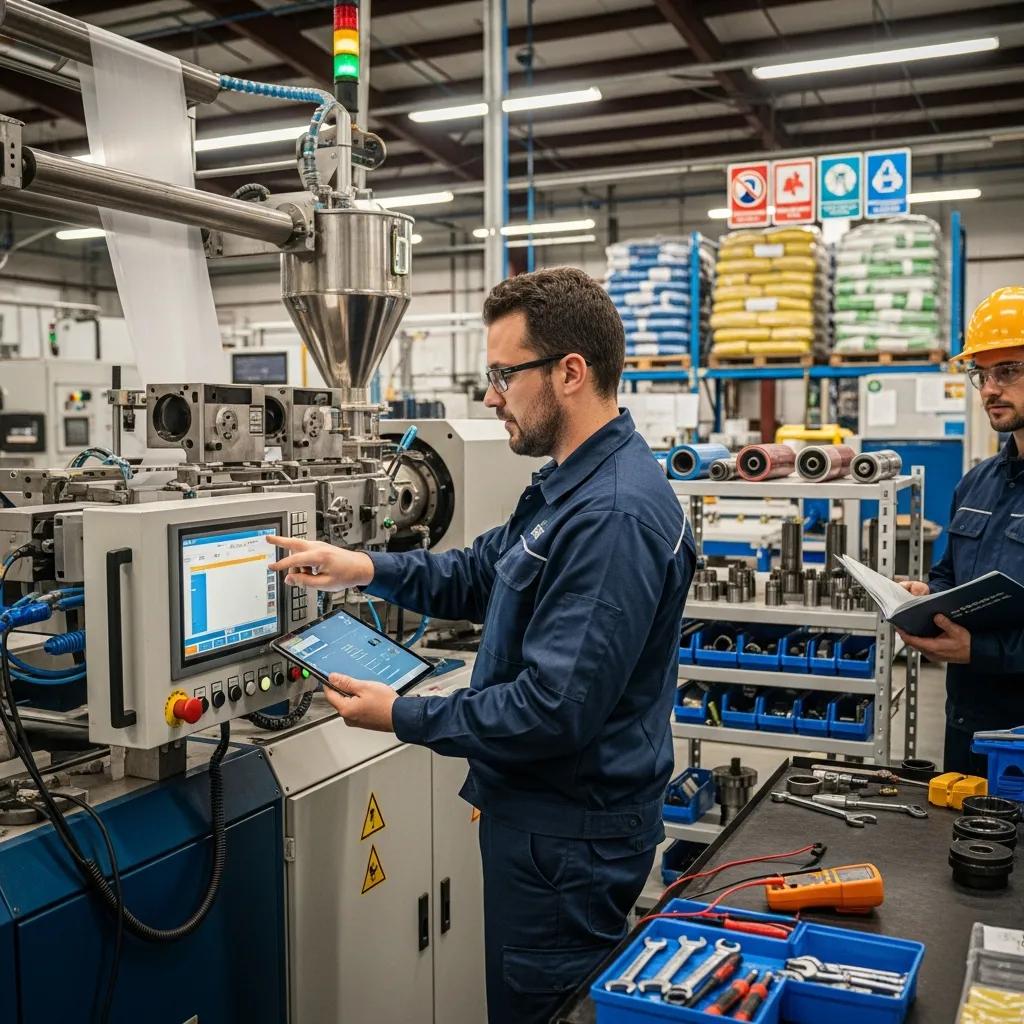
Local support and after-sales service mean faster response times for installation issues, spare parts delivery and preventive maintenance, which together reduce unplanned downtime and production losses. On-site installation and commissioning ensure correct line set-up—die head alignment, air ring tuning and PLC/HMI parameterisation—so film gauge and bubble stability meet specification from day one. Service contracts commonly cover scheduled maintenance visits, recommended spare-part kits and remote troubleshooting to shorten resolution cycles; ask potential suppliers about guaranteed response SLAs and availability of technicians in the Garden Route. Knowing what to expect from local support lets buyers plan maintenance windows and maintain production continuity while improving long-term equipment reliability.
This focus on dependable support naturally leads to the next commercial factor: how competitive prices and fast delivery alter a manufacturer’s return on investment and operational planning.
Competitive machine pricing and accelerated delivery reduce the time between purchase decision and revenue-generating production, improving cash flow and lowering opportunity cost when entering new product lines. Shorter lead times permit tighter inventory planning for raw materials like HDPE or LLDPE pellets, and they allow manufacturers to respond to seasonal demand for agricultural film or retail bags. Economically, lower capital outlay paired with faster commissioning shortens payback periods and raises project viability for smaller shops in George. When evaluating quotes, compare total landed cost, expected delivery window to the Garden Route and included services such as installation, training and spare-part kits to assess full value.
Understanding cost implications and timelines sets the stage for selecting the right machine family—mono-layer, multi-layer or co-extrusion lines—that match product requirements and production targets.
Blown film extrusion options in George range from mono-layer single-extruder lines to multi-layer co-extrusion systems that combine multiple extruders feeding a multi-manifold die head for barrier or functional layers. Mono-layer blown film machines are simpler, cost-effective and appropriate for economy bags and single-layer films; multi-layer co-extrusion lines add barrier, tie or EVOH layers to meet packaging requirements. Material compatibility varies by machine: dedicated HDPE lines use high-torque extruders and specific die profiles, while LDPE/LLDPE lines favour different screw geometry and cooling strategies to control melt strength and gauge.
Different blown film line types and their typical attributes:
| Line Type | Typical Throughput | Typical Applications |
|---|---|---|
| Mono-layer blown film machine | Low–medium (suitable for small to medium bag production) | Shopping bags, shrink wrap, basic films |
| Multi-layer co-extrusion line | Medium–high (adds functional layers) | Barrier packaging, laminated films, high-performance sacks |
| HDPE/LLDPE-specific extruder line | Medium (high torque) | Carrier bags, heavy-duty sacks, tubular film |
This comparison helps buyers decide whether a simple mono-layer solution or a more complex co-extrusion line is appropriate; after choosing the line class, explore integration options with bag-making and printing equipment for turnkey production. Plastic Bag Machine South Africa is a supplier of plastic bag production machinery, including blown film extrusion machines, plastic bag making machines, flexo printing machines, plastic recycling machines and other related equipment. That supplier emphasis on a one-stop approach supports buyers seeking integrated solutions spanning extrusion to finished bags.
A mono-layer blown film machine uses one extruder and produces a single homogenous film layer, delivering lower system complexity, simpler process control and lower purchase price, which is ideal for basic bags and commodity films. In contrast, multi-layer co-extrusion lines combine two or more extruders into a co-extrusion die head that forms layered structures, enabling barrier layers, adhesive tie layers or recycled-content layers while maintaining surface properties for printing or sealing. Multi-layer systems require precise melt pressure balance, matched screw designs and advanced die head engineering to ensure layer distribution and bubble stability. Buyers should weigh increased capital and operational complexity against the product performance benefits that co-extrusion delivers for specialized packaging applications.
This structural difference informs the throughput, footprint and operator skills required, which in turn affects which polymers the line can handle effectively.
Machine selection for HDPE, LDPE and LLDPE depends on extruder screw design, L/D ratio and the die/air-ring configuration that manage melt strength and bubble cooling; HDPE typically needs higher torque and specific die gaps to produce stiff films, while LDPE/LLDPE require attention to melt strength and crystallisation behaviour for consistent gauge. For HDPE film blowing, choose extruders with compression profiles that yield a homogeneous melt and a die head designed for narrow temperature windows; for LDPE and LLDPE, select screw configurations that promote mixing and control shear to minimise gel or haze. Practical examples include HDPE carrier bag production on high-torque single-extruder lines and agricultural mulch film on multi-layer LLDPE lines with UV-stabiliser dosing.
| Machine Class | Key Extruder Attribute | Polymer Best Suited |
|---|---|---|
| HDPE film extruder | High torque, moderate L/D | HDPE |
| LDPE/LLDPE extruder | Mixable screw, controlled shear | LDPE, LLDPE |
| Co-extrusion line | Multiple matched extruders | Blends and layered films |
This EAV-style table clarifies the relationship between extruder attributes and polymer compatibility to inform procurement decisions.
Key components that determine film quality are the extruder screw (diameter and L/D ratio), die head profile, air ring cooling system and the control panel (PLC/HMI) that manages process parameters. The extruder screw determines melt homogeneity and throughput through its compression ratio and mixing elements; the die head and air ring control bubble formation and cooling which affects gauge uniformity and film flatness. Automation, including PLC-based recipe management and closed-loop gauge control, reduces operator variability and supports repeatable output across production shifts.
The table below compares common technical attributes across representative extruder sizes to help buyers assess performance vs cost.
| Extruder Model | Screw Diameter | Typical Output |
|---|---|---|
| Model A (small workshop) | 45 mm | Low–medium output for sample and small-batch runs |
| Model B (standard production) | 65 mm | Medium throughput for continuous bag production |
| Model C (high-capacity) | 90 mm | High throughput for large-scale film lines |
This table helps translate technical attributes into expected production capability and guides conversations with suppliers about the right extruder size for target film output. Understanding components and specs leads directly to buyer choices on screw geometry and die systems.
Extruder screw diameter and L/D ratio determine melt throughput and residence time, which control melt temperature, homogenisation and dispersion of additives or regrind. Screw geometry with mixing elements improves dispersion of pigments, UV stabilisers or filler materials, reducing gels and improving optical properties, which is crucial for printed retail bags. L/D ratio influences pressure build-up and shear history; higher L/D can offer more consistent melt but may increase residence time and thermal exposure. When specifying a machine, request details on screw metallurgy, changeable mixing sections and options for high-torque motors to match the intended polymer and regrind ratios.
Naturally, screw selection must be considered alongside die head and air ring choices that stabilise the bubble during cooling.
Die head design controls melt distribution around the bubble circumference; an annular die with adjustable gap and mandrel tuning improves thickness uniformity and reduces transition marks. The air ring provides controlled cooling and stabilises the bubble; precisely regulated airflow and temperature management are essential to gauge control, surface finish and mechanical properties of the film. Automation systems—PLC/HMI with recipe storage, melt-pressure monitoring and closed-loop thickness control—minimise operator dependence, enabling consistent runs and faster changeovers between products. Buyers should ask suppliers about die adjustability, air-ring control precision and the availability of automation modules for remote diagnostics and process logging.
Selecting optimized die and air-ring systems increases yield and reduces scrap, which ties into applications and downstream integration.
Blown film extrusion lines in George are commonly applied to produce retail shopping bags, agricultural films, packaging films and industrial sheeting, each with distinct layflat widths, thickness ranges and mechanical property requirements. Retail bags commonly require printable surfaces and moderate tensile strength; agricultural films demand UV stabilization, thicker gauges and additive dispersion for weather resistance; packaging films often need multi-layer constructions for barrier properties and sealability. The production workflow moves from resin handling and extrusion through bubble cooling, flattening, corona treatment (if printing) and winding or slitting for finished reels. Mapping product specs to appropriate line configuration ensures output meets customer requirements and downstream processes like printing or bag-making run smoothly.
Several local sectors in George and the Garden Route benefit from plastic bag manufacturing including retail and grocery stores that need printed consumer bags, agriculture for mulch and crop covers, and light industry for packaging and component protection. Retail customers often require flexo-printed films with good surface finish and consistent gauge for reliable sealing and branding. Agricultural users prioritize UV-stable, thicker films with higher tear resistance and larger layflat widths for row covers and silage wrap. Identifying target markets helps manufacturers choose whether to prioritize in-line printing capability, multi-layer barrier performance or robust winder systems for wide-format agricultural reels.
Agricultural and packaging films typically follow a sequence: resin selection and drying, extrusion with appropriate screw/die setup, bubble cooling controlled by air ring and haul-off, optional corona treatment for print adhesion, and winding/slitting to customer reel specifications. Agricultural films often use co-extruded LLDPE layers with UV stabilisers dosed during extrusion, followed by wide-width winding and protective packaging for transport. Packaging films destined for printing will usually receive corona treatment and be processed on precision winders to maintain registration for later flexo printing or bag conversion. Attention to material handling, moisture control and downstream coating or printing steps ensures consistent product quality for both sectors.
An integration table below outlines common process-to-equipment mapping used in local lines.
| Process Stage | Typical Equipment | Purpose |
|---|---|---|
| Extrusion | Blown film extruder, die head | Form molten film bubble |
| Surface treatment | Corona treater | Improve ink adhesion for printing |
| Converting | Slitter, bag-making machine | Cut and form finished products |
This mapping clarifies where additional equipment is needed in a production sequence and highlights integration opportunities.
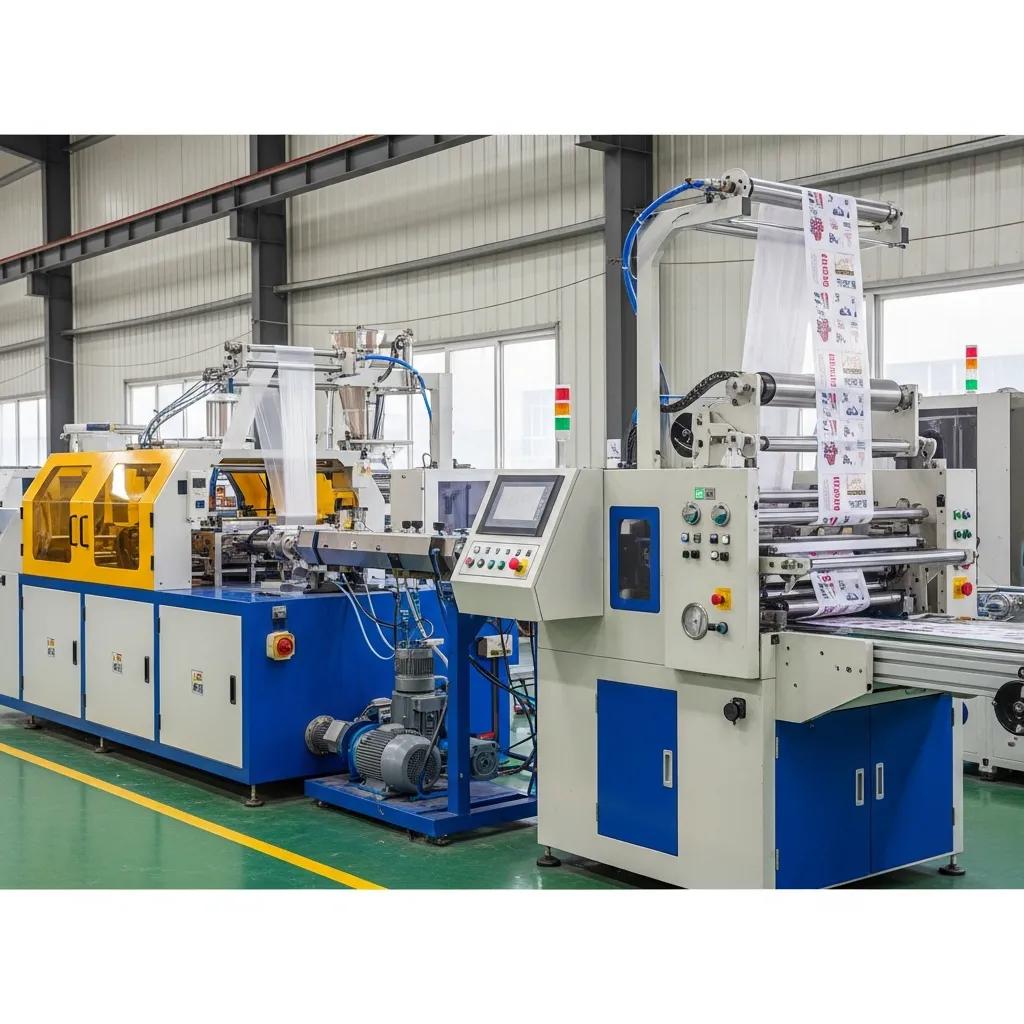
Blown film extrusion lines integrate with flexo printing machines, bag-making equipment and recycling systems to create turnkey production lines that shorten workflows and improve quality control. In-line printing and bag-making reduce handling, maintain registration and accelerate throughput; combining extrusion with bag-making in a single production cell can lower labour requirements and minimise intermediate storage. Recycling equipment such as granulators, washing lines and pelletisers can be connected to supply regrind or recycled pellets back into the extruder feed, supporting cost reduction and circularity when quality control and moisture management are maintained. The integration choices depend on desired product mix, footprint constraints and the degree of automation sought.
The table below maps common integrations and benefits for buyers planning a combined line in George facilities.
| Blown Film Extruder | Integratable Equipment | Primary Benefit |
|---|---|---|
| Blown film extruder | Flexo printing machine (in-line) | Shorter production workflow and improved registration |
| Blown film extruder | Plastic bag making machine | Direct conversion to finished bags reduces handling |
| Blown film extruder | Plastic recycling machine | Enables regrind use and lowers raw material cost |
This mapping helps purchasers visualise a phased investment plan and the operational benefits of combined lines.
Combining flexo printing with bag-making in-line reduces handling steps and preserves print registration because the film travels directly from extrusion and corona treatment to printing and conversion. In-line integration reduces lead time between extrusion and finished bag, lowers labour and reduces potential damage or contamination during handling. The trade-offs include higher initial capital and greater process complexity; however, these are offset by reduced inventory, quicker order fulfilment and more consistent print quality for branded retail bags. For buyers targeting retail customers in Cape Town, Johannesburg or Gqeberha, integrated printing and bag-making can be a competitive advantage.
These advantages make combined lines attractive where print quality, speed and lower unit costs are priorities.
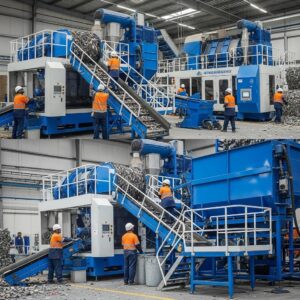
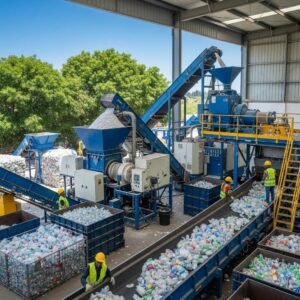
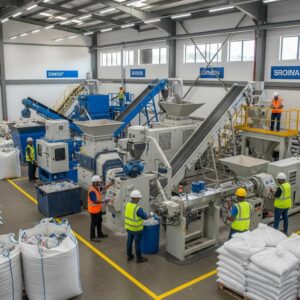
Plastic recycling machines—granulators, washers and pelletisers—enable producers to reclaim production trim, edge scrap and post-industrial regrind for reintroduction into blown film extrusion, reducing raw material costs and supporting circular production. Practical guidance includes limiting allowable regrind ratios based on product specification and mechanical property requirements, controlling moisture and contamination, and implementing quality checks to avoid defects in final film. Recycling integration requires appropriate feeding systems, melt filtration and occasionally a twin-screw extruder designed to process higher regrind content. When executed correctly, recycling supports sustainable product claims while preserving film performance and lowering material spend.
Integrating recycling capability must be planned with suppliers to ensure compatibility with intended polymer grades and final product standards.
Requesting a quote for blown film extrusion equipment requires clear production specifications, target output rates, preferred polymers and any intended integrations such as printing, bag-making or recycling so suppliers can size extruders, die heads and automation appropriately. Typical information to provide includes desired layflat width, film thickness range (gauge), target kg/hour or tonnes/year, polymer grades (HDPE, LDPE, LLDPE), and footprint or utility constraints at the installation site. After an initial enquiry, expect suppliers to ask for site details, discuss lead times and propose machine configurations with optional services such as installation and training. The three-step process below summarises an efficient approach to obtaining competitive proposals and understanding next steps.
Follow these three steps to request a quote and progress to purchase:
Plastic Bag Machine South Africa emphasizes one-stop service, strong R&D, production capacity, competitive prices, fast delivery, timely after-sales service. Supplier proposals should include expected lead-times, included services and options for commissioning and operator training so buyers in George can compare total value rather than purchase price alone.
Start by submitting target film specifications and production goals so suppliers can recommend extruder sizes, die heads and automation packages tailored to your needs; include whether you plan to integrate flexo printing, bag-making or recycling lines. After initial technical scoping, suppliers typically provide a written proposal outlining machine configuration, estimated delivery to the Garden Route, installation services and optional training or spare-part kits. Upon order, expect factory acceptance testing and coordinated delivery schedules followed by on-site commissioning and operator training; local technical support and spare parts provisioning shorten ramp-up time and protect production continuity. Asking detailed questions about warranty coverage, spare-part lead-times and technician locations will clarify after-sales expectations before purchase.
This stepwise procurement flow ensures accurate quotes and realistic timelines for commissioning in George facilities.
Manufacturers commonly ask about material compatibility, maintenance requirements, warranty and training; precise answers depend on chosen line type but generally include recommended regrind ratios, service intervals and availability of local technicians. Typical warranty expectations include basic equipment coverage with optional extended support plans; buyers should request written details on spare-part kits and recommended stock levels. Training packages often cover operator basics, preventive maintenance and basic PLC recipe management to minimise downtime. When evaluating proposals, prioritise suppliers that provide clear documentation, accessible technical support and an equipment handover that includes test runs to verify film properties.
These practical questions and answers help buyers compare offers and select machines that match production, quality and service expectations.
Plastic Bag Making M
Plastic Recycling So
Plastic Recycling So
Plastic Recycling So