
Plastic Bag Making Machines for Sale in Pretoria
Plastic Bag Making M
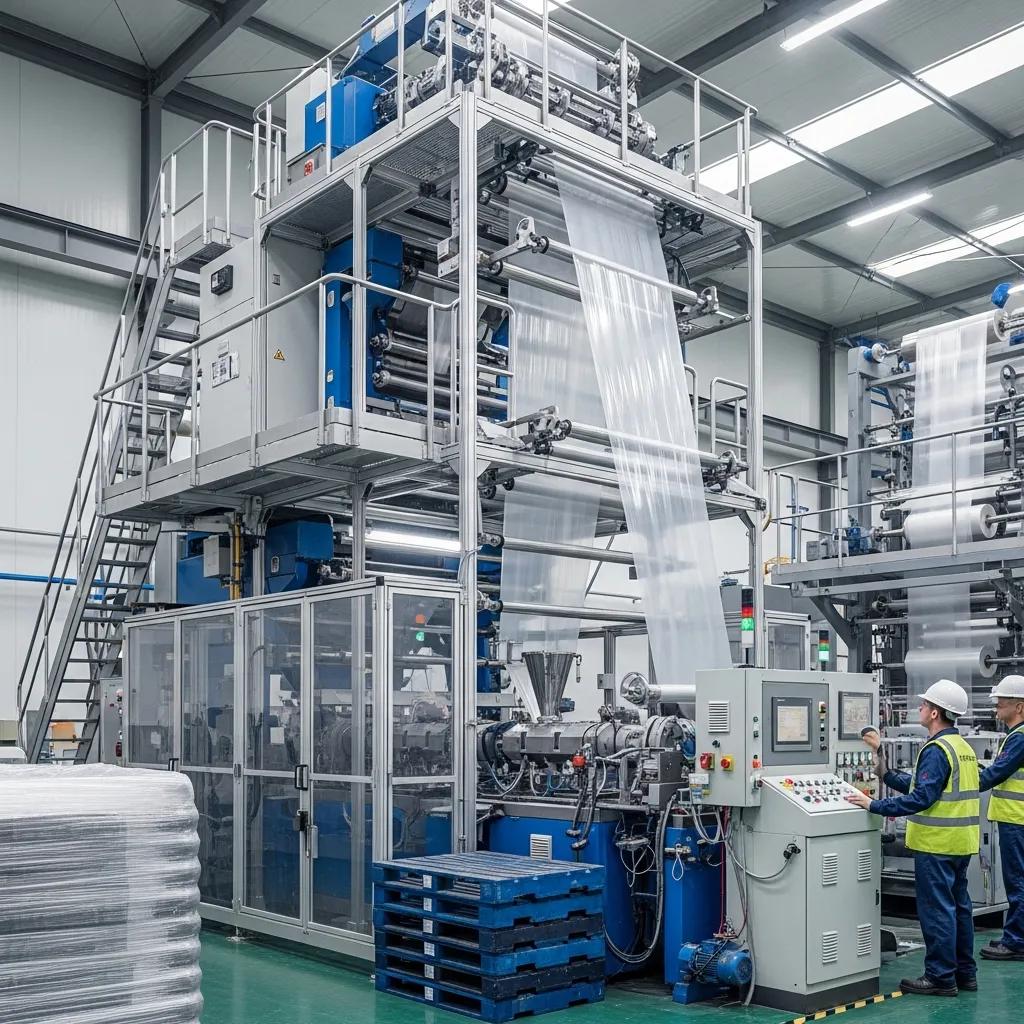
Blown film extrusion machines convert molten polymer into tubular film by extruding through a circular die and inflating the melt into a thin bubble, producing film used for bags, wraps, and laminated structures. This guide explains how blown film extrusion works, which machine types and components determine performance, and why local availability in Kempton Park matters for South African manufacturers. Buyers will learn to match monolayer or co-extrusion lines to product needs, evaluate material compatibility including recycled compounds, and plan complete production workflows that integrate printing and bag making. The article also maps technical features — screws, die heads, winders and optional feeders — to real-world benefits like throughput, film uniformity and maintenance requirements. Read on to compare machine families, review material processing guidelines, understand how extrusion lines feed bag production, assess supplier and used-equipment options, and see the practical service advantages offered by a vetted local distributor.
Blown film extrusion machines available to Kempton Park buyers fall into two principal categories: monolayer extruders for straightforward films and co-extrusion lines for multi-layer structures that add barrier or mechanical properties. Monolayer machines extrude a single polymer stream through a die and are suited to simple packaging and commodity bags because their mechanical complexity is lower and set-up is faster. Co-extrusion systems combine two or more polymer streams through a multi-manifold die to produce films with dedicated seal, core and barrier layers, delivering improved functionality for food packaging or high-strength applications. Understanding these types helps you choose the right balance of cost, complexity and product performance before reviewing machine sizing and optional modules.
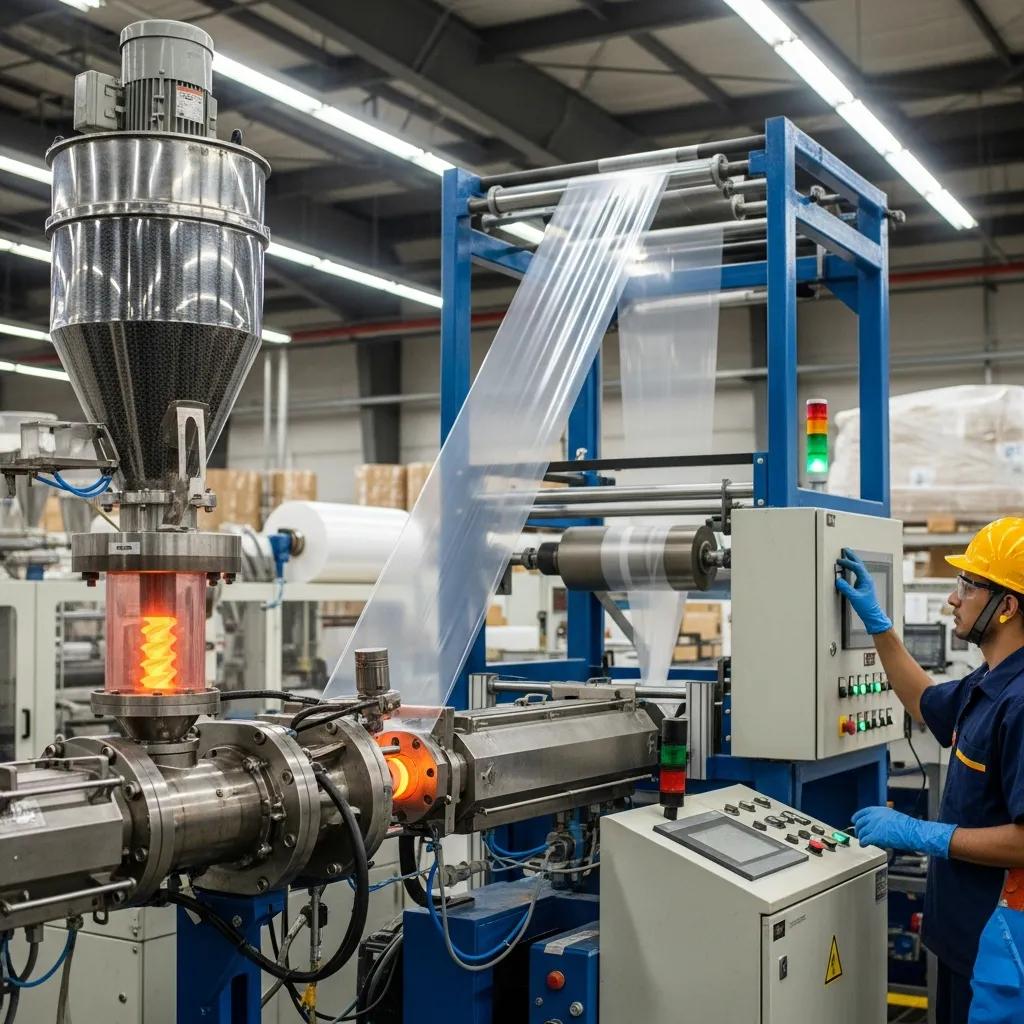
Monolayer blown film extruders are single-screw or twin-screw machines that melt one polymer and form a film with straightforward process control, making them cost-effective for commodity bags and simple packaging. Typical screw diameters range from small production sizes to larger industrial screws, with output rates commonly spanning from about 100 kg/h for compact units up to 600 kg/h for more powerful models; film widths often fall between 150 mm and 1000 mm depending on die size and winding configuration. These machines favor polymers like LDPE and LLDPE and are chosen when product demands focus on volume, low complexity and ease of maintenance. Buyers who value simple operation and quick changeovers will prefer monolayer lines, which also minimize tooling costs compared with co-extrusion systems.
| Machine Type | Typical Output (kg/h) | Typical Film Width (mm) | Common Use Cases |
|---|---|---|---|
| Monolayer | 100–600 | 150–1000 | Shopping bags, T-shirt bags, simple packaging |
| 2-layer co-extrusion | 150–700 | 200–1200 | Films with seal or slip layers, improved mechanical properties |
| 3-layer co-extrusion | 200–900 | 300–1400 | Barrier films, food packaging, high-strength industrial bags |
This comparison clarifies the trade-offs between simplicity and functionality and leads naturally into a closer look at multi-layer co-extrusion advantages.
After evaluating basic machine families, many buyers ask about local sourcing and service; a practical option for Kempton Park manufacturers is to work with a local distributor acting for an established manufacturer to secure machines, spare parts and maintenance support.
For buyers who want local supply and specification support, Plastic Bag Machine South Africa operates as a local presence and distributor for Kingdom Machinery Co., Ltd., offering families of monolayer and co-extrusion blown film lines plus ancillary equipment. Plastic Bag Machine South Africa emphasizes simple operation, easy maintenance, customization and timely after-sales support; standard machines can be delivered quickly with lead times reported as 15–25 days for stock configurations, and the supplier cites quality controls such as 100 percent final inspection and a two-year warranty on electrical components including timer switches. Prospective buyers in Gauteng can request model specifications or quotations directly through the distributor to compare capacity and optional modules before ordering.
Blown film extrusion machines process a range of thermoplastics including HDPE, LDPE, LLDPE and PP, as well as blends that include recycled or biodegradable resins; the chosen polymer affects melt handling, die design and downstream finishing. Processing suitability depends on melt flow index (MFI), temperature profile and additive packages; for example, higher-MFI resins require tighter melt control and may benefit from specialized screw designs to preserve melt homogeneity. Using recycled content introduces variability that must be managed with drying, filtration and dosing systems to maintain film appearance and mechanical properties. Understanding material-specific processing constraints helps align machine options — screw geometry, die tolerance and filtration modules — to the polymers you intend to run.
HDPE, LDPE and LLDPE each present distinct processing needs: LDPE typically melts at lower temperatures and yields flexible films with good sealing, LLDPE combines strength and elongation, and HDPE gives stiffer films used in thicker bags. Melt flow index ranges and temperature setpoints vary by resin and grade, and machines must provide appropriate screw compression ratios and barrel heating zones to optimize melt homogeneity; gravimetric dosing and melt filtration help maintain consistent output when running additives or color concentrates. For each polymer, recommended features include controlled cooling (air ring and frost line control) and precise winding to prevent gauge variation, with common end-products including T-shirt bags (LDPE/LLDPE blends), heavy-duty refuse bags (HDPE) and industrial liners.
| Material | Processing Notes | Typical MFI Range (g/10min) | Compatibility with Recycled Content |
|---|---|---|---|
| LDPE | Flexible melt, tolerant to variations, good heat-seal | 0.3–5 | Good with controlled filtration |
| LLDPE | Higher tensile strength and elongation, needs stable melt | 0.5–3 | Good with compatibilizers |
| HDPE | Stiffer films, requires higher shear or specific die control | 0.1–2 | Acceptable for thicker films with sorting |
This material breakdown prepares the buyer to specify machine adjustments for the polymers they plan to use and points to the next practical topic: incorporating recycled and biodegradable compounds.
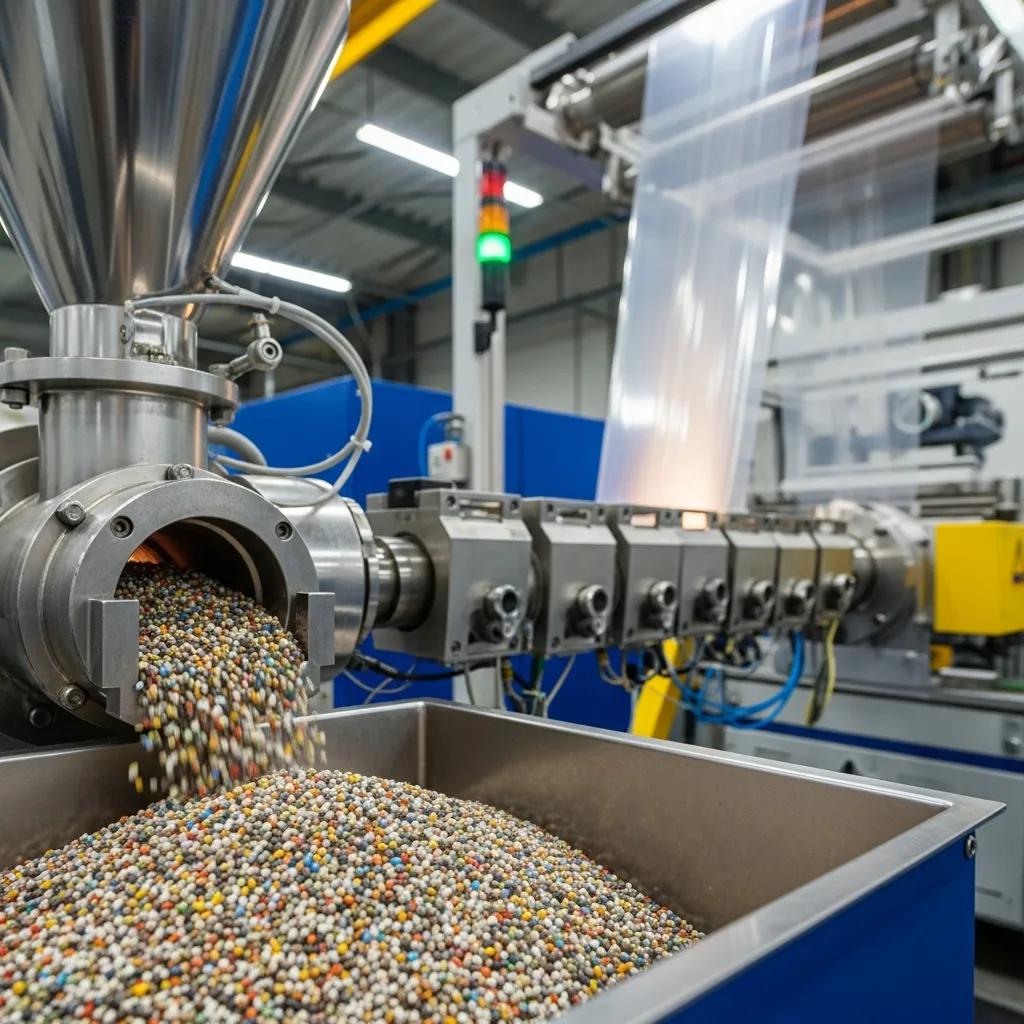
Running recycled pellets or biodegradable resins requires pre-processing steps such as drying, density sorting, and melt filtration to reduce contamination and improve film quality; these measures mitigate common issues like gel formation and inconsistent transparency. Recycled content can lower costs and support sustainability goals, but it typically reduces optical clarity and can alter mechanical strength, so blends and compatibilizers are often used to restore target properties. Optional equipment like gravimetric dosing units, inline melt filters and twin-screw compounding modules help integrate recycled or additive-rich streams while preserving throughput. Planning for quality control, traceability and certification where required helps manufacturers balance sustainability claims with product performance and customer expectations.
Blown film extrusion is the upstream stage of plastic bag manufacturing: extrusion produces the film, which is then cooled, flattened, printed if required, slit and converted into finished bags on bag-making machines. The extrusion line must deliver consistent film gauge and width to optimize downstream cutting and sealing operations, and effective integration with flexo printing and slitting systems ensures minimal web handling issues and high first-pass yields. Choosing the right extruder capacity and winder configuration directly impacts bag maker throughput and scrap rates, so system design should consider the full process from resin dosing to final bag packaging. The following subsections describe recommended line configurations for common bag types and the technical steps needed to add printing and slitting for finished products.
Efficient production of T-shirt, shopping and garbage bags begins with selecting an extruder and winder that match target bag width and required throughput; smaller operations often use compact monolayer extruders and compact winding, while high-volume lines benefit from larger screws and automatic winding systems. Typical throughput considerations include cycle speed of the bag maker, film layflat width, and winding changeover time; bottlenecks frequently stem from unstable film gauge or frequent winder stops. To optimize yield, manufacturers should implement stable melt control, use auto-trimming and edge-guide systems, and schedule preventive maintenance on screws and gearboxes. Properly sizing the entire line from extrusion capacity through slitter and bag maker reduces downtime and supports predictable per-bag production costs.
This list summarizes typical operational focus areas for efficient bag production:
These operational practices reduce variability and prepare the film for added print processes described next.
Adding flexo printing and slitting to a blown film line requires attention to surface treatment, registration, tension control and curing or ink setting; corona treatment is commonly applied to increase ink adhesion, and precise web handling prevents registration errors. Printing-ready film must present consistent surface energy and gauge uniformity; otherwise, printed graphics suffer from color variation or misregistration during bag conversion. Slitting and rewind operations must be configured to deliver parent rolls compatible with downstream bag makers, and operators should implement checkpoints for print quality, slit-edge integrity and roll balance. Investing in inline inspection systems and proper treatment stations improves final-product appearance and reduces waste during conversion.
For buyers in Gauteng, selecting a supplier with local presence and distributor capabilities can shorten lead times, simplify spare-parts access and provide timely technical support during installation and operation.
Plastic Bag Machine South Africa operates as a local presence and distributor for Kingdom Machinery Co., Ltd., offering blown film extrusion machines alongside flexo printing, bag-making and recycling equipment. The distributor emphasizes simple operation, easy maintenance and timely after-sales service, which can translate into faster start-up and reduced downtime for Kempton Park manufacturers. The following subsections outline the concrete support services and warranty/quality assurances prospective buyers should expect.
Local support includes installation assistance, operator training and access to spare parts and online troubleshooting; these services reduce the operational risks of commissioning new equipment and accelerate time-to-production. According to supplier information, standard machines may be available for fast delivery with typical lead times of 15–25 days for in-stock configurations, while 24-hour online service aims to provide rapid technical response when issues arise. Buyers should confirm the extent of on-site training and spare-parts stock prior to purchase to ensure uninterrupted production. Establishing clear service-level expectations with the supplier helps align readiness for urgent repairs and routine maintenance.
Key local support benefits include:
These support features reduce operational risk and lead naturally into the supplier’s stated quality assurances.
Customization and a rigorous inspection process provide buyer confidence that machines will match specified performance; the distributor highlights strong R&D and customization capabilities to tailor line configurations and optional modules. Quality assurance measures such as 100 percent final inspection aim to verify mechanical function and build quality before shipment, while specific warranty coverage — for example, a two-year warranty on electrical components including timer switches as stated — offers limited, targeted protection on certain parts. Buyers should evaluate which warranty items are covered and request written documentation of inspection and warranty terms to reduce acquisition risk. Clear QA and warranty agreements help ensure predictable performance and facilitate claims handling if components under warranty require repair or replacement.
Key features that determine blown film machine performance include screw and barrel design, die head precision, automatic winding systems, and optional modules like corona treaters and gravimetric dosing units. Screw geometry and surface treatments affect melt homogeneity and wear resistance; die head design controls bubble stability and gauge uniformity; and winding systems influence roll quality and changeover efficiency. Modern extruders also support automation features that stabilize process variables and reduce operator dependency, improving repeatability across production runs. The table below maps critical components to their specifications and buyer benefits so you can prioritize upgrades and maintenance practices when specifying a line.
| Component | Specification / Material | Benefit |
|---|---|---|
| Screw | Hardened/nitrided alloy (e.g., 38CrMoAl style treatments) | Improved wear resistance and longer service life |
| Die Head | Precision-manifold designs, adjustable gap control | Better gauge control and reduced thickness variation |
| Winder | Automatic tension control and roll change systems | Higher roll quality and less downtime during changeover |
| Optional Modules | Corona treater, gravimetric dosing, inline filters | Improved printability, accurate dosing and cleaner melt streams |
Understanding component-level choices helps buyers estimate maintenance needs and performance trade-offs and leads into specific screw and barrel design implications.
Screw and barrel selection is central to throughput and melt quality; screws with optimized compression ratios and nitrided surface treatments reduce wear from abrasive fillers and recycled content while preserving melt homogeneity. The right design balances shear and residence time to avoid thermal degradation and promotes dispersion of additives or fillers, which improves film appearance and mechanical properties. Maintenance practices such as scheduled inspection of wear patterns and having spare screws or barrel liners on hand reduce unplanned downtime and protect production targets. Considering screw metallurgy and treatment when specifying a machine will directly influence operating costs and long-term reliability.
Practical screw/barrel considerations include:
These mechanical choices feed into downstream film quality achieved through die and winding systems.
Die head precision affects film gauge and concentricity, with balanced manifolds and adjustable gap controls enabling tighter thickness tolerances; this directly improves print registration and conversion yields. Automatic winding systems with tension and roll-profile control reduce manual interventions, enable faster roll changes and help maintain consistent roll density. Optional equipment such as corona treaters, chill rings, gravimetric dosing units and inline melt filters add functional value: corona improves surface energy for printing or coating, dosing units deliver accurate additive rates, and filters remove contaminants to protect die and film appearance. Selecting the right combination of die and ancillary equipment ensures that the film meets downstream requirements without excessive rework.
Buyers in Gauteng can source new machines through local distributors or authorized resellers and may find used machines via equipment brokers, refurbishers or industrial marketplaces; each option carries trade-offs in cost, lead time and risk. New machines offer guaranteed specifications, warranty coverage and quicker access to manufacturer support, while used equipment may lower capital cost but require careful technical inspection and potential refurbishment. Regardless of route, evaluating documentation, run-hours, spare parts availability and the supplying party’s service capability is essential to protect production continuity. The subsections below outline how to compare new versus used machines and criteria for validating local suppliers.
When comparing new versus used machines, consider total cost of ownership: new equipment carries manufacturer warranties and typically lower short-term risk, while used machines may require investment in refurbishment, spare parts and potentially suffer from undocumented wear. Technical checks for used machines include verifying serial numbers, reviewing runtime logs where available, inspecting screw and barrel wear, testing electrical and control systems, and performing trial runs under load with representative resins. Buyers should factor in potential downtime for refurbishment, shipping and installation costs when assessing purchase price. A thorough checklist and, if possible, a factory or third-party inspection help quantify the risk premium for used equipment.
New vs. used buying checklist highlights:
Completing these checks reduces surprises and supports an informed purchase decision from local suppliers.
Local suppliers include authorized distributors, independent resellers and specialized equipment brokers; evaluating a supplier involves reviewing their service offerings, spare-parts stock, installation and training capabilities, and references from existing customers. For buyers in Gauteng, working with a distributor that represents an established manufacturer combines access to standardized machine lines with local service responsiveness. Verify the supplier’s ability to coordinate logistics, provide on-site commissioning, and deliver scheduled preventative maintenance to sustain production. Establishing clear contractual terms for delivery, inspection and warranty coverage is essential before finalizing any purchase.
Criteria for evaluating local suppliers:
These supplier-evaluation steps ensure a smoother procurement and installation process.
Plastic Bag Making M
Plastic Recycling So
Plastic Recycling So
Plastic Recycling So