
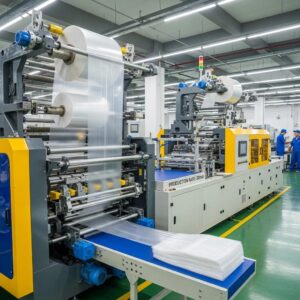
Plastic Bag Making Machines for Sale in Pretoria
Plastic Bag Making M
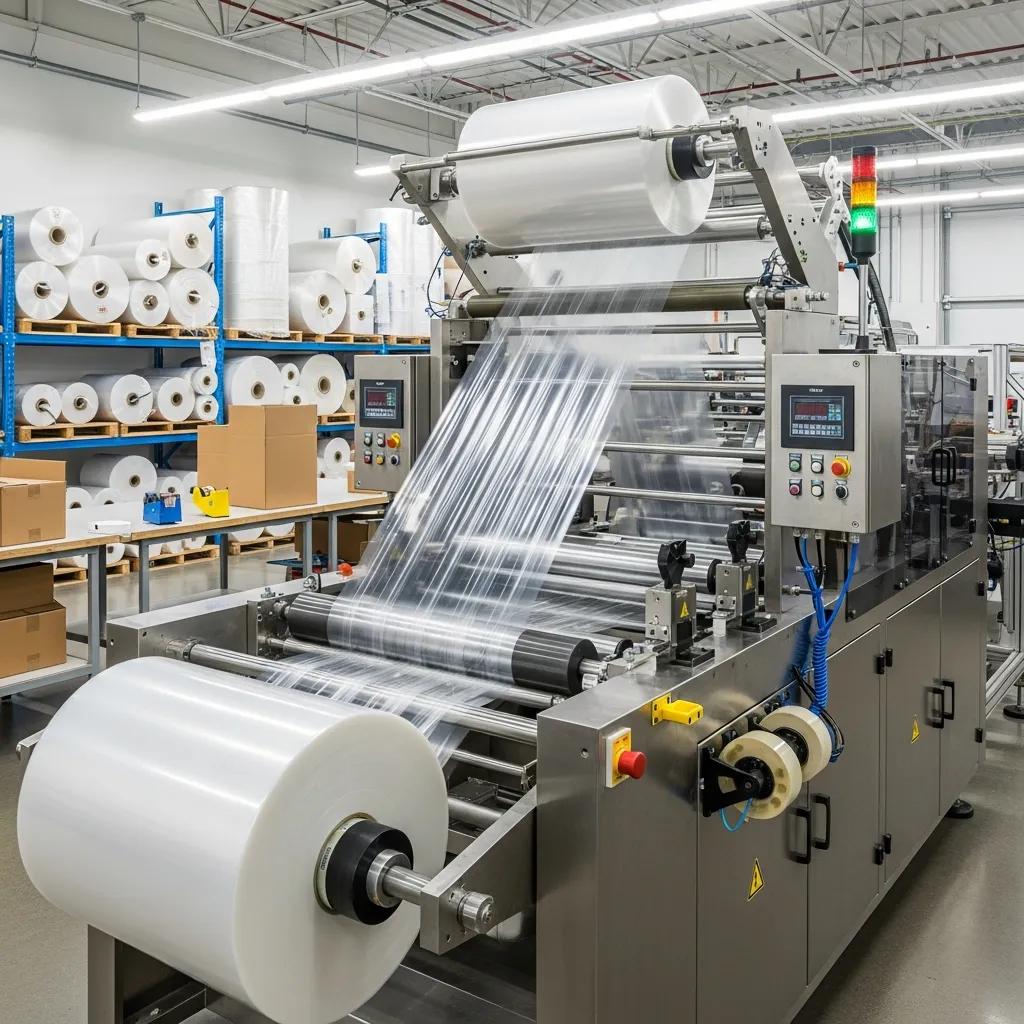
Bubble film machines convert plastic resin into air-cushioned film used to protect goods during storage and transport, and East London businesses can leverage on-demand production to reduce damage, shorten lead times, and tailor cushioning to each product line. This article explains how these machines work, the blown film extrusion process behind air-bubble film, material choices such as LDPE and LLDPE, and the practical benefits for e-commerce, manufacturing, and distribution operations in the Eastern Cape. Readers will learn which machine types suit different throughput requirements, how multi-layer co-extrusion improves strength and barrier performance, and which operational controls influence bubble integrity and film quality. We also examine sustainability options, recycling workflows, and how in-plant production reshapes cost models for local packaging. Finally, the guide outlines the types of machines available through Plastic Bag Machine South Africa, their service propositions and delivery timelines, and a clear step-by-step path for East London buyers to request quotes and evaluate return on investment.
A bubble film machine is specialized packaging machinery that extrudes plastic film and forms air-filled pockets to create cushioning that protects fragile goods from impact and abrasion; the mechanism combines extrusion, inflation and lamination to deliver consistent bubble geometry and controlled cushioning performance. These machines enhance packaging in East London by enabling just-in-time production of bubble wrap, reducing inventory of pre-made protective materials and shortening lead times for e-commerce shipments and regional distribution. Local businesses facing handling challenges and inter-city transport in the Eastern Cape benefit from on-demand sizing, custom perforations and immediate quality control that reduce claims and freight damage. Understanding machine types and workflow helps East London packagers choose equipment that balances throughput, footprint and film properties for electronics, furniture, or light industrial parts.
Bubble film machines deliver several immediate packaging advantages for local operations:
These operational gains set the stage for the technical explanation of what a bubble film machine is and which industrial variants are commonly used.
A bubble film machine melts polymer resin, extrudes a tubular film, inflates it to form the bubble cavities, and then laminates or winds the finished sheet for use as protective cushioning. The core components—extruder die, air-inflation ring, cooling tower and winder/rewinder—work together so operators can control bubble diameter, film thickness and bubble spacing, which determine cushioning effectiveness and material usage. In practice, packers use bubble film for fragile electronics, glassware, and small appliances, selecting bubble height and film gauge based on product fragility and stacking demands. Routine inspection of bubble integrity and simple machine adjustments maintain consistent quality, which directly reduces damage claims and lowers total packaging cost per shipment. Understanding these operational roles leads into the types of machines suited for different industrial needs and production scales.
Industrial bubble film machines range from compact units for low-volume, on-site production to multi-layer automatic lines designed for high-throughput manufacturing; layer count, automation level and output speed differentiate these models. Two-layer machines typically form a single bubble layer laminated to a flat film for basic cushioning, while three-layer and five-layer co-extrusion systems provide enhanced tear resistance, barrier properties and energy absorption useful for heavier or higher-value goods. Output rates vary by model and configuration, but industrial lines emphasize continuous winding, automated edge-trim and controlled bubble formation to meet production targets. Buyers should compare available footprint, energy consumption, and control-panel sophistication when choosing between compact versus full-scale systems, with the right selection balancing packaging demand and floor space.
This overview of machine types prepares the reader to understand the actual manufacturing process that creates bubble film at scale.
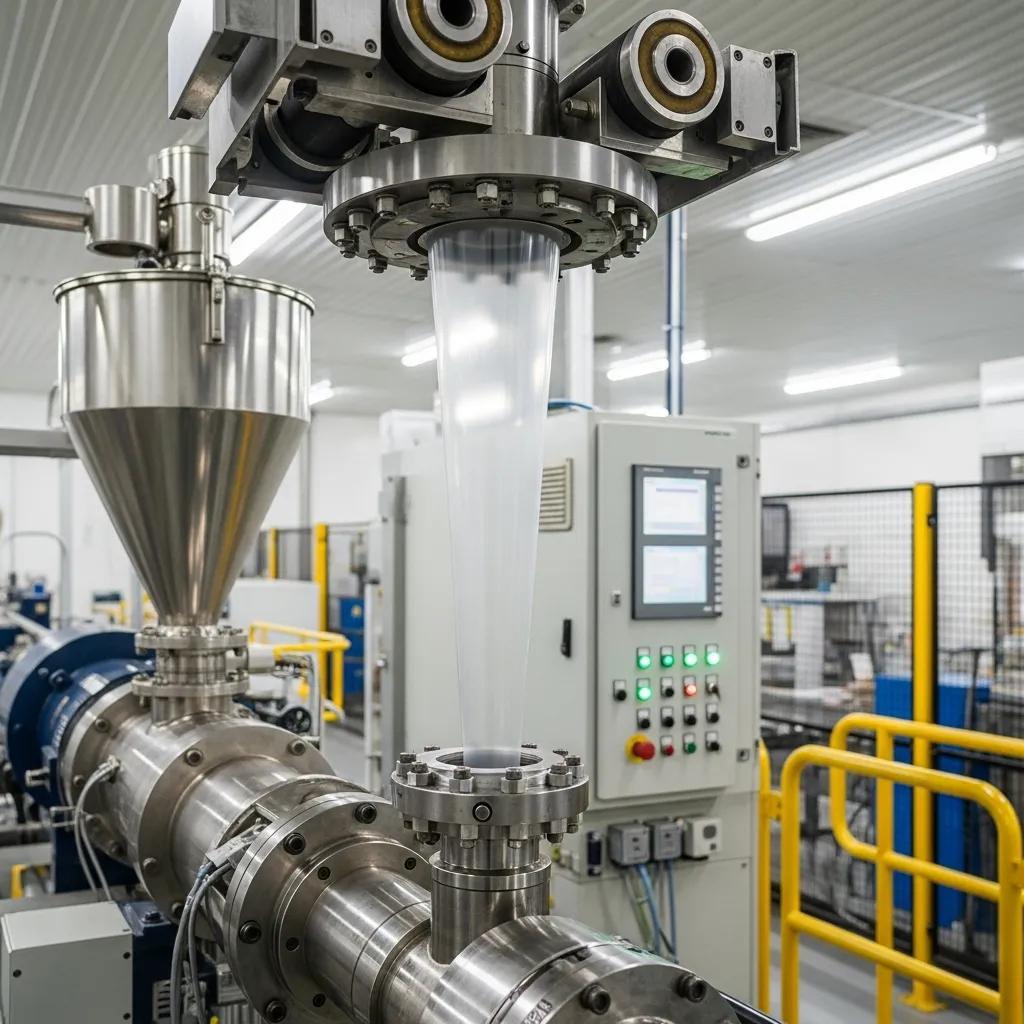
Blown film extrusion for bubble film production melts polymer resin, forces it through a circular die to create a tubular melt, inflates that tube to form the film bubble, then cools and collapses the bubble before winding; the process produces continuous film with air pockets formed by molding into a bubble structure. Key parameters—melt temperature, die dimensions, inflation air pressure and cooling rate—directly influence bubble size, wall thickness and film clarity, while co-extrusion enables multi-layer performance like improved toughness or recycled-content layers. Process control and consistent raw material quality ensure repeatable cushioning properties and low defect rates, which are essential for protective packaging reliability. The following table maps core process steps to their components and expected outcomes to make these relationships explicit for production planning.
Different stages of the blown film extrusion process and their outcomes:
| Process Step | Component | Outcome |
|---|---|---|
| Resin melting and homogenization | Extruder screw and barrel | Uniform melt viscosity for consistent extrusion |
| Tubular extrusion through circular die | Circular die | Continuous tubular film ready for inflation |
| Inflation and bubble formation | Air-inflation ring and pressure control | Defined bubble diameter and wall thickness |
| Cooling and collapse | Cooling tower and nip rollers | Stabilized film dimensions for downstream processing |
This process breakdown clarifies how each control point impacts final bubble integrity and film performance, guiding machine specification and operator training.
Blown film extrusion technology uses a circular die to produce a continuous tube of molten polymer that is inflated into a bubble and cooled to form film, and when adapted for bubble film the process includes specialized laminating or molding steps to create air pockets with controlled geometry. Co-extrusion capability allows multiple polymers to be combined in-layer, providing functional layers for toughness, slip control or recycled content while preserving cushion performance. For bubble film, the inflation stage must be precisely controlled because small changes in air pressure or haul-off speed alter bubble height and film gauge, so modern machines include closed-loop control and intuitive control panels. Understanding these adaptations helps packers specify features that ensure consistent protective properties across production runs.
Bubble film manufacturing typically uses polyethylene grades such as LDPE and LLDPE due to their balance of flexibility, toughness and ease of extrusion; blends and recycled PE content can be introduced to lower cost or environmental footprint while maintaining acceptable bubble strength. LDPE offers excellent bubble clarity and sealability, whereas LLDPE provides improved tensile strength and puncture resistance, making it a preferred choice for heavier items or thin-gauge applications. Additives such as slip agents or anti-block coatings assist handling and unwind performance, while higher recycled-content blends require careful parameter tuning to avoid reduced elongation or inconsistent bubble walls. Material choice impacts recyclability, processing window and final cushioning performance, so specifying the right polymer matrix is crucial during machine selection and process setup.
Bubble film machines deliver quantifiable benefits including lower per-unit packaging costs, improved supply resilience, and greater customization that reduces damage and returns; the mechanism is on-demand production that eliminates bulk roll purchases and lengthy lead times. Producing bubble film in-house decreases freight and storage expenses and reduces exposure to supply disruptions, which is particularly valuable for East London companies shipping across the Eastern Cape and to major cities like Cape Town and Johannesburg. Customization—bubble size, film width, perforation, and lamination—lets packers match cushioning precisely to product fragility, lowering material waste and improving customer experience. The EAV table below highlights typical operational metrics that buyers can use to compare on-site production versus purchasing pre-made film.
| Production Mode | Key Attribute | Typical Value or Benefit |
|---|---|---|
| On-site production | Cost per m² | Lowered through reduced transport and bulk handling |
| Pre-made purchase | Lead time | Longer due to shipping and inventory replenishment |
| On-site customization | Damage reduction | Reduced product damage and returns |
This comparison shows how on-site production improves speed and cost-efficiency while granting packaging teams the flexibility to tailor cushioning to their product mix.
Intro to lists covering the top business benefits:
These benefits explain the business case; for companies seeking equipment and service support in South Africa, Plastic Bag Machine South Africa distributes several bubble film solutions and offers local assistance aligned with operational needs. Plastic Bag Machine South Africa acts as a distributor relationship with Kingdom Machinery Co., Ltd. (manufacturer) and supplies equipment such as Bubble Film Machine, Air Bubble Film Bag Machine, Double Layers Air Bubble Film Machine, and Three Layers Air Bubble Film Machine. The company emphasizes simple operation and performance, timely after-sales service and maintenance, 100% final inspection with defective products controlled between 1% and 3%, a two-year warranty for timer switches, strong R&D with 16 production lines, competitive prices and fast delivery (samples within 3 days, bulk within 15–20 days), serving South Africa including cities such as Gqeberha, Soweto, Cape Town and Johannesburg.
Producing bubble wrap on-site reduces variable costs by cutting freight, lowering storage footprint and reducing damaged inventory, while enabling lean inventory practices like just-in-time film production. Typical cost drivers are raw material price per tonne, transport, and warehousing; on-demand production shifts expenditure from holding inventory to variable production, which improves cash flow and reduces spoilage of pre-made rolls. Operational efficiencies include fewer handling steps, reduced lead times for special sizes and faster response to order spikes, translating into measurable KPIs such as reduced days of inventory on hand, lower damage rates and improved order-to-ship times. Monitoring these KPIs—cost per m², damage rate, and average lead time—helps managers quantify ROI and decide when on-site production pays back investment.
This operational efficiency discussion leads into customization options that further enhance protective performance for different product categories.
Bubble film machines support a range of customization options including bubble diameter and height, film width and gauge, perforation patterns for easy tearing, and lamination to flat film or paper for added protection and printability. Printed or flexo-marked bubble film enables branding or handling instructions, while perforations and pre-cut widths speed packing operations and reduce secondary packaging steps. Matching bubble dimensions to item fragility and pallet stacking rules reduces overpack weight and shipping costs, and combining bubble film production with bag-making or sealing lines streamlines workflow for pack houses and fulfillment centres. Selecting the correct customization mix enhances pack density and reduces damaged returns, making customization an integral part of ROI modeling.
Plastic Bag Machine South Africa distributes a range of bubble film equipment suitable for varied production scales, including Bubble Film Machine, Air Bubble Film Bag Machine, Double Layers Air Bubble Film Machine and Three Layers Air Bubble Film Machine; these model classes address low-volume on-site needs through to high-throughput industrial lines. Key machine features to consider include multi-layer co-extrusion for strength and barrier, automated controls for stable bubble formation, energy-efficient drives and compact to industrial footprints depending on throughput requirements. After selecting the model family, buyers should confirm delivery timelines and warranty terms as part of procurement planning. The EAV table below compares typical configurations so East London buyers can quickly evaluate fit-for-purpose options.
Machine comparisons for quick evaluation:
| Model Family | Typical Layers | Typical Output (m/min) | Material | Typical Applications |
|---|---|---|---|---|
| 2-layer Bubble Film Machine | 2 | 10–30 | LDPE/LLDPE | Basic cushioning, low-volume on-site use |
| 3-layer Bubble Film Machine | 3 | 20–50 | LDPE/LLPE blends | E-commerce, electronics packaging |
| 5-layer / multi-layer lines | 5+ | 30–80 | Co-extruded PE | Heavy-duty cushioning, high-throughput plants |
This comparison illustrates how layer count and output align with packaging needs, enabling buyers to match machine capability to throughput and product fragility.
Intro to feature list and service elements:
After selecting a machine, East London customers should also evaluate after-sales service to maintain uptime and protect investment; Plastic Bag Machine South Africa highlights simple operation, timely after-sales service and maintenance, rigorous final inspection limiting defective products to 1–3%, a two-year warranty for timer switches, strong R&D and multiple production lines, competitive pricing and fast delivery (samples within 3 days, bulk within 15–20 days). These service assurances reduce operational risk and make installation and commissioning more predictable for local operations.
2-layer systems typically laminate a bubble layer to a flat film for basic cushioning and ease of sealing; they are compact, simple to operate, and suitable for low to medium production needs. 3-layer co-extrusion machines add a middle layer that can improve tensile strength and tear resistance, offering better puncture protection for electronics and higher-value goods while maintaining good flexibility and clarity. 5-layer or multi-layer lines allow functional layers—such as recycled-content core layers or surface layers with anti-block and slip properties—that enhance barrier performance, durability and recyclability options for heavier packaging applications. Buyers should match layer function to product requirements, balancing output rate, footprint and energy use against expected damage reduction and material costs.
Reliable after-sales support ensures uptime, consistent film quality and rapid resolution of mechanical or control issues so production schedules and packaging service levels remain stable. Key elements of an effective support package include training for operators, availability of spare parts, scheduled preventive maintenance guidance and remote troubleshooting capability for faster diagnostics. According to distributor service notes, expectations such as timely after-sales service, controlled defect rates and specific warranty coverage—like a two-year warranty for timer switches—reduce operating risk and improve total cost of ownership. Regular maintenance schedules and access to trained technicians help East London companies maintain production continuity and preserve ROI over the machine lifecycle.
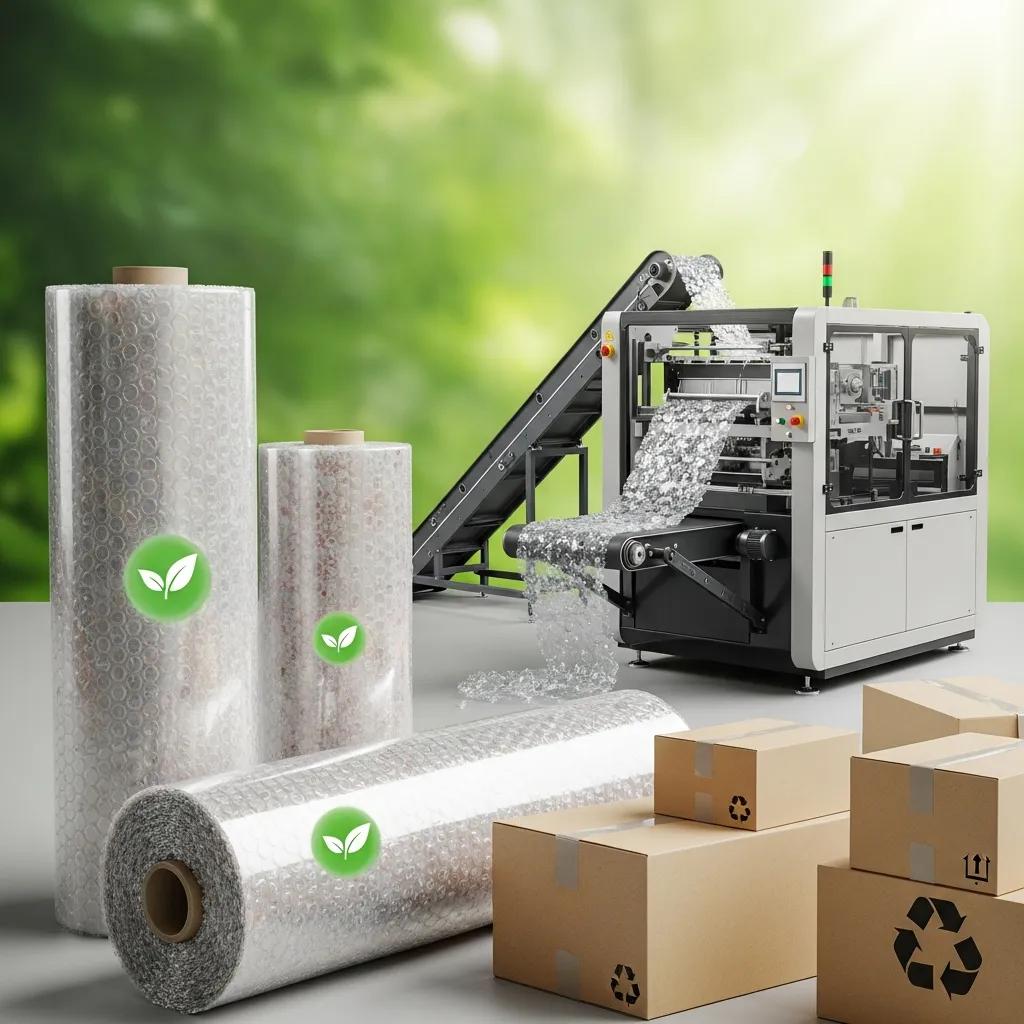
Sustainable bubble film solutions focus on increasing recycled-content film, enabling on-site reclaim and integrating recycling lines to create circular workflows that reduce landfill waste and lower material costs over time. Recyclable PE options remain the most practical route for bubble film because polyethylene is widely recycled and compatible with existing blown film extrusion equipment; however, trade-offs include potential changes to bubble integrity and processing windows when recycled pellets are used. Integrating plastic recycling machines for in-plant film reclaim allows manufacturers to reuse trim and off-spec material, reducing virgin resin demand and improving lifecycle metrics. These trends influence procurement choices and make machine features like multi-layer compatibility and material-flexible extruders valuable for businesses pursuing sustainability.
Options for eco-friendly bubble film production and recycling:
| Approach | Characteristic | Impact |
|---|---|---|
| Recycled-content PE | Uses post-industrial or post-consumer pellets | Lowers virgin resin use, may need process tuning |
| In-plant recycling | Reclaims trims and off-spec film | Reduces waste and raw material cost |
| Co-extrusion with barrier layers | Combines functionality with recyclability considerations | Balances performance vs recycling simplicity |
Practical eco-friendly choices include using post-industrial recycled (PIR) or selected post-consumer recycled (PCR) PE blends, coupled with process control adjustments to maintain bubble integrity and tensile properties. On-line recycling options—where trim and off-spec film are re-pelletised and fed back into extruders—reduce waste and create circular material flows, although capital and operational planning are required. Biodegradable alternatives for bubble film remain limited due to cost and mechanical performance gaps, so many producers prioritize recyclable PE strategies and improved collection systems. Choosing the right recycling workflow depends on product requirements, available infrastructure and sustainability targets set by customers and retailers.
Sustainable packaging practices can enhance brand perception, reduce long-term material costs and align businesses with retailer and regulatory expectations, particularly for exporters and e-commerce brands sensitive to consumer preferences. Adopting recyclable-content bubble film or on-site recycling demonstrates environmental responsibility to customers and can reduce waste-management expenses locally. There may be upfront investments required for recycling equipment or process tuning, but the operational benefits—lower virgin resin consumption and reduced disposal fees—often offset capital costs over time. East London businesses that plan for sustainability can better meet buyer requirements and secure long-term supply relationships with environmentally focused partners.
East London buyers typically follow a short, three-step procurement path: specify production needs and material preferences, discuss customization and service requirements with suppliers, and evaluate quotations that include delivery and warranty terms; this sequence streamlines comparison and shortens time-to-decision. When preparing a request, provide film width, desired output (m/min), target layer count, expected material (LDPE/LLDPE or recycled blend), and any customization like perforation, printing or lamination. Suppliers should respond with lead times, sample availability and warranty information; note service highlights such as sample delivery within 3 days and bulk delivery within 15–20 days where applicable. The brief EAV table below outlines the typical information suppliers will use to produce accurate quotes.
Information suppliers need to prepare a quote:
| Information Required | Why It Matters | Typical Response Time |
|---|---|---|
| Desired film width and layer count | Determines die size and machine configuration | Quotation within business days |
| Required output (m/min) | Sets motor and extruder sizing | Included in proposal |
| Material type and recycled content | Affects processing parameters and cost | Clarified in quote |
Follow this three-step guide to obtain a tailored quote: 1) Provide specifications—film width, desired output, layer count, and material preferences—so suppliers can shortlist appropriate models. 2) Discuss customization, after-sales support and sample requirements, including any desired printing, perforation or lamination options to ensure the quote covers tooling and service. 3) Receive the quote with lead times and warranty details; for example, distributors note sample delivery in about 3 days and bulk delivery in roughly 15–20 days, plus warranty and inspection assurances that should be clarified before order. Providing clear operational targets and production forecasts speeds evaluation and helps suppliers present accurate total cost of ownership estimates.
This practical quote process prepares buyers for the typical questions and timelines encountered during procurement.
Customers commonly ask about total cost of ownership, machine footprint, expected throughput, spare parts availability and warranty coverage; concise answers help set expectations and reduce procurement friction. Questions about material flexibility—whether machines can handle recycled-content PE or different resin blends—are frequent, and suppliers should provide processing ranges and any necessary process tuning. Service-related queries focus on after-sales support, defect rates and lead times for samples and bulk orders; transparent information on inspection procedures, warranty terms (such as two-year warranty for certain components) and local service arrangements is critical. Clear responses to these FAQs enable East London buyers to compare proposals and plan installation and training for smooth commissioning.
This completes the detailed guide and equips East London businesses with the knowledge to evaluate bubble film machines, specify requirements, and engage suppliers with confidence.
Plastic Bag Making M
Plastic Recycling So
Plastic Recycling So
Plastic Recycling So