
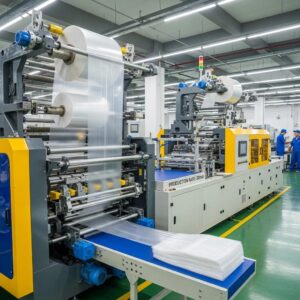
Plastic Bag Making Machines for Sale in Pretoria
Plastic Bag Making M

Water-cooled recycling equipment answers a pressing challenge for South Africa’s plastics recovery sector: converting flexible film and mixed polyolefin waste into consistent, saleable pellets without thermal damage. This article explains how water cooling plastic recycling machines work, which polymers they handle, and why water-quenched pelletizing improves pellet morphology and process throughput. Readers will learn core system components, polymer-specific operating considerations for HDPE/LDPE/PP, measurable quality and efficiency benefits, and practical guidance for selecting models and configurations. The piece also maps typical process parameters and provides model-comparison guidance relevant to South African buyers, while briefly noting local supply and support options from a recognised distributor. Use the sections below to move from basic definitions and the recycling process to machine selection, expected outcomes, and market drivers shaping investment decisions.
Water cooling plastic recycling machines are extrusion-based pelletizing systems that quench molten polymer strands in a circulating water bath to achieve rapid solidification, controlled pellet shape, and reduced thermal degradation. The mechanism relies on extrusion to form a continuous strand, an underwater or water-spray cutting/granulating head to shape pellets, and downstream separation and drying to remove entrained water while preserving pellet integrity. Rapid heat extraction decreases the polymer’s residence time at high temperatures, which lowers chain scission and discoloration and yields more spherical pellets with fewer fines. Understanding these mechanics clarifies why water cooling is preferred for film-to-pellet recycling and high-throughput granulation lines.
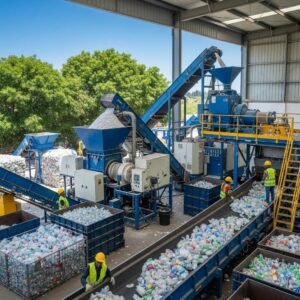
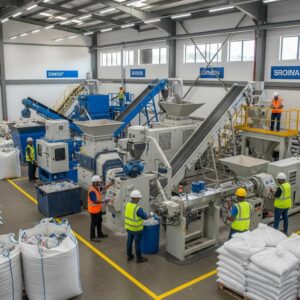
A water cooling plastic recycling system comprises a feed/prewash area, shredder/crusher, extruder with temperature control, a water quench/cooling tank or spray chamber, an underwater pelletizer or cutter head, separation equipment, and a dryer or centrifugal dewatering stage. The extruder and screw configuration regulate melt pressure and throughput, typically matched to the cutter head capacity to avoid surging. The water cooling tank provides controlled residence time and steady heat extraction, while the drying stage restores pellet bulk properties for storage or reprocessing. These components together form an industrial pelletizing line suitable for continuous operation and modular upgrades.
This component overview leads naturally into how water cooling specifically improves pellet quality compared with alternative cooling methods.
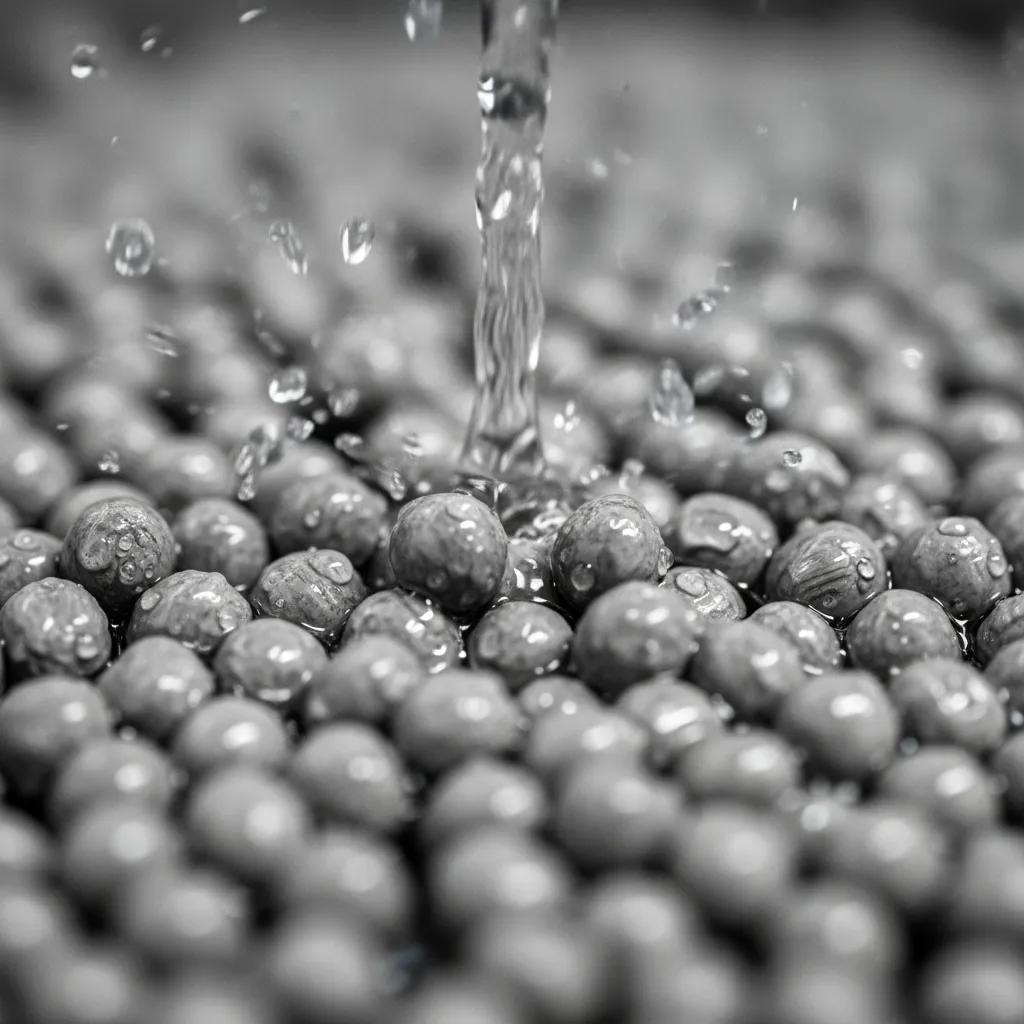
Water cooling enhances pelletizing by providing faster, more uniform cooling rates than air cooling, which reduces deformation, lowers the generation of fines, and improves pellet sphericity and bulk density. Faster solidification preserves polymer molecular weight and minimizes thermal oxidation, resulting in pellets with better mechanical properties and aesthetic uniformity suitable for higher-value applications. Compared with air-cooled strands, water-quenched pellets typically show reduced odor and discoloration, translating into fewer rejects in downstream compounding. These material and process advantages make water cooling attractive for film, bag, and mixed polyolefin recycling where quality consistency is critical.
The technical efficiency of water cooling suggests specific polymer compatibilities covered next.
Water-cooled pelletizers are best suited to thermoplastic polyolefins and common packaging films where rapid quenching prevents shape distortion and thermal degradation. Typical compatible feedstocks include HDPE and LDPE films and bags, polypropylene (PP) homopolymers and copolymers, and many mixed polyolefin streams after appropriate sorting. Contamination levels, multilayer structures, and non-polyolefin inclusions affect suitability, so pre-sorting, washing, and shredding remain critical preparatory steps. Understanding polymer-specific behavior allows operators to optimize temperatures, screw profiles, and cutter speeds for consistent output.
HDPE, LDPE, and PP each present distinct processing windows: HDPE requires higher melt temperatures and benefits from faster cooling to retain stiffness and crystallinity; LDPE film demands careful melt homogenization to avoid gels and benefits from quenching to preserve clarity; PP usually produces pellets with good surface quality but is sensitive to contamination and requires strong filtration. Typical extrusion temperatures vary by polymer class, and operating parameters must be tuned to balance throughput and melt stability. Proper pre-washing and size reduction reduce contamination-related defects and ensure consistent pellet quality across batches.
These polymer specifics inform machine configuration choices covered in the next section about benefits.
Water-cooled granulators handle a range of waste plastics beyond clean film, including mixed polyolefin blends and some contaminated streams when paired with upstream separation and washing systems. The technology is less appropriate for hygroscopic or highly polar polymers without additional drying controls, and multilayer films with incompatible polymers may require delamination or dedicated processing. Decision points include the homogeneity of the feed, target pellet spec, and tolerance for regrind variability. When mixed streams are used, modular add-ons such as melt filtration, screen changers, and specialized cutters increase robustness and broaden acceptable feedstock types.
Understanding feedstock compatibility leads into measurable benefits of water cooling, which follow.
Water cooling delivers measurable improvements in pellet quality, process stability, and equipment longevity by extracting heat rapidly and evenly from extruded strands. Benefits include reduced thermal degradation, lower scrap and fines rates, higher bulk density and more uniform pellet geometry, and potential energy savings through reduced rework and lower motor strain under stable operating temperatures. These advantages combine to improve recyclate value and plant throughput while reducing maintenance cycles. The following table maps benefit entities to specific effects on pellet quality and operations.
| System Element | Effect on Pellet Quality | Operational Outcome |
|---|---|---|
| Water Cooling Tank | Rapid solidification, uniform cooling | Reduced deformation and fewer fines |
| Underwater Pelletizer | Controlled cutting, smooth pellet surfaces | Consistent pellet size and shape |
| Continuous Drying/Separation | Effective water removal without overheating | Ready-to-store pellets with lower moisture |
This mapping illustrates how water-cooled systems convert component-level design into real process advantages and sets up the practical metrics discussed next.
Water cooling removes heat at rates far above passive air cooling, stabilizing melt temperature and reducing polymer thermal history variance across production runs. By limiting exposure to elevated temperatures, the system lowers oxidation and chain scission, directly reducing discoloration and preserving molecular weight distribution. Operators therefore observe fewer brittle or fused pellets and improved color consistency across batches, which increases recyclate acceptability for compounding. Monitoring melt temperatures and water bath conditions is critical to maintaining these quality gains and preventing local hotspots that could cause variability.
These quality outcomes correlate with energy and lifecycle benefits described next.
Water cooling can improve energy efficiency by enabling stable extrusion conditions, reducing motor load fluctuations and avoiding frequent stoppages for cleaning or cooling-related maintenance. Lower thermal stress on bearings, cutters, and seals extends component life and reduces unplanned downtime, which in turn improves overall plant availability and lowers lifecycle costs. While the water-cooling loop requires pumps and heat-exchange equipment, the net effect often favours higher throughput and lower per-kilogram energy consumption when compared to less-stable air-cooled operations. Properly designed water systems with heat recovery or efficient filtration maximize both reliability and energy performance.
Having established benefits, the next section provides model-level selection guidance and a direct look at locally available options.
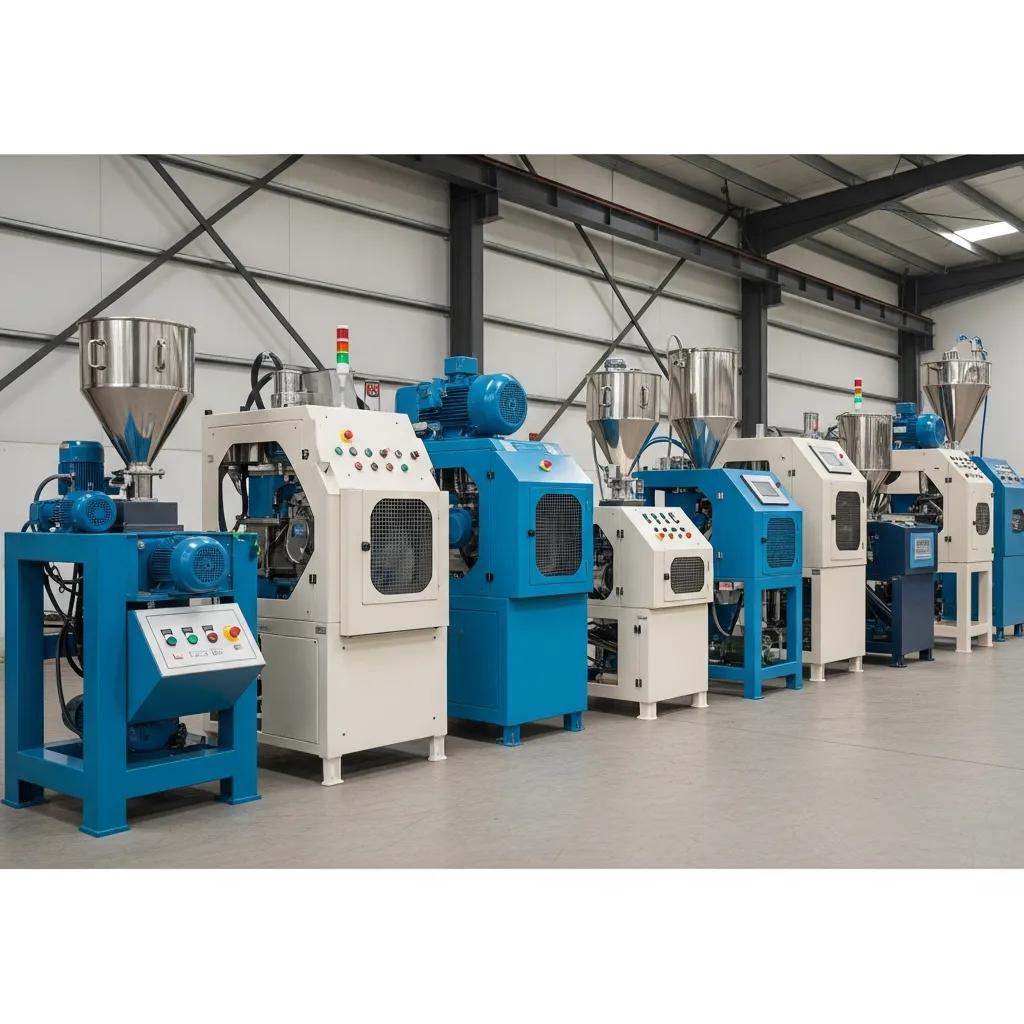
South African buyers can choose from compact, mid-range, and industrial continuous water-cooled pelletizing models that differ by throughput, power draw, and cooling approach (underwater cutting vs water-spray quench). Selection centers on required capacity (kg/h), feedstock type, available footprint, and necessary downstream drying or separation equipment. Modular systems allow OEM customization, and buyers should compare power ratings, typical feedstock compatibility, and required ancillary equipment when evaluating offers.
The following table compares archetypal model classes and helps buyers match capacity and functionality to feedstock and plant goals.
| Model Class | Typical Capacity (kg/h) | Typical Power (kW) | Cooling Type | Typical Feedstock |
|---|---|---|---|---|
| Small / Pilot | 50–200 | 15–30 | Water-spray quench | Bag/film samples, trial batches |
| Medium / Modular | 200–800 | 30–120 | Underwater pelletizer | Film lines, mixed polyolefins |
| Large / Industrial | 800+ | 120+ | Continuous water tank + pelletizer | High-volume film recycling, centralised plants |
This comparison clarifies how capacity bands relate to plant objectives and guides technical questions for suppliers. For buyers prioritising customization, modular add-ons such as dryers, centrifugal separators, and screen changers are often the next decision points.
Industrial water-cooled granulators are engineered for continuous operation and high uptime with heavy-duty cutter heads, large-diameter extruders, and integrated filtration options to handle film and mixed polyolefin streams. These systems commonly target throughput bands above 200–800 kg/h and emphasize robust melt filtration and dryer integration to deliver saleable pellets. Buyers evaluating industrial models should ask about cutter materials, rotor/stator designs, and spare parts availability to ensure the system meets long-term production targets.
Customizable pelletizing systems allow specification of screw geometry, cutter tooling, water tank dimensions, and ancillary equipment such as centrifugal dryers, vibrating conveyors, and automatic feeders to suit particular feedstocks and output goals. Typical customization options include inverter control for throughput modulation, tooling for different pellet shapes, and OEM integration of filtration and degassing modules. These options allow recyclers to tune pellet size, shape, and surface finish to match end-use requirements and market demands. When comparing offers, request clear specification sheets for capacity, power, footprint, and optional add-ons to ensure fit-for-purpose procurement.
Buyers should note that reputable local distributors typically offer consultation and configuration support. Plastic Bag Machine South Africa operates as a local distributor for Kingdom Machinery Co., Ltd., offering water cooling plastic recycling machines and plastic recycling machines with customization and OEM options, competitive pricing, and fast delivery. The company highlights a comprehensive product range, quality assurance with 100% final inspection, a two-year warranty on timer switches, and 24-hour online after-sales support with engineer availability for installation and training. Prospective buyers are encouraged to request detailed specifications and quotes to identify the right model and optional equipment for their feedstock and capacity goals.
Plastic Bag Machine South Africa positions itself as a local supplier and distributor for water cooling recycling equipment, providing pre-sale configuration advice, equipment commissioning support, and post-sale service. Their service proposition emphasises product range depth, quality checks prior to dispatch, warranty coverage on key electrical components, and online support that can connect operators with engineers for installation and training. Buyers benefit from local responsiveness for custom OEM options and logistics tailored to South African plant timelines. This local support model reduces buyer risk and helps shorten ramp-up time for new recycling lines.
Quality assurance processes include 100% final inspection before dispatch, ensuring that each machine meets specified tolerances and functional checks prior to shipment. Warranty coverage specifically notes a two-year warranty on timer switches as part of the equipment guarantee, and ongoing support is provided via 24-hour online channels to troubleshoot commissioning or operational queries. Engineer availability for installation and on-site training complements remote assistance, enabling operators to achieve stable production more quickly. These support elements reduce operational unknowns and provide a structured path to production readiness.
The company emphasises competitive pricing and fast delivery as purchasing advantages while offering OEM customization to adapt machines for specific feedstocks or space constraints. Guidance for buyers includes requesting detailed quotations that list included ancillaries, lead times, and optional services such as installation and operator training. Local customization accelerates implementation by aligning equipment layout and control logic with on-site workflows. For budget-conscious projects, evaluating modular upgrades and phased delivery can balance upfront cost with future expansion.
The company’s combination of local distribution, technical support, and packaged services helps bridge technical knowledge gaps and supports customers through selection and start-up.
Market drivers such as Extended Producer Responsibility (EPR) initiatives and circular economy targets are increasing demand for reliable pelletizing equipment that converts post-consumer film and packaging into usable recyclate. Policymakers and brand owners are pushing for higher recycled content and reduced landfill, which creates stronger markets for consistent, high-quality pellets produced by water-cooled systems. Industry investment in recycling infrastructure through 2025 and beyond indicates rising adoption of industrial pelletizers and modular recycling lines that can scale with feedstock availability. These dynamics shape equipment specification priorities, with quality and throughput increasingly valued by buyers.
EPR schemes and recycled-content targets create commercial incentives for producers and waste managers to invest in efficient recycling lines that deliver consistent recyclate suitable for commercial incorporation. The need to meet recycled content benchmarks increases demand for pelletizers that maintain polymer properties and deliver low-fines, high-bulk-density pellets. As regulatory compliance becomes more stringent, buyers prioritise machines that minimise rejects and provide traceable production records. Consequently, equipment that supports reliable quality control and throughput becomes a strategic advantage for firms seeking to meet policy-driven targets.
Projected growth in recycling capacity through the mid-to-late 2020s supports increased procurement of medium and large-scale water-cooled pelletizing systems across the region, especially where film waste streams are significant. New plant investments and technology adoption reinforce the need for scalable equipment, flexible process controls, and integrated downstream drying and screening. For equipment suppliers and recyclers, this trend signals opportunities to offer modular upgrades, service agreements, and training to improve plant performance and recyclate consistency. Buyers should prioritise systems with documented operating parameters and local service pathways to capitalise on market growth.
Efficient water-cooled pelletizing aligns with these market trends by delivering the quality and throughput that emerging policy and commercial requirements demand.
(This article ends after the last provided heading.)
Plastic Bag Making M
Plastic Recycling So
Plastic Recycling So
Plastic Recycling So