
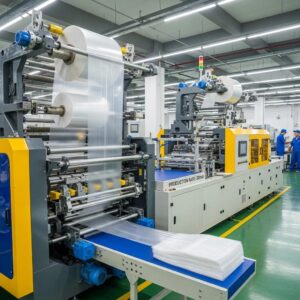
Plastic Bag Making Machines for Sale in Pretoria
Plastic Bag Making M
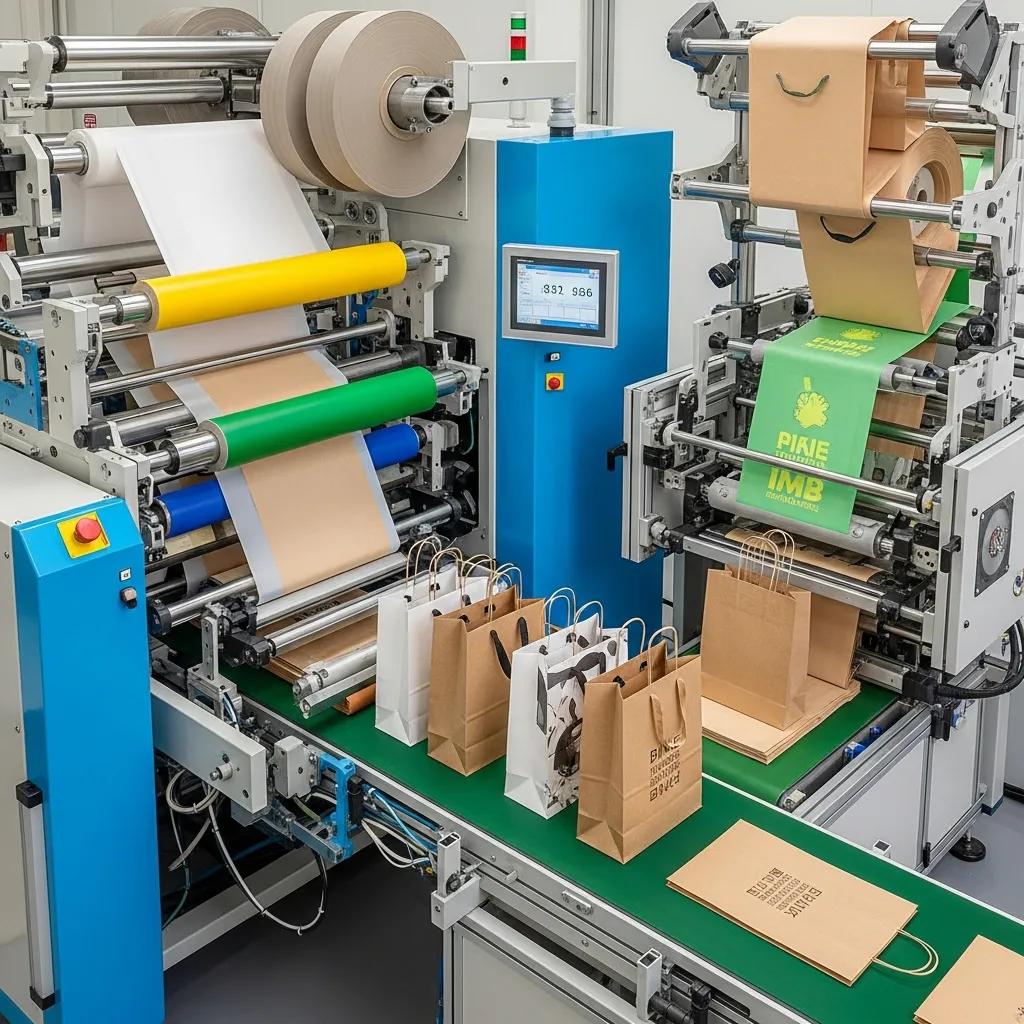
Plastic shopping bag making machines are integrated systems that convert resin or film rolls into finished carry bags, combining extrusion, printing, cutting and finishing stages to produce high-volume retail packaging. These machines work by forming film (via blown film extrusion or supplied rolls), controlling web handling with servo-driven systems and executing precise sealing, cutting and handle-making operations to deliver consistent bag dimensions and strength. For buyers in South Africa focused on efficiency or sustainability, the result is predictable throughput and the option to produce conventional HDPE/LDPE bags or biodegradable alternatives such as PLA/PBAT blends. This guide explains machine types, blown film support, printing and finishing choices, material compatibility, automation benefits and industry applications, giving procurement and technical guidance for selecting the right equipment. Read on to compare automatic lines and biodegradable setups, learn how blown film quality affects downstream bag-making, and discover practical supplier considerations when sourcing production lines in South Africa.
Versatile shopping bag making machines cover a range of hyponyms—automatic T-shirt bag making machines, side-sealing machines, bottom-sealing machines, garbage bag makers and dedicated biodegradable bag lines—each defined by sealing style, output format and automation level. Mechanically, these machines combine a film feed (or inline extrusion), a sealing and cutting module, and auxiliary systems such as punching, stacking and bag folding; the specific mechanism determines throughput, bag types and operational benefits for a manufacturer. Buyers choose based on required throughput, material compatibility (HDPE/LDPE vs biodegradable resins) and finishing needs like printing or handle options, which directly affects production cost per bag and brand presentation. Understanding model capacities and basic specs helps shortlist machines that match supermarket or retail volume targets and budget constraints, then move to finish and integration considerations.
Different machine categories and common uses:
Compare typical model capacities in the table below to help identify fit by throughput and application.
Introductory comparison table of popular machine categories and capacities:
| Machine Type | Typical Throughput | Typical Outputs |
|---|---|---|
| Automatic T-shirt (Vest) Machine | 140–200 pcs/min | Handled grocery/retail bags |
| Side-seal Bag Machine | 60–120 pcs/min | Gusseted/shopping bags |
| Bottom-seal Bag Machine | 40–100 pcs/min | Flat/sealable packaging |
| Garbage Bag Machine | 30–80 rolls/min (varies) | Thick waste bags and rolls |
This quick comparison highlights throughput ranges buyers should match to their production targets. The next section explains the internal components—especially blown film extruders—that feed these bag making systems and why film specs matter for consistent output.
For buyers who want supplier options in South Africa, Plastic Bag Machine South Africa (operating under Kingdom Machinery Co., Ltd.) offers categories that map to the types above and provides model comparisons and quotation support upon request. Their offering is positioned as one-stop: customization, printing integration and full lines are options to consider when selecting a supplier that can deliver machines assembled for local needs.
Automatic plastic shopping bag making machines are turnkey systems that convert film into finished retail bags using synchronized modules controlled by PLCs and servo motors to ensure repeatable length, sealing, and punching operations. Core components include the web feed and tension control, servo-driven cutting and sealing units, PLC recipe management, automatic stacking and waste removal; these mechanisms reduce manual handling and improve yield through consistent cycle timing. Typical performance metrics range from around 140 to 200 pieces per minute for high-speed vest bag machines down to lower throughputs for gusseted or bottom-seal designs, with roll widths often set to standard bag widths used by supermarkets. When selecting an automatic unit, buyers should prioritize servo precision, accessible spare parts and modularity for inline printing or handle formation, because these factors impact uptime and total cost of ownership.
Choosing automatic over semi-automatic is appropriate when production targets require consistent high throughput, predictable labor costs and integration with printing or extrusion lines. The next subsection outlines biodegradable machine adaptations that enable processing compostable resins and blends.
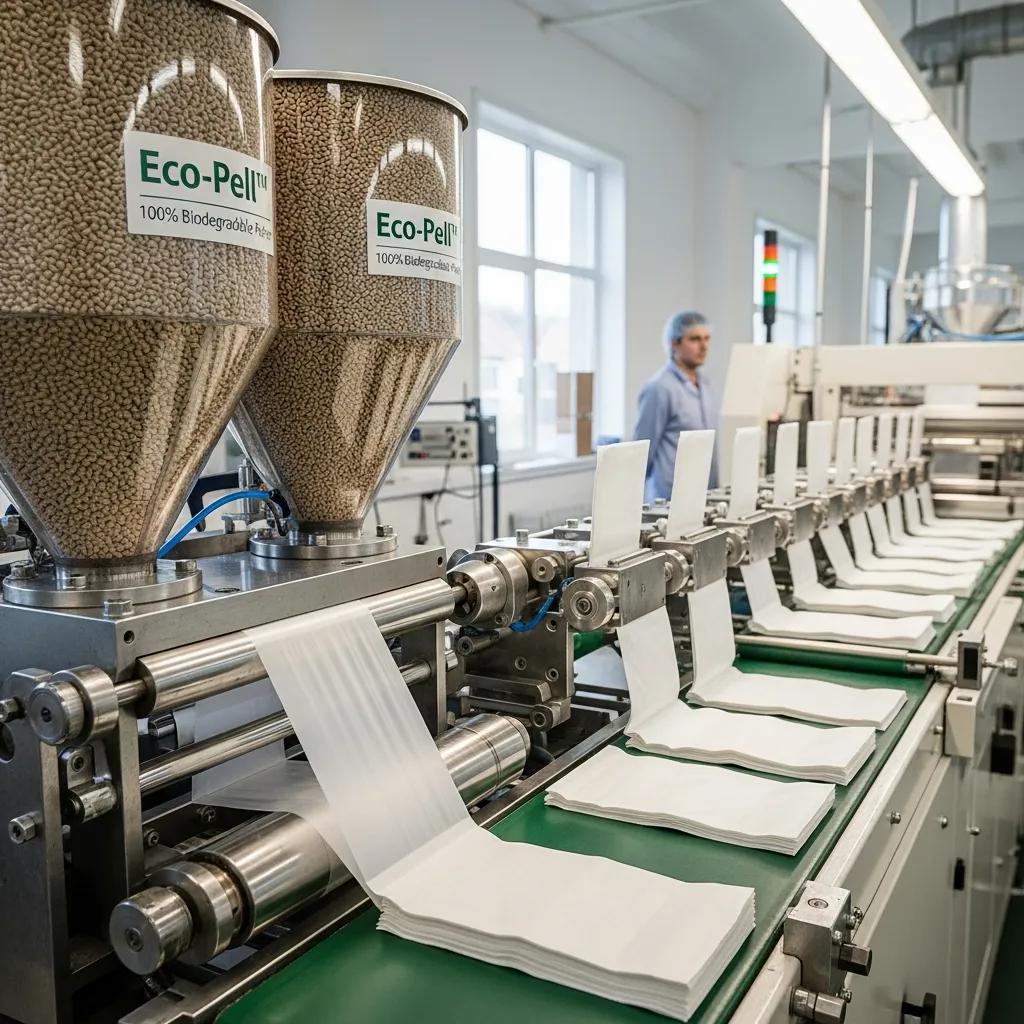
Biodegradable bag making machines are adapted to process resins like PLA, PBAT and starch blends by modifying feeders, screw profiles and temperature control systems to handle different melt behaviors and to avoid thermal degradation during extrusion and bag forming. The mechanism involves gentler melt handling, shorter residence times in heated zones and sometimes vacuum degassing to manage moisture-sensitive resins, resulting in films that balance compostability with adequate mechanical performance for retail use. These machines produce bags that meet market and regulatory demand for reduced environmental impact, but they require careful material selection and process control to preserve sealing and tensile properties; operators must monitor extrusion temperatures and cooling rates closely. Buyers should plan for trial runs and sample evaluation to confirm film strength and printability before committing to full-scale production lines.
Understanding these material-process interactions leads directly into the role of blown film extrusion as the primary method for producing films fed to bag-making lines, which we cover next.
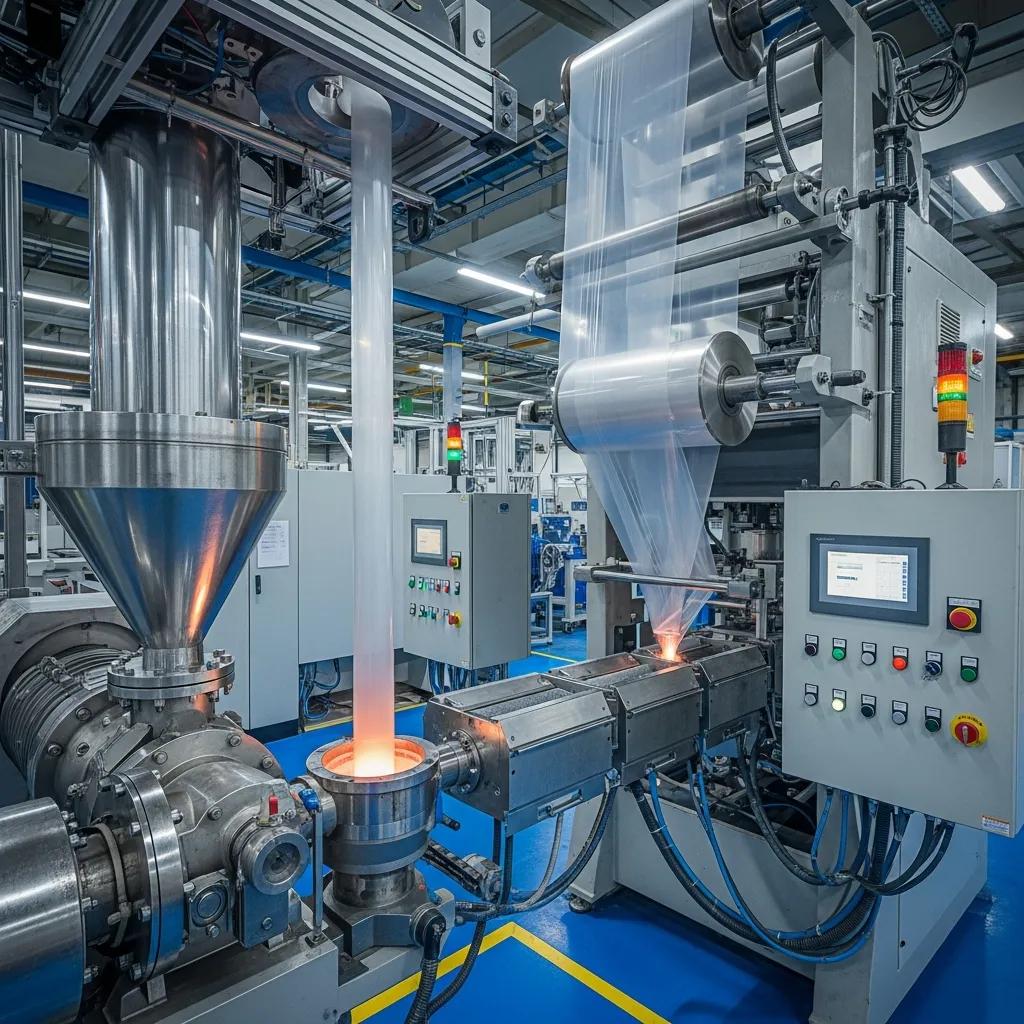
Blown film extrusion machines create continuous polymer films by melting resin, extruding it through a circular die, inflating the melt into a bubble and cooling it to form uniform film gauges—this process directly determines film gauge, mechanical strength and optical properties that dictate downstream bag-making performance. The mechanism is defined by three core steps: melting and homogenizing the resin in the extruder screw, shaping and inflating the melt through the die to form the bubble (blow-up ratio controls thickness), and cooling/flattening the film before winding; each stage affects tensile strength, elongation and sealability. High-quality blown film control results in consistent bag dimensions, reduced scrap during cutting and better print registration for inline printing operations. Differences in film properties such as gauge tolerance, clarity and seal strength influence whether a line should use mono-layer or multi-layer extrusion, and they determine compatibility with specific bag-making modules.
A concise 3-step process summary for featured-snippet style clarity:
For South African buyers deciding between complete bag production lines and standalone extruders, supply options can include complete integrated lines (extruder + film handling + bag maker) or standalone blown film extruders feeding existing bag machines. Plastic Bag Machine South Africa (operating under Kingdom Machinery Co., Ltd.) states they supply both complete lines and standalone extruders, offer fast sample turnaround and report sample delivery within three days and bulk order production within 15–20 days—details worth verifying during procurement.
HDPE and LDPE films are produced using similar blown film mechanisms but require different processing parameters—HDPE typically needs higher melt temperatures and results in stiffer, thinner films suited to T-shirt/vest bags, while LDPE produces softer, clearer films better for flexible shopping bags and sealing applications. Processing differences include higher screw shear and melt strength considerations for LDPE to achieve clarity and elongation, whereas HDPE benefits from higher blow-up ratios to produce thin, strong films with good puncture resistance; thermal profiles and cooling rates are adjusted accordingly to maintain mechanical properties. These material-process interactions affect bag performance: HDPE is strong at low gauges and economical for high-volume vest bags, while LDPE and LLDPE offer improved sealability and film clarity for printed retail bags. Understanding these trade-offs helps manufacturers choose extrusion parameters that align with target bag type and downstream printing or sealing processes.
Multi-layer blown film uses co-extrusion to combine different polymers into a laminated structure, delivering benefits such as enhanced barrier properties, tailored mechanical strength and the ability to include recycled content in inner layers while keeping outer layers optimized for printing and sealing. Mono-layer films are simpler and less costly to produce, making them attractive when budget constraints are primary and when film performance requirements are moderate; they also simplify recycling streams. The mechanism of multi-layer films allows designers to position a strong core for puncture resistance, an inner layer for heat-sealing, and an outer printable layer—all of which improve finished bag quality and brand finish. Choosing multi-layer over mono-layer depends on required barrier, strength, and aesthetic properties balanced against equipment complexity and material costs, guiding procurement decisions for lines intended for higher-value retail packaging.
Printing technologies for plastic bags—flexographic, gravure and digital—affect brand presentation, cost structure and run-length economics, with each method offering distinct mechanisms and benefits related to ink transfer, substrate compatibility and setup costs. Flexo printing uses relief plates and fast-drying inks suited to medium runs and variable color counts; it integrates well inline with bag making lines and offers quick changeovers, making it common for supermarket and promotional bags. Gravure printing employs engraved cylinders for very high-quality, consistent prints at high volume but requires larger setup costs and longer runs to be economical, making it suitable for large-scale branded bags with photographic detail. Digital printing provides short-run flexibility and fast turnaround without plates, trading off per-unit cost for lower setup time, and it is increasingly used for customized or seasonal runs where low minimum quantities are required.
Introductory list comparing printing technologies:
After printing, finishing steps such as slitting, perforation, punching and handle formation determine final bag dimensions and packability; these finishing modules achieve precise tolerances that support automated packing and retail distribution. The selection of printing technology should align with brand requirements, run lengths and the chosen film substrate to ensure ink adhesion and colorfastness across the expected shelf life. The following subsections detail flexo and gravure capabilities.
Flexo printing machines use flexible plates mounted on rotating cylinders to transfer fast-drying inks onto film substrates, enabling inline installation with bag forming machines for efficient production. Typical flexo setups support two-color to four-color printing configurations, providing adequate color coverage for logos and promotional graphics while keeping changeover time and costs low for medium-length runs. Mechanically, flexo systems excel with water-based or UV inks compatible with common resins like LDPE and LLDPE, and their registration control works well with servo-synchronized bag makers to maintain print alignment through cutting and sealing stages. For buyers, flexo offers a practical balance between print quality and operational flexibility; it is ideal for supermarket and retail bag production where frequent artwork changes are necessary.
These factors make flexo a common choice for brands needing consistent but adaptable print capability, leading into the higher-fidelity gravure approach described next.
Gravure printing achieves superior image fidelity by engraving cells into cylinders that hold precise ink volumes, making it ideal for long, high-volume production runs where consistent color and fine detail are required. The gravure process has higher initial setup and cylinder costs, so it becomes economical when amortized over very large volumes; it also pairs well with multi-layer films where detailed imagery and photographic quality are required. Slitting and rewinding machines are crucial finishing stages that convert wide printed film into roll widths tailored for bag making, maintaining narrow tolerances to ensure downstream sealing and cutting accuracy. Properly specified slitters and rewinds with tension control reduce edge defects and improve feed reliability into bag makers, which translates to higher yields and less stop-and-start during production.
With printing and finishing choices aligned, material selection becomes the next critical decision in producing the right bag for the right market.
Material compatibility spans conventional plastics—HDPE, LDPE, LLDPE—and biodegradable alternatives such as PLA, PBAT, PVA and starch-based blends; each material presents distinct mechanical properties, processing parameters and end-of-life behaviors that influence machine configuration and product positioning. Mechanistically, conventional polyethylenes melt and form predictably on standard blown film extruders and maintain strong heat-seal performance, while biodegradable resins often require moisture control, lower residence times and specialized screw designs to prevent degradation. Choosing the right resin depends on the bag’s functional demands (strength, clarity, sealability), regulatory drivers, and the target customer’s sustainability expectations. Below is a comparative table to guide material selection for common bag applications.
| Material | Key Properties | Typical Applications |
|---|---|---|
| HDPE | High strength at low gauge, low stretch | T-shirt/vest bags, lightweight retail bags |
| LDPE/LLDPE | Good clarity, flexibility, excellent sealing | Printed retail bags, softer shopping bags |
| PLA | Compostable, stiffer, lower heat resistance | Compostable retail bags, light-duty packaging |
| PBAT (blend) | Improved flexibility and compostability when blended with PLA | Flexible biodegradable bags, compostable sacks |
| Starch blends / CaCO3-filled | Cost-reduced, tunable stiffness | Biodegradable bags with adjusted performance/cost |
This comparison highlights trade-offs: conventional polyethylenes remain the baseline for strength and cost, while biodegradable resins require process adjustments but support sustainability claims. The next subsections provide more detail on processing for conventional and biodegradable families.
HDPE, LDPE and LLDPE are the primary conventional polymers used in bag production, each bringing distinct processing windows and mechanical outcomes that inform extruder settings and bag maker choices. HDPE yields thin, strong films that are economical for high-volume vest bag production; it processes at higher extrusion temperatures and benefits from specific die and cooling setups to control stiffness and haze. LDPE and LLDPE produce softer, clearer films with better heat-sealability, making them preferable for printed retail bags where appearance and seal integrity matter; they typically require lower extrusion temperatures and different cooling profiles to maintain clarity. Processing considerations such as blow-up ratio, screw design and cooling ring positioning directly influence final film tensile properties and seal performance, so bag makers and extruder suppliers must coordinate specifications for optimal results.
Biodegradable materials like PLA and PBAT offer compostability advantages but introduce processing challenges—PLA is sensitive to moisture and heat, requiring low residence time and good drying, while PBAT adds flexibility when blended but increases material cost. Corn starch blends and calcium carbonate fillers can reduce cost and alter stiffness, yet they impact melt strength and may require modified screw geometries and filtration to avoid specks or flow instabilities. End-of-life behavior and certification claims (compostable vs biodegradable) should be considered early in product design since film formulation affects both processing and downstream disposal claims. Machine adjustments and trial runs are essential to achieve acceptable sealing, printability and mechanical performance when switching from conventional polyethylenes to biodegradable formulations.
Versatile shopping bag making machines improve efficiency primarily through automation, integrated film production and inline finishing, which together reduce handling, minimize changeover time and improve yield—delivering measurable KPI gains such as higher throughput, lower scrap rates and reduced labor cost per bag. Mechanically, features like servo motor control, PLC recipe management and automated stacking translate into precise bag length control, repeatable seals and fast tool-less size transitions; these mechanisms directly reduce waste and increase uptime. Integration with blown film extrusion and inline printing further streamlines logistics by eliminating intermediate rewind/transfer steps and improving registration for printed bags, which lowers rework. For buyers, mapping machine features to operational metrics clarifies ROI: faster changeovers mean higher effective production hours, and reduced scrap improves yield and material cost per bag.
Below is a feature-to-benefit EAV table demonstrating how specific features map to operational outcomes.
| Feature | Metric / Spec | Benefit |
|---|---|---|
| Servo Motor Control | Precise length control ±1 mm | Reduced scrap and consistent bag length |
| PLC with recipe storage | Fast changeover between sizes | Shorter downtime and fewer setup errors |
| Inline Printing Integration | Synchronized registration | Less misprint waste and higher quality output |
| Automatic Stacking & Counting | Automated packaging | Lower labor cost and faster packing |
These mappings help procurement prioritize features that produce measurable business outcomes, such as lower material waste and higher throughput. The following subsections discuss automation and supplier service details relevant to South African buyers.
Servo motor control and PLC systems form the meronymic core of modern bag making lines—servos handle motion precision for cutters and punches while PLCs orchestrate process variables, store recipes and communicate alarms—this combination increases repeatability and reduces manual adjustments. The mechanism of closed-loop servo control reduces length variance and ensures accurate registration with printing stations, which decreases rework and scrap that otherwise accumulate from mechanical drift in cam-driven systems. PLC recipe storage accelerates multi-size production by enabling operators to select saved parameters for temperature, speed and sealing pressure, thereby shortening changeovers and lowering operator skill requirements. These automation elements improve KPIs such as yield, uptime and throughput and make it easier to scale operations or add new SKUs without proportionally increasing labor.
When evaluating suppliers, buyers should consider warranties, QA processes and R&D support as part of automation value—Plastic Bag Machine South Africa (operating under Kingdom Machinery Co., Ltd.) emphasizes competitive pricing due to large-scale production and trained workers, quality assurance featuring 100% final inspection with reported defective rates between 1% and 3%, a two-year warranty for timer switches, and multidisciplinary R&D support covering product, structural, software and circuit engineering. These supplier attributes can help protect uptime and provide technical assistance during commissioning, which ties directly to the value of automation investments.
Fast delivery and one-stop customization services reduce procurement friction by combining machine supply, printing, customization (logo change, labeling, packaging) and new product development into a single supplier relationship, which lowers coordination overhead and shortens go-to-market timelines. Practically, buyers should expect sample timelines and bulk production lead times to vary by supplier capability; the supplier above reports sample availability within three days and bulk order timelines of roughly 15–20 days, which is relevant for rapid market testing and seasonal demand. Customization scope typically includes tooling for handle types, print plate setup and packaging preferences; aligning these requirements early helps ensure machines are delivered with the correct auxiliary modules installed. A procurement checklist should include site utilities, line footprint, spare-part lists and training schedules to ensure smooth commissioning and predictable ramp-up.
These procurement steps lead naturally into practical applications across industry verticals, which we examine next.
Versatile shopping bag making machines serve retail, supermarket, food packaging, industrial waste and recycling markets by producing format-specific bags—each vertical demands particular bag specs, printing quality and production scale that influence machine selection and line configuration. Mechanistically, retail and supermarket bags prioritize handle styles, printability and cost per unit, while industrial or waste bags emphasize thicker films, puncture resistance and roll packaging. Sustainability-conscious buyers can integrate biodegradable film extrusion and recycling equipment (pelletizers, granulators) to close material loops and support circular claims, which also offers potential cost offsets by reclaiming scrap. Mapping machine capabilities to vertical use-cases helps manufacturers design lines that meet functional, regulatory and marketing goals for their target customers.
Below is a short list of common industry applications and the primary benefits each derives from investing in versatile bag-making machines.
These applications illustrate that machine selection must balance throughput, material compatibility and finishing capabilities to achieve desired commercial outcomes. The next subsections explore retail specifics and recycling integration.
Retail and supermarket customers typically require high-throughput vest bag lines with reliable handle punching, fast changeovers for different sizes and inline printing for branding; these requirements translate into specific machine features including wide roll handling, servo registration and automatic stacking. Production targets vary by store scale, but lines designed for central bag manufacturing should optimize for low material usage per bag and fast switchovers to accommodate promotional artwork and seasonal campaigns. Packaging and fulfillment integration—such as bag roll formats compatible with dispensers—reduces handling costs at the retail point of sale and improves shelf replenishment efficiency. When specifying equipment, retailers should prioritize consistent gauge control, good print registration and accessible maintenance pathways to sustain high-volume distribution.
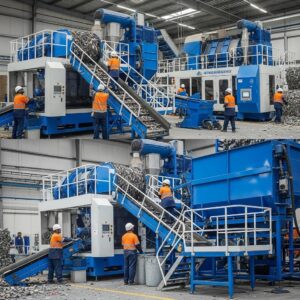
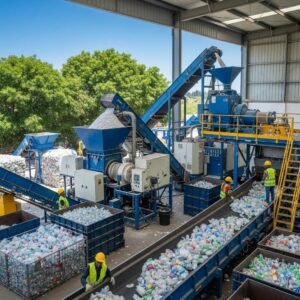
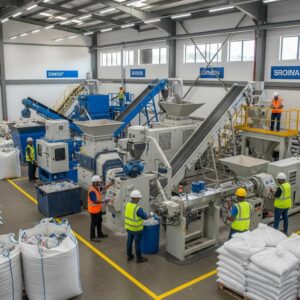
Integrating recycling equipment—granulators, pelletizers and dedicated recycling extruders—enables a closed-loop approach where production scrap and returned material are reprocessed into usable film or compounded with virgin resin to lower raw material costs and support circularity claims. The mechanism for closed-loop recycling involves shredding, washing/drying (if required), pelletizing and re-extruding the reclaimed resin, with attention to contamination control and material property retention. Benefits include reduced material costs, lower waste disposal expenses and the ability to market recycled-content packaging, which aligns with evolving regulatory and customer expectations. Suppliers that offer one-stop solutions for both bag making and recycling equipment simplify integration and technical support during commissioning.
For buyers in South Africa, assessing the full lifecycle—from resin sourcing to end-of-life management—helps determine whether to invest in biodegradable lines, recycling modules or a hybrid approach that combines recycled-content films with targeted compostable products.
For manufacturers ready to request detailed quotations, compare line options, or obtain a catalogue and technical specifications, contact Plastic Bag Machine South Africa (operating under Kingdom Machinery Co., Ltd.) through their sales channels to request a quote or product catalogue and discuss customization, delivery and after-sales service. This call to action supports lead generation while leaving selection and technical evaluation in the buyer’s hands.
Plastic Bag Making M
Plastic Recycling So
Plastic Recycling So
Plastic Recycling So